
What is the 2-Stroke Fuel Oil Mix Calculator?
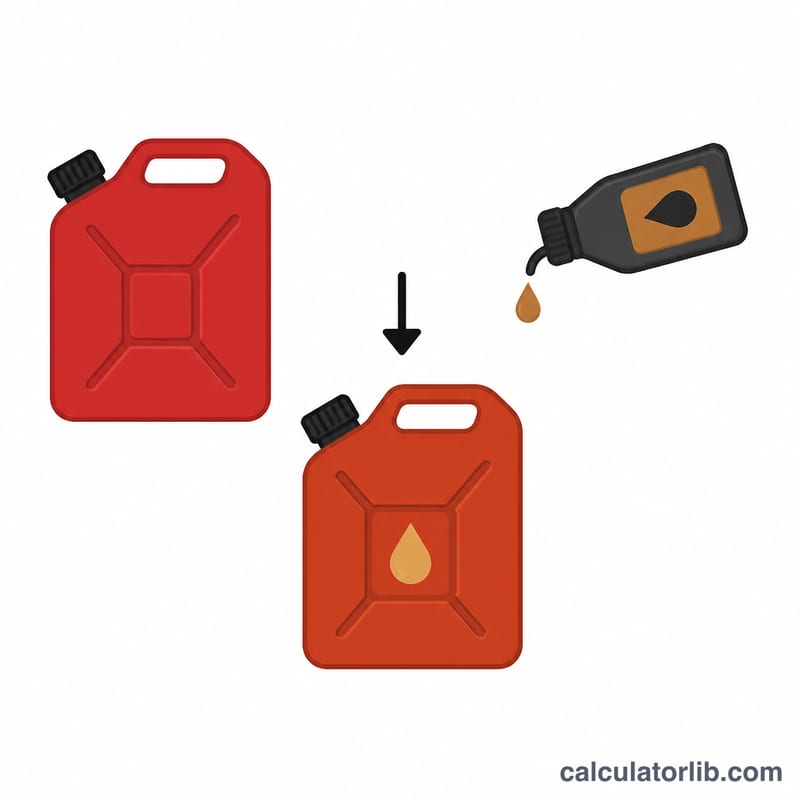
Two-stroke engines—found in many chainsaws, weed trimmers, leaf blowers, dirt bikes, and outboard motors—mix lubricating oil directly into the gasoline. Running the wrong ratio risks engine seizure (too little oil) or fouled plugs and smoke (too much oil). This calculator tells you exactly how much oil to add to a given amount of fuel for any gas-to-oil ratio.
How to Use It
Enter the amount of fuel you are preparing, choose liters or US gallons, and type your engine's recommended ratio (the number before the ":1", such as 50 for a 50:1 mix). The calculator returns the oil quantity in both milliliters and fluid ounces.
The Formula Explained
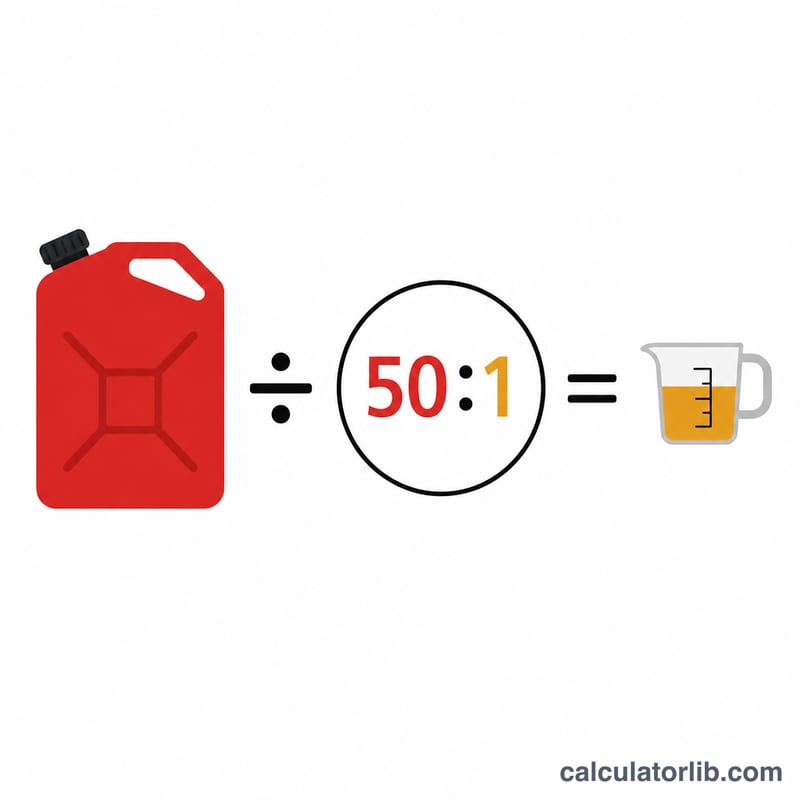
The math is a simple division: oil = fuel volume ÷ ratio. A 50:1 mix means 50 parts gasoline to 1 part oil, so the oil is one-fiftieth of the fuel volume. Converting fuel to milliliters first keeps the result in convenient units: liters are multiplied by 1000 and US gallons by 3785.41.
$$\text{Oil (mL)} = \frac{1000 \times \text{Fuel (L)}}{\text{Ratio}}$$
$$\text{Oil (mL)} = \frac{3785.4118 \times \text{Fuel (gal)}}{\text{Ratio}}$$
Worked Example
You have 5 liters of gasoline and a 50:1 engine. Fuel in mL = \(5 \times 1000 = 5000\) mL. Oil = \(5000 \div 50 = \mathbf{100}\) mL, which is about 3.38 fluid ounces. Pour in 100 mL of two-stroke oil and shake the can to blend.
FAQ
What ratio should I use? Always follow your engine or oil manufacturer's specification. Common ratios are 50:1, 40:1, 32:1, and 25:1.
Can I use the gas/oil mix later? Premixed two-stroke fuel degrades; use it within about 30 days for best results.
Is more oil safer? No. Excess oil causes carbon buildup, smoking, and plug fouling. Stick to the recommended ratio.