
What is the Speedometer Error Calculator?
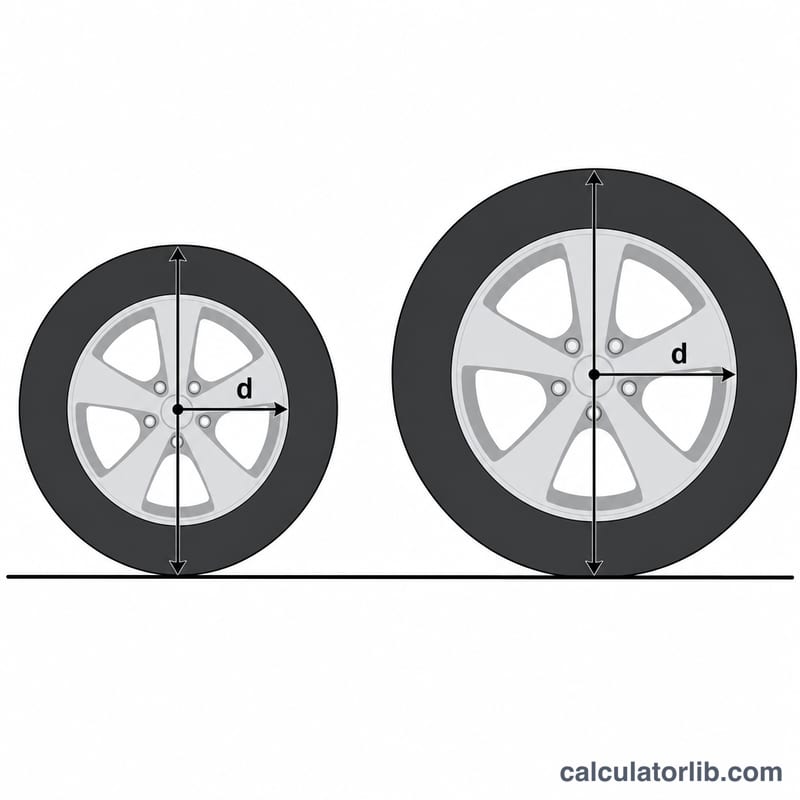
Your car's speedometer is calibrated for the diameter of its original (stock) tires. When you fit tires with a different overall diameter — taller off-road tires, low-profile performance tires, or simply a different size — each wheel revolution covers a different distance, so the displayed speed no longer matches your true ground speed. This calculator shows your actual speed and how far off the speedometer is for any tire change.
How to use it
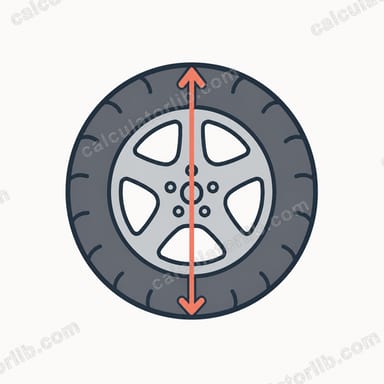
Enter the speed your speedometer is showing (the indicated speed), then enter the overall diameter of your stock tires and the diameter of your new tires. Use the same length unit for both diameters (inches, millimetres — it cancels out) and any speed unit you like (mph or km/h) for the reading. The result is your true speed in the same speed unit, plus the difference and percentage error.
The formula explained
Because distance per revolution scales directly with tire diameter, actual speed equals the indicated reading multiplied by the ratio of new diameter to stock diameter:
$$\text{Actual} = \text{Indicated} \times \frac{\text{New Diameter}}{\text{Stock Diameter}}$$
If the new tires are larger, the ratio is above 1, so you are actually travelling faster than the speedometer shows. Smaller tires reverse this.
Worked example
Suppose your speedometer reads 60 mph, your stock tires are 26 inches in diameter, and you upgraded to 28-inch tires. Actual speed $$= 60 \times \left(28 \div 26\right) = 60 \times 1.0769 = \textbf{64.62 mph}$$. That is a 4.62 mph difference, or about a 7.7% under-read — you are going faster than the dash suggests.

FAQ
Do I need the loaded or unloaded tire diameter? Use the loaded (rolling) diameter for best accuracy, but the manufacturer's listed overall diameter works well for most comparisons.
Will larger tires make my odometer read low? Yes — the same ratio applies, so larger tires undercount miles while smaller tires overcount them.
Can I use tire size codes instead of diameter? Convert each tire size (e.g. 225/45R17) to an overall diameter first, then enter those two numbers here.