
What the UTC Time Converter Does
The UTC Time Converter takes a local date and time in a specific time zone and translates it into Coordinated Universal Time (UTC) — the global time standard used by aviation, IT systems, finance and international scheduling. Instead of doing fiddly mental arithmetic across regions, you enter your local moment, pick your zone, and the tool returns the exact equivalent UTC timestamp along with the offset it applied.
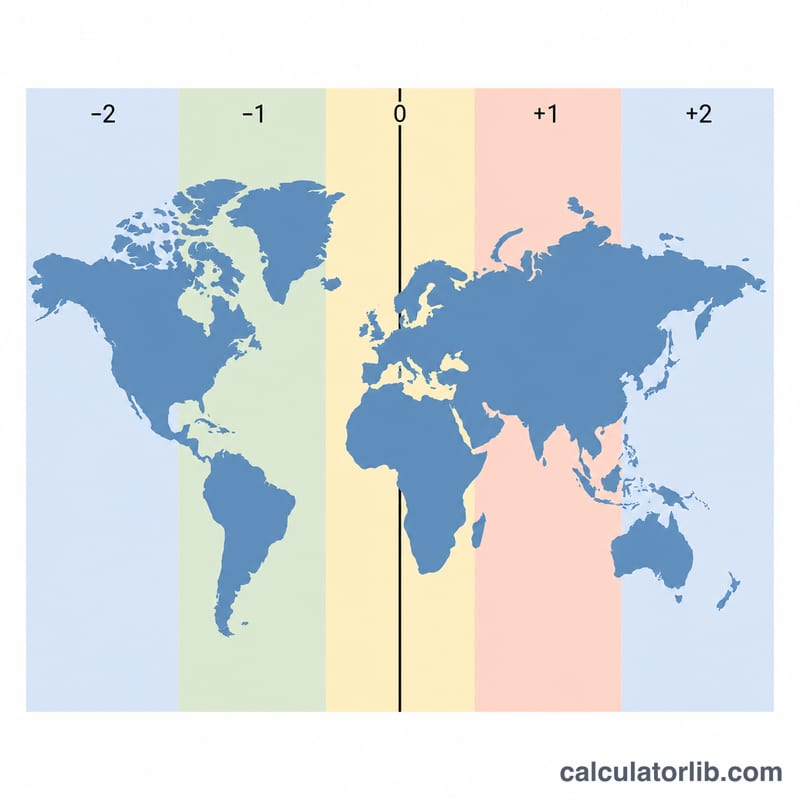
The Inputs You Provide
- Local Time: the date and time as it reads on a clock where you are, entered in ISO format (for example
2024-06-15T14:30). - Time Zone: your local IANA zone identifier (such as
America/New_YorkorEurope/London). Choosing the correct zone is essential — it determines the offset, and whether daylight saving time applies, so the conversion is accurate.
How the Conversion Works
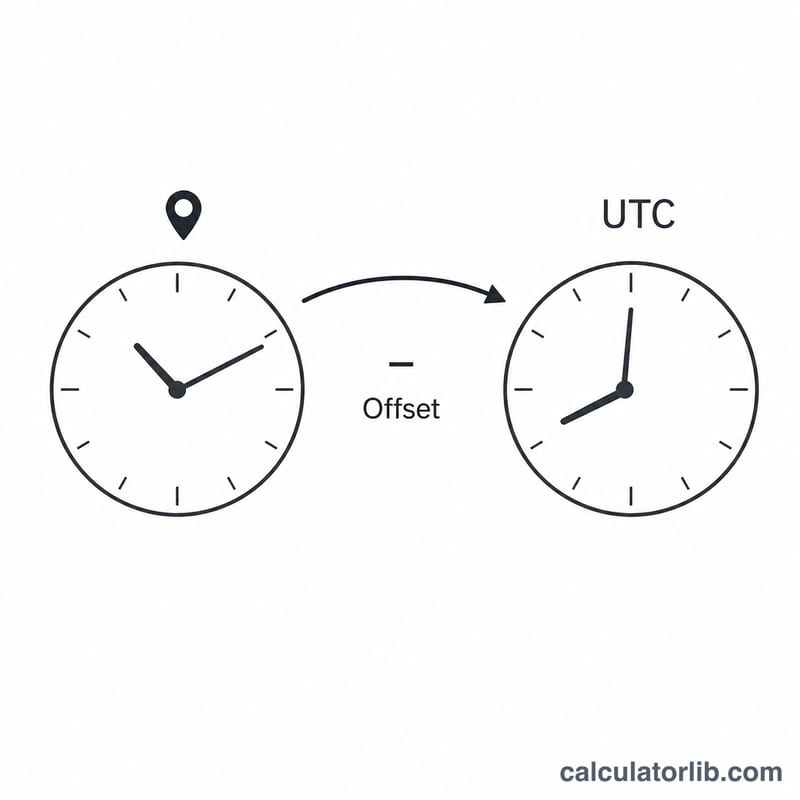
The calculator interprets your local time as a moment "attached" to the chosen zone, then re-expresses that same instant in UTC. In plain terms:
- UTC time = Local time − UTC offset (zones east of Greenwich subtract their positive offset; zones to the west add their negative offset).
- The tool also reports the zone offset in a friendly
GMT±H:MMformat, the raw offset broken into hours, minutes and seconds, and whether the zone observes daylight saving time.
Because it works on the actual instant in time, the result is correct regardless of which side of UTC your region sits.
Worked Example
Suppose you enter Local Time: 2024-06-15T14:30 and select Time Zone: America/New_York. New York's base (raw) offset is GMT−5:00, equal to −18,000,000 milliseconds, or 5 hours. The converter takes 14:30 local and shifts it to the same instant in UTC. The result is 2024-06-15 18:30 UTC (during summer DST it accounts for the seasonal shift), with a reported difference of 5 hours.
Frequently Asked Questions
Is UTC the same as GMT? For everyday purposes they line up exactly. GMT is a time zone; UTC is a precise time standard. The converter displays the offset using a "GMT" label for familiarity.
Does it handle daylight saving time? Yes. By using your IANA zone (like Europe/Paris), it knows the daylight saving rules for that region and applies them to the date you entered. The result also flags whether the zone uses daylight time.
Why must I pick a zone instead of typing an offset? A named zone carries full historical and seasonal rules, so the same zone can be UTC−5 in winter and UTC−4 in summer. Selecting the zone guarantees the right offset for your specific date.