
What the Lunar Calendar Converter does
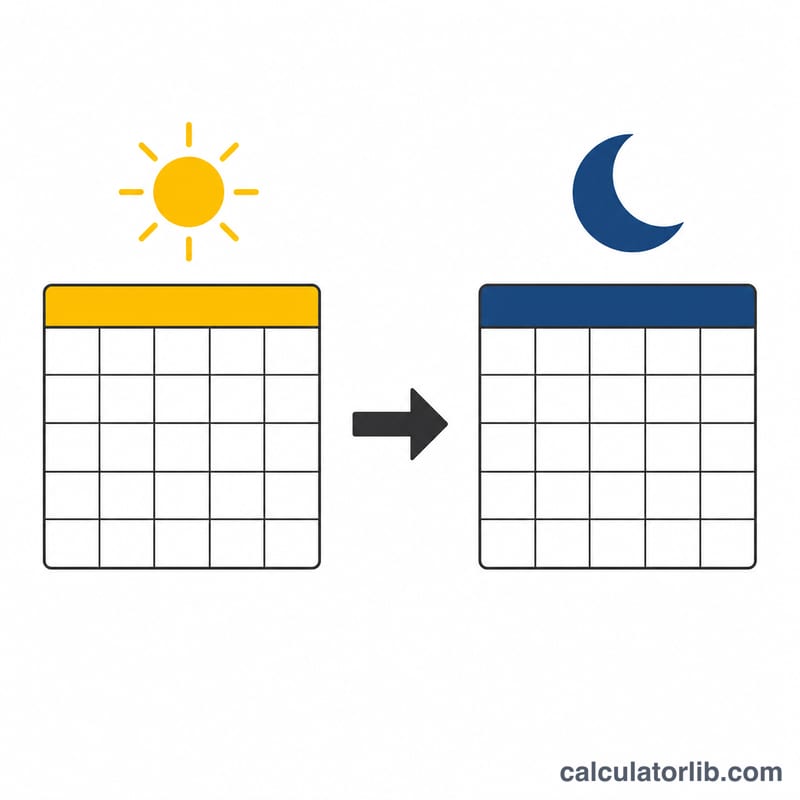
This tool converts any standard (Gregorian) calendar date into its equivalent date on the traditional Chinese lunar calendar. It is built on the ICU ChineseCalendar engine, so the results reflect the real Chinese lunisolar system used across China, Taiwan, Hong Kong, Singapore and many overseas Chinese communities for festivals such as Lunar New Year, the Lantern Festival and the Mid-Autumn Festival.
For each conversion the calculator returns the lunar year, the lunar month, the lunar day, the 60-year cyclical (stem–branch) year name in Chinese characters, the corresponding zodiac animal, and the current solar term.
How to use it
There is a single input field:
- Gregorian Date — pick or type the everyday calendar date you want to convert (format YYYY-MM-DD).
Submit it and the converter instantly displays the matching lunar year, month and day, the cyclical year (e.g. 甲辰), the zodiac animal, and the solar term that period falls in.
The formula behind it
The date is loaded into a ChineseCalendar set to the China locale. The lunar year is derived from the calendar's extended year minus 2637, which aligns the ICU epoch with the traditional Chinese year count. That year number then drives two lookups:
- Cyclical year = Heavenly Stem[(year − 1) mod 10] + Earthly Branch[(year − 1) mod 12].
- Zodiac animal = animal list[(year − 1) mod 12] (Rat, Ox, Tiger … Pig).
The lunar month and day come directly from the calendar; if the month is a leap month it is labelled "Leap" plus the preceding month number, since lunar years occasionally insert an extra month.
Worked example
Enter 2024-02-10. The converter calculates lunar year 4661, lunar month 1, lunar day 1 — meaning this Gregorian date is the very first day of the first lunar month, i.e. Chinese New Year's Day. The cyclical year shows 甲辰 and the zodiac animal is Dragon, with the solar term around "Beginning of Spring".
Frequently Asked Questions
How do I convert a Gregorian date to a lunar date?
Enter any Gregorian (Western) calendar date — day, month and year — into the converter and it instantly returns the matching lunar date, including the lunar month, day, and the cyclical year name. The tool handles leap months automatically, so you don't need any tables or manual calculation.
How do I find my lunar birthday?
Type your Gregorian date of birth into the converter to see the lunar month and day you were born on. Many people use this to celebrate birthdays by the traditional lunar date, which falls on a different Gregorian day each year because lunar and solar calendars drift apart.
Why doesn't every lunar month have the same length?
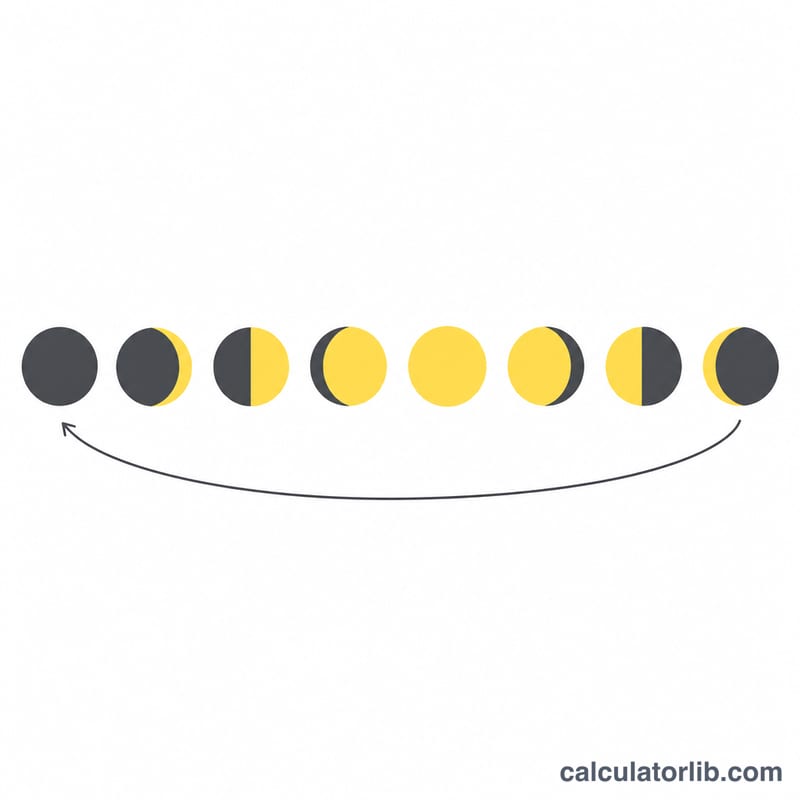
Lunar months track the moon's cycle of about 29.5 days, so each month runs either 29 or 30 days. To keep the calendar aligned with the solar year and seasons, an extra leap month is added roughly every three years, giving some lunar years 13 months instead of 12.
How is the lunar conversion calculated?
There is no simple arithmetic formula. The lunar calendar is astronomical, based on actual new moons and the sun's position. Converters rely on precomputed astronomical tables that record the start date and length of each lunar month, then map a Gregorian date onto the correct lunar month and day.
What is the cyclical year, such as 甲辰?
It pairs one of 10 Heavenly Stems with one of 12 Earthly Branches to form a repeating 60-year cycle used in traditional Chinese dating and astrology. Each year also links to a zodiac animal, so 甲辰 corresponds to a Year of the Dragon.
Can I use it to find Chinese New Year or check 2026 dates?
Yes. When the result shows lunar month 1, day 1, that Gregorian date is Lunar New Year for that year. You can convert any date in 2026 or other years to plan festivals, anniversaries and traditional celebrations accurately.