
What Is the Vegetable Yield Calculator?
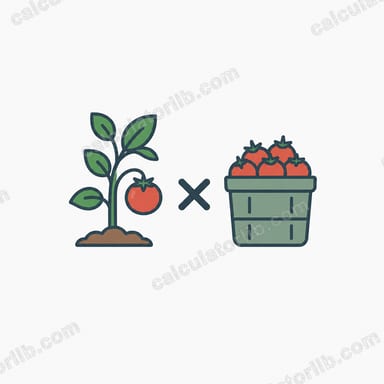
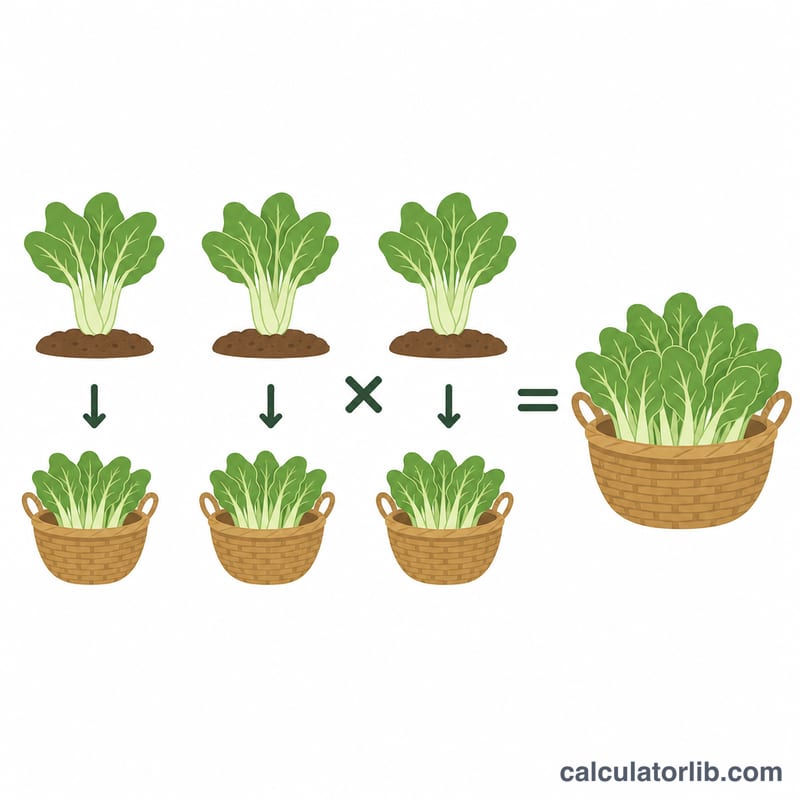
The Vegetable Yield Calculator helps gardeners and small-scale growers estimate how much produce a crop will deliver before harvest. By multiplying the number of plants you have by the average yield each plant produces, you get a quick projection of your total harvest. This is useful for meal planning, sizing your garden, deciding how much to preserve or sell, and comparing the productivity of different varieties.
How to Use It
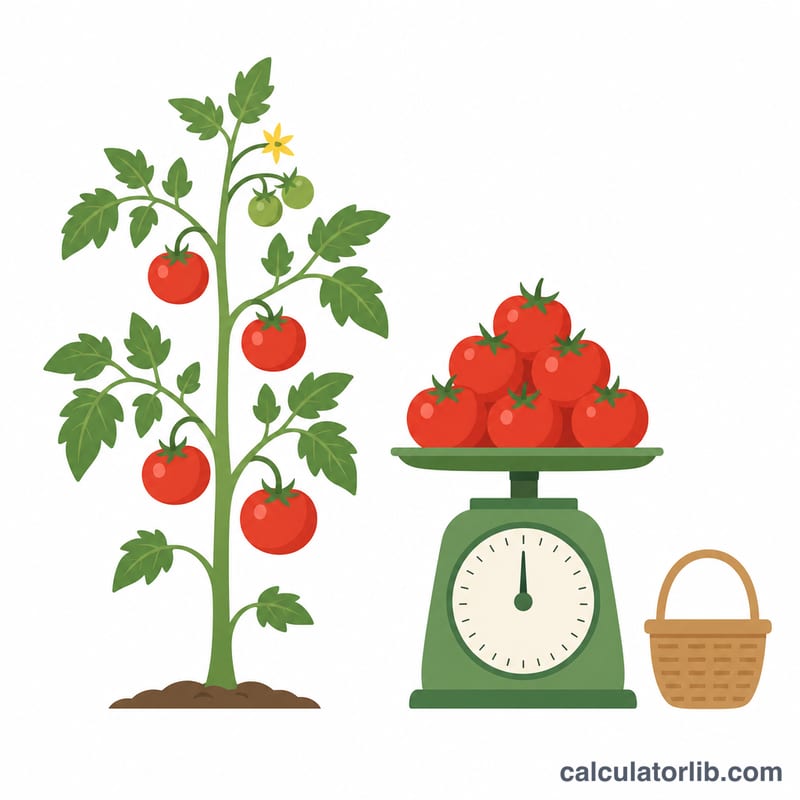
Enter two values: the number of plants you are growing and the average yield per plant in kilograms. The average yield depends on the crop and growing conditions — seed packets, extension guides, or your own past records are good sources. For example, a healthy tomato plant might produce 4–5 kg, while a lettuce head yields under 0.5 kg. Press calculate to see your estimated total harvest.
The Formula Explained
The math is simple: $$\text{Total Yield} = \text{Number of Plants} \times \text{Average Yield per Plant}$$ If you grow 20 tomato plants and each yields about 4.5 kg, your total estimated harvest is \(20 \times 4.5 = 90\) kg. The result is an average projection; actual output varies with weather, soil fertility, pests, and care.
Worked Example
Suppose you plant 12 zucchini plants and expect an average of 3 kg per plant. $$\text{Total Yield} = 12 \times 3 = 36 \text{ kg}$$ That tells you to plan storage, sharing, or sales for roughly 36 kg of zucchini over the season.
FAQ
Where do I find the average yield per plant? Check seed packets, local agricultural extension data, or track your own harvest weights from previous seasons for the most accurate figure.
Why is my actual harvest different? Yield estimates assume average conditions. Drought, disease, poor pollination, or excellent care can push your real numbers up or down significantly.
Can I use this for any crop? Yes — it works for any plant as long as you supply a realistic average yield per plant for that crop and variety.