
What is WPI (Wraps Per Inch)?
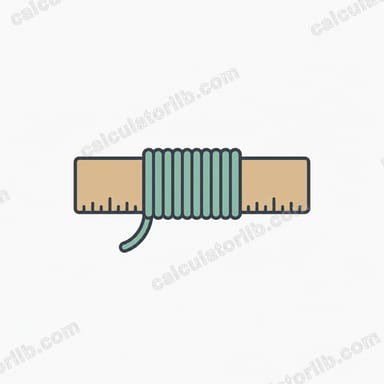
Wraps per inch (WPI) is a simple, ruler-and-pencil method knitters, crocheters, and weavers use to identify an unlabeled yarn's weight. You wrap the yarn snugly (without stretching) around a ruler or pencil, count how many wraps fit within a measured span, and divide by that length. The result places your yarn into a standard weight category — from delicate lace to chunky super bulky.
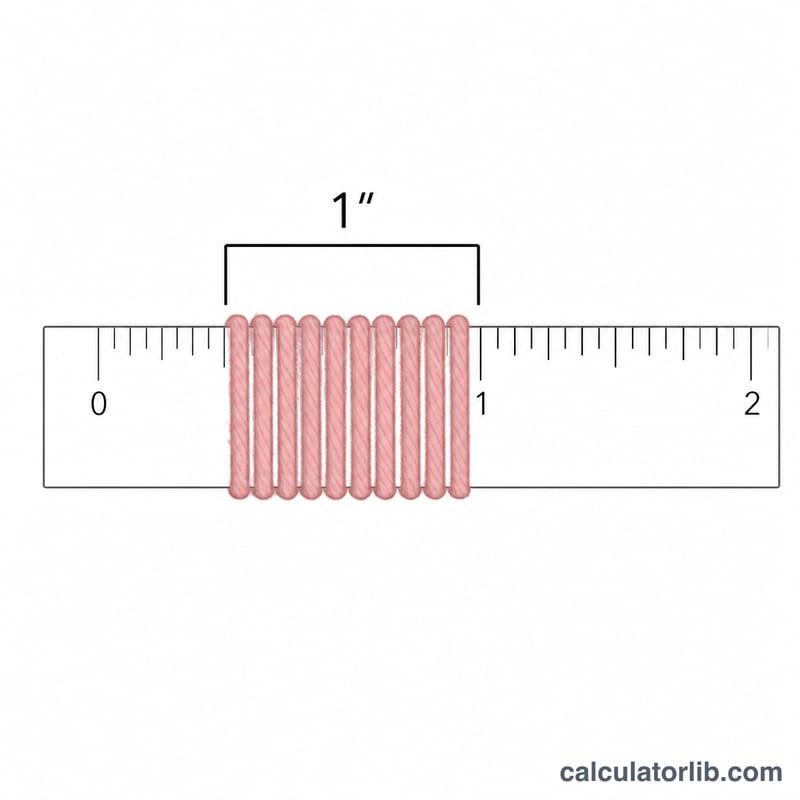
How to use this calculator
Wrap your yarn around a ruler so the strands sit side by side, just touching but not overlapping or squished. Count the number of wraps over a known distance (1 inch is typical, but a 2- or 4-inch span averages out unevenness). Enter the number of wraps and the measured length in inches, then read off your WPI and matching yarn weight category.
The formula explained
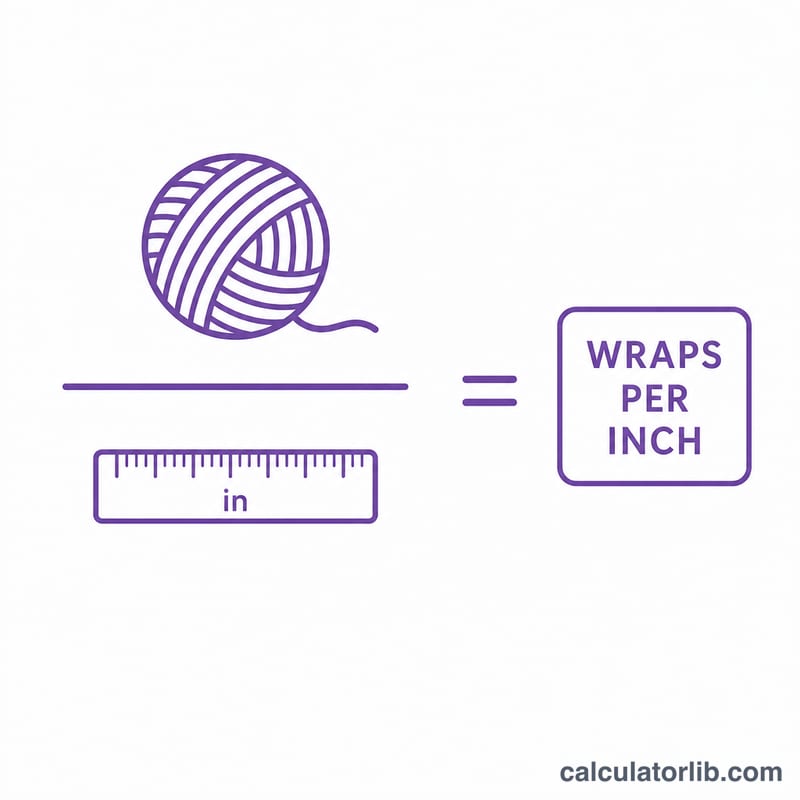
The math is just a rate: $$\text{WPI} = \frac{\text{Number of wraps}}{\text{Measured length (in)}}$$ Measuring over a longer span and dividing gives a more reliable figure because a single inch can be thrown off by one thick or thin spot. This calculator then maps the WPI to common categories: ~18+ lace, 14–18 fingering, 12–14 DK, 9–12 worsted/aran, 7–9 bulky, and under 7 super bulky or jumbo.
Worked example
Suppose you wrap a mystery yarn and fit 24 wraps over 2 inches. $$\text{WPI} = 24 \div 2 = 12 \text{ WPI}$$ which falls into the DK / Light Worsted range — perfect for a lightweight sweater on US 6 needles.
FAQ
How tight should I wrap? Snug enough that strands touch, but never stretched — stretching thins the yarn and inflates your WPI.
Why measure over more than one inch? Averaging over 2–4 inches smooths out lumpy or fuzzy yarns for a more accurate reading.
Are the categories exact? WPI thresholds are guidelines; gauge swatches and the pattern's recommendation always take final priority.