
What This Calculator Does
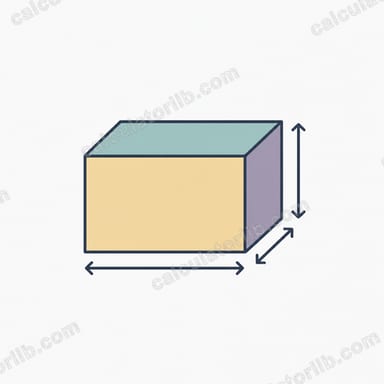
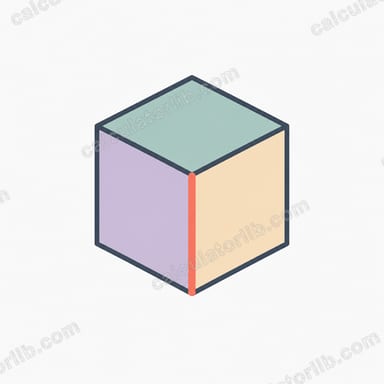
The Resin Mold Volume Calculator tells you how much casting resin you need to fill a rectangular (cuboid) mold. Enter the inside length, width and depth of the cavity, choose how full you want it, and the tool returns the volume in milliliters and liters plus the approximate resin weight in grams. This helps you mix the right amount so you avoid waste or coming up short mid-pour.
How to Use It
Measure the inside dimensions of your mold in centimeters. Enter Length, Width and Height/Depth. Set Fill Level to 100% for a full pour, or lower if you only want a partial fill (for example a coaster base). The Resin Density field defaults to 1.1 g/mL, which is typical for epoxy resin; polyester and UV resins are similar. Adjust it if your resin's data sheet lists a different value. Click calculate to see volume and weight.
The Formula Explained
Because 1 cm³ equals exactly 1 milliliter, the volume of a box-shaped cavity is simply length × width × height in centimeters. We multiply by the fill fraction (fill% ÷ 100) to account for partial pours. Mass is then volume × density: resin_g = volume_ml × density. Two pigments or fillers can change density slightly, so treat weight as an estimate.
$$\text{Resin (g)} = \text{Length} \times \text{Width} \times \text{Height} \times \frac{\text{Fill \%}}{100} \times \text{Density}$$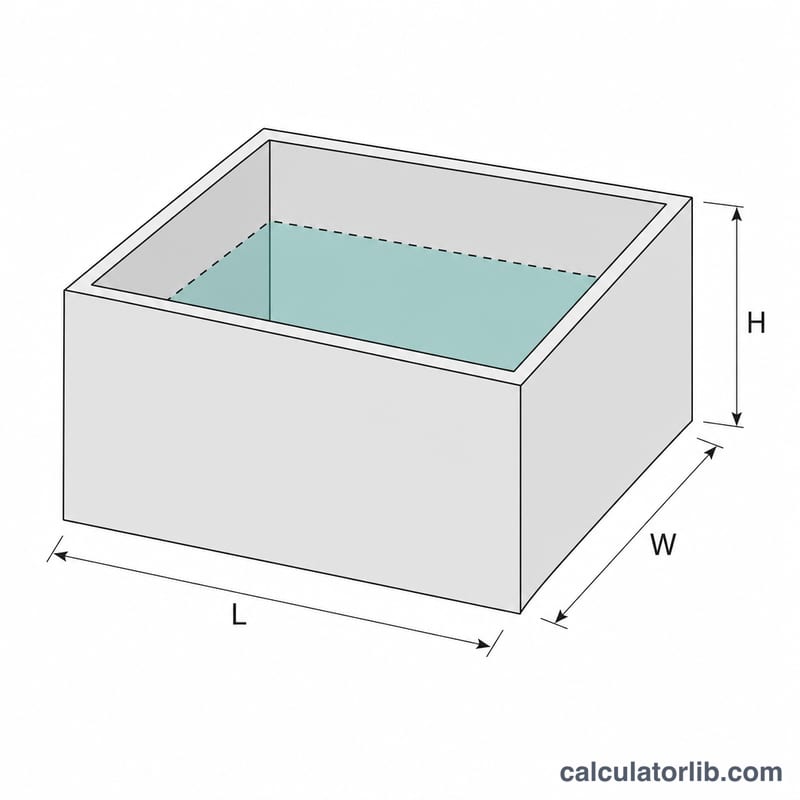
Worked Example
A tray mold is 20 cm long, 15 cm wide and 2 cm deep, filled to 100% with epoxy at 1.1 g/mL. Volume = \(20 \times 15 \times 2 \times 1.0 = 600\) mL (0.6 L). Resin weight = \(600 \times 1.1 = 660\) g. So you would mix about 660 g of total resin + hardener.
$$V = 20 \times 15 \times 2 \times 1.0 = 600 \text{ mL} \;(0.6 \text{ L})$$$$\text{Resin (g)} = 600 \times 1.1 = 660 \text{ g}$$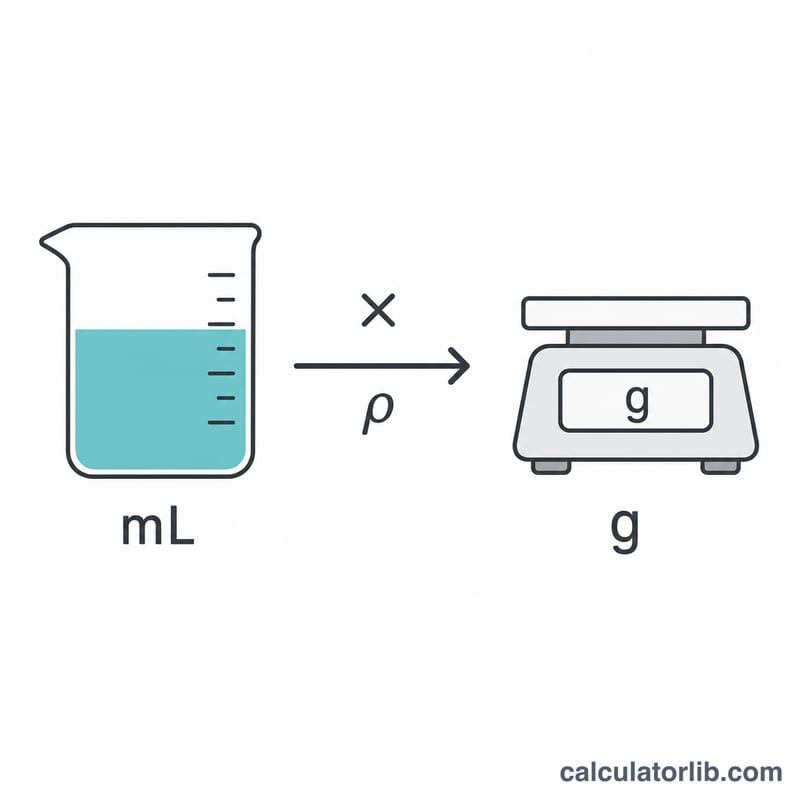
FAQ
My mold isn't rectangular — can I still use this? For irregular shapes, approximate with the bounding box or fill the mold with water, then measure that water's volume in mL.
Should I mix extra? Yes — adding roughly 5–10% extra accounts for resin clinging to the mixing cup.
What density should I use? Most epoxy casting resins are 1.0–1.2 g/mL; check your product's technical data sheet for an exact figure.