
What Is the Albumin/Globulin (A/G) Ratio?
The albumin/globulin ratio compares the amount of albumin to the amount of globulin in your blood. Both are proteins measured in a standard total protein blood test. Albumin is produced by the liver and helps maintain fluid balance, while globulins include antibodies and transport proteins. The A/G ratio is a useful screening figure that can hint at liver, kidney, immune, or nutritional issues when it falls outside the typical range.
How to Use This Calculator
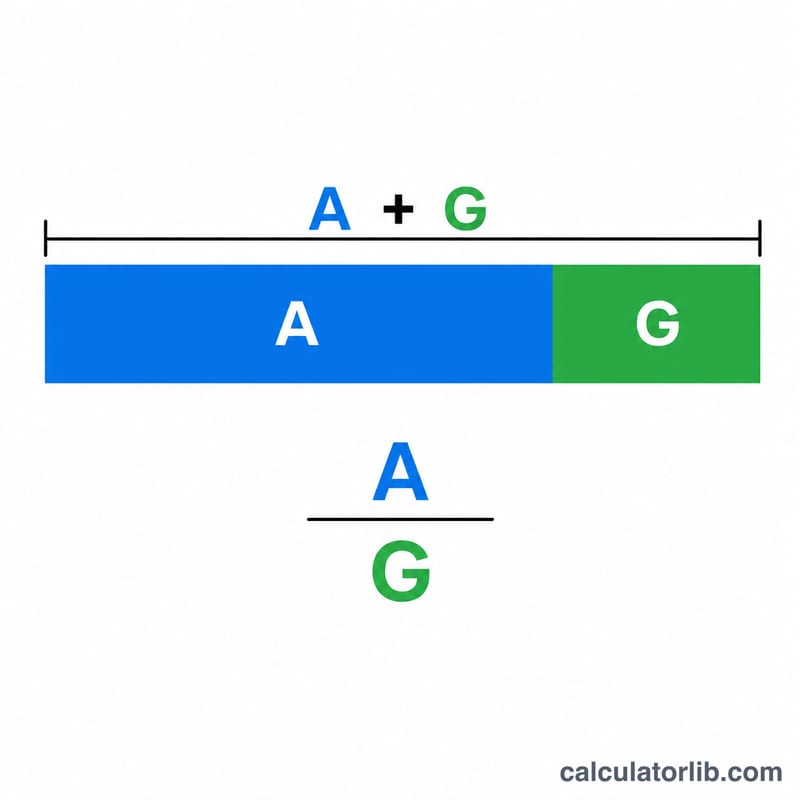
Enter your albumin value and your total protein value, both in g/dL (the units used on most lab reports). The calculator first computes globulin by subtracting albumin from total protein, then divides albumin by globulin to give the A/G ratio. A normal A/G ratio is usually between roughly 1.1 and 2.5, though reference ranges vary by lab.
The Formula Explained
The relationship is: $$\text{globulin} = \text{total protein} - \text{albumin}$$ and $$\text{A/G ratio} = \dfrac{\text{albumin}}{\text{globulin}}$$ Because globulin is not measured directly on many panels, it is calculated from the two reported numbers, which is exactly what this tool does.
Worked Example
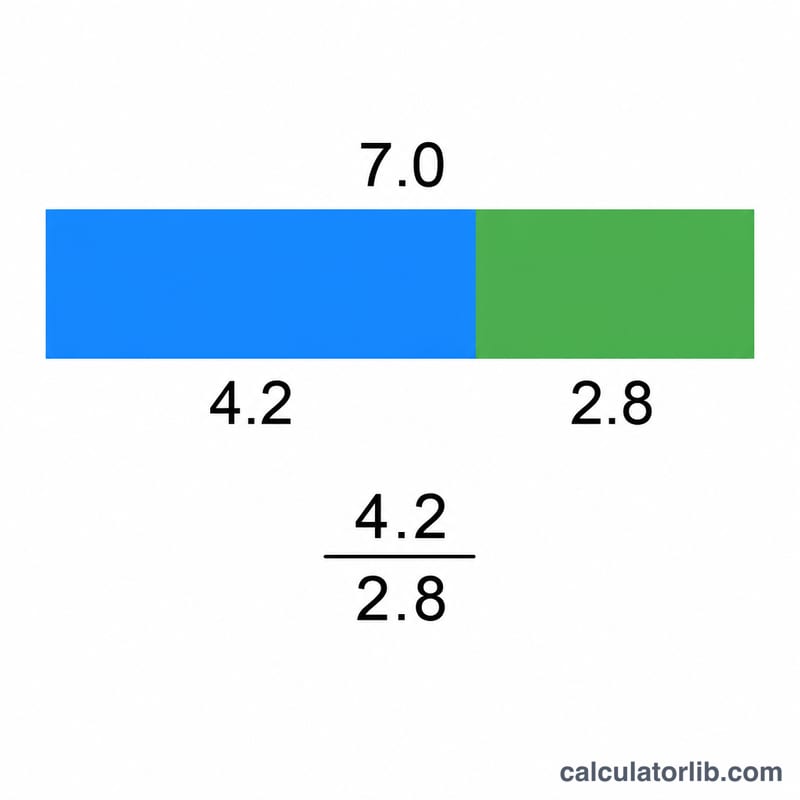
Suppose your lab report shows albumin = 4.0 g/dL and total protein = 7.0 g/dL. $$\text{Globulin} = 7.0 - 4.0 = 3.0 \text{ g/dL}$$ $$\text{A/G ratio} = 4.0 \div 3.0 = 1.33$$ This sits comfortably within the normal range.
Interpreting Your A/G Ratio Result
The albumin/globulin (A/G) ratio compares the amount of albumin in your blood to the amount of globulin. Globulin is not measured directly in this calculation; instead it is derived by subtracting albumin from total protein:
$$\text{Globulin} = \text{Total Protein} - \text{Albumin}$$The A/G ratio is then the albumin divided by that calculated globulin value. Because both numbers come from a single comprehensive metabolic panel, the ratio is a useful screening clue rather than a stand-alone diagnosis.
Normal A/G ratio (roughly 1.1 to 2.5): Most healthy adults have slightly more albumin than globulin, so the ratio is normally a little above 1. A result in this band generally indicates a typical balance between the two protein fractions.
Low A/G ratio (below about 1.1): A low ratio can result from decreased albumin—seen in liver disease (the liver makes albumin), kidney disease (protein lost in urine, as in nephrotic syndrome), malnutrition, or chronic inflammation—or from increased globulin, which may accompany chronic infection, chronic inflammatory or autoimmune disease, and certain plasma-cell disorders such as multiple myeloma. A low ratio is a flag to investigate which protein fraction is responsible.
High A/G ratio (above about 2.5): A high ratio usually reflects relatively low globulin (underproduction of immunoglobulins) and is less common. It can be associated with certain immune deficiencies and some leukemias. It may also appear when globulin is genetically low.
Reference ranges and the exact cut-offs vary between laboratories and the analytical methods used, so always interpret your number against the range printed on your own lab report. An abnormal A/G ratio is not itself a diagnosis—it is one piece of information that a clinician evaluates alongside your history, symptoms, and follow-up tests (such as serum protein electrophoresis) to identify a cause.
This is general educational information, not medical advice. Discuss your individual results with a qualified healthcare professional.
A/G Ratio Reference Ranges
The table below shows commonly cited interpretation bands for the calculated A/G ratio, followed by typical adult reference ranges for the inputs used to derive it. Exact ranges depend on the laboratory and assay, so compare against your own report.
| A/G ratio band | General interpretation |
|---|---|
| Below ~1.0 | Low — investigate decreased albumin or increased globulin |
| ~1.1 – 2.5 | Normal range for most healthy adults |
| Above ~2.5 | High — often relatively low globulin |
Typical Adult Reference Values
| Component | Typical reference range | Notes |
|---|---|---|
| Albumin | 3.4 – 5.4 g/dL | Measured directly; main protein made by the liver |
| Total protein | 6.0 – 8.3 g/dL | Measured directly; albumin + all globulins |
| Globulin (calculated) | 2.0 – 3.5 g/dL | Total protein − albumin |
Worked example: with an albumin of 4.0 g/dL and a total protein of 7.0 g/dL, globulin is \(7.0 - 4.0 = 3.0\) g/dL, giving an A/G ratio of \(4.0 \div 3.0 = \) 1.33, which falls within the normal band.
Note: reference ranges vary by laboratory, equipment, and patient age; values for children and pregnancy can differ from the adult ranges shown.
FAQ
What is a normal A/G ratio? Most labs consider about 1.1 to 2.5 normal, but always compare against your own report's reference range.
What does a low A/G ratio mean? A low ratio may suggest reduced albumin (liver disease, kidney loss, malnutrition) or increased globulin (chronic inflammation, infection, or certain cancers). Discuss results with a clinician.
Why isn't globulin on my report? Many panels report only albumin and total protein; globulin and the A/G ratio are derived from those two values, just as this calculator does.