

What Is the Bonus After-Tax Take-Home Calculator?
This tool estimates how much of a bonus you actually keep after a flat tax withholding rate is applied. In the United States, employers commonly withhold supplemental wages such as bonuses at a flat federal rate (22% for amounts up to $1 million under current IRS rules). This calculator uses a simple flat-rate model so you can quickly see your net take-home amount. Note: it does not include state taxes, Social Security, Medicare, or other deductions unless you fold them into the rate you enter.
How to Use It
Enter your gross bonus amount and the flat tax withholding rate as a percentage. The calculator instantly returns your net (take-home) bonus, the amount withheld for tax, and a summary of your inputs. To approximate total withholding, add federal, state, and payroll tax percentages together into a single rate.
The Formula Explained
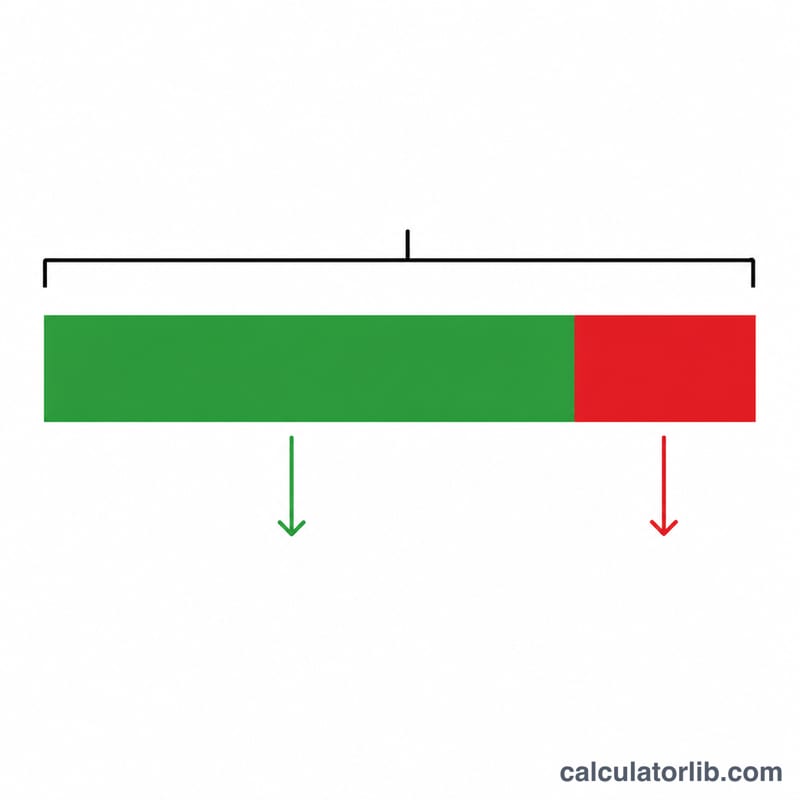
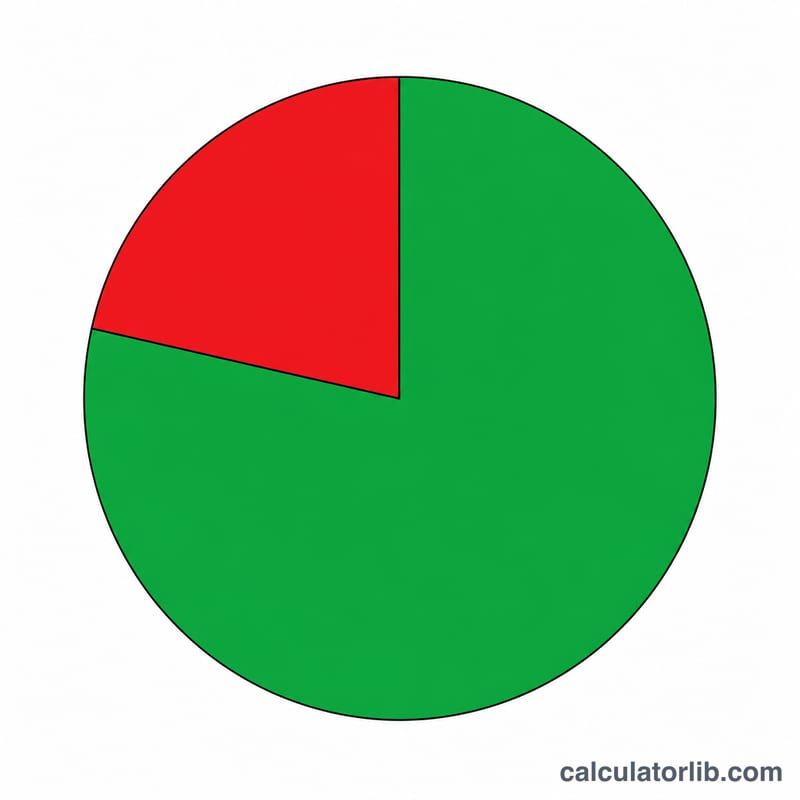
The math is straightforward: $$\text{Net Bonus} = \text{Gross Bonus} \times \left(1 - \frac{\text{Flat Tax Rate}}{100}\right)$$ The tax withheld equals \(\text{Gross Bonus} \times \frac{\text{Flat Tax Rate}}{100}\). For example, a 22% rate means 78% of the bonus reaches your pocket.
Worked Example
Suppose you receive a $5,000 bonus and your employer withholds at the IRS flat supplemental rate of 22%. Tax withheld $$= \$5{,}000 \times 0.22 = \$1{,}100.$$ Net bonus $$= \$5{,}000 - \$1{,}100 = \$3{,}900.$$ So you take home $3,900.
Bonus Take-Home Across Common Withholding Rates
The table below shows how much of a bonus you keep after a flat (supplemental) withholding rate is applied. Net take-home is calculated as:
$$\text{Net Bonus} = \text{Gross Bonus} \times \left(1 - \frac{\text{Rate}}{100}\right)$$The 22% rate is the IRS standard flat rate for supplemental wages up to $1 million; higher rates illustrate what happens when an employer aggregates the bonus with regular wages or applies a higher withholding figure. These are withholding estimates, not your final tax liability.
| Gross Bonus | 22% — Tax / Net | 27% — Tax / Net | 32% — Tax / Net | 37% — Tax / Net |
|---|---|---|---|---|
| $1,000 | $220 / $780 | $270 / $730 | $320 / $680 | $370 / $630 |
| $5,000 | $1,100 / $3,900 | $1,350 / $3,650 | $1,600 / $3,400 | $1,850 / $3,150 |
| $10,000 | $2,200 / $7,800 | $2,700 / $7,300 | $3,200 / $6,800 | $3,700 / $6,300 |
Remember that Social Security and Medicare (FICA) are also withheld from bonuses on top of income tax withholding, so an actual paycheck may show slightly less than the figures above. Any over-withholding is reconciled when you file your annual tax return.
IRS Supplemental Withholding Reference Rates
A bonus is classified as supplemental wages by the IRS. When paid separately from regular wages, employers commonly withhold federal income tax at a flat percentage. The table summarizes the standard withholding components for U.S. employees.
| Component | Withholding Rate | Applies To |
|---|---|---|
| Federal supplemental income tax | 22% | Supplemental wages up to $1,000,000 in a calendar year |
| Federal supplemental income tax | 37% | Portion of supplemental wages exceeding $1,000,000 |
| Social Security (OASDI) | 6.2% | Wages up to the annual Social Security wage base |
| Medicare | 1.45% | All wages (no wage cap) |
| Additional Medicare | +0.9% | Wages above the applicable threshold (e.g. $200,000 single) |
Important: These percentages are withholding figures — the amounts an employer sets aside from your pay. They are not your final tax owed. State and local income tax withholding may also apply and varies by jurisdiction. Your actual tax liability is determined when you file your annual federal and state returns, and excess withholding is refunded.
Key Terms Explained
- Gross bonus
- The full pre-tax bonus amount your employer awards before any income tax or FICA withholding is deducted.
- Net (take-home) bonus
- The amount you actually receive after withholding is subtracted from the gross bonus — what lands in your bank account.
- Flat / supplemental withholding rate
- A fixed percentage applied to supplemental wages such as bonuses. The IRS standard flat federal rate is 22% (rising to 37% on supplemental pay above $1 million per year).
- Tax withheld
- The dollar amount removed from your bonus and sent to tax authorities on your behalf. It is calculated as gross bonus multiplied by the withholding rate.
- Effective tax rate
- The actual percentage of your total income paid in tax once your annual return is filed — it blends all brackets and credits and is often different from the flat withholding rate applied to a bonus.
- Supplemental wages
- Compensation paid in addition to regular wages, including bonuses, commissions, overtime, severance, and certain back pay. The IRS allows employers to withhold on these at the flat supplemental rate or by aggregating them with regular wages.
FAQ
Is the 22% rate always correct? The IRS flat supplemental withholding rate is 22% for bonuses up to $1 million, and 37% on amounts above that. This is withholding, not your final tax bill — your actual liability is settled when you file your return.
Does this include state taxes? No. To estimate total withholding, add your state and local rates to the percentage you enter.
Why is my withholding higher than my real tax rate? Flat supplemental withholding can exceed your effective rate. Any over-withholding is typically refunded when you file your annual tax return.