

What Is the Take-Home Pay Percentage?
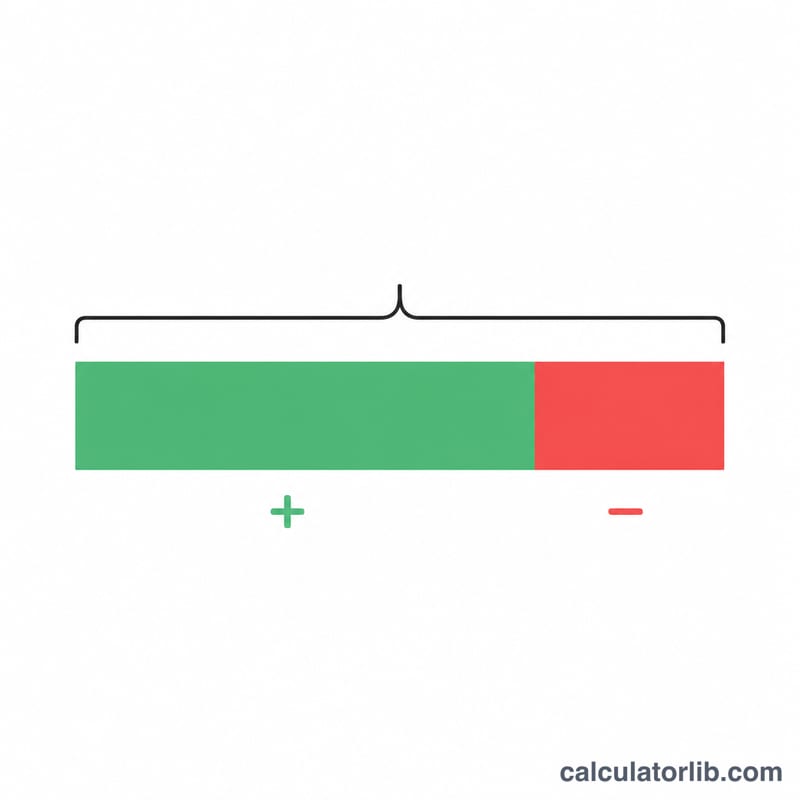
Your take-home pay percentage tells you how much of every dollar you earn actually lands in your pocket after taxes, insurance, retirement contributions, and other payroll deductions are removed. It's one of the clearest ways to understand the gap between your headline salary (gross pay) and your spendable income (net pay). This calculator works for any currency and any pay period — weekly, bi-weekly, monthly, or annual — as long as both numbers cover the same period.
How to Use It
Enter your gross pay (the total before any deductions) and your net pay (the amount deposited into your account). The calculator instantly returns the percentage you keep, the total amount deducted, and the percentage lost to deductions. Use figures from the same paycheck so the comparison is meaningful.
The Formula Explained
The math is simple division turned into a percentage:
$$\text{Take-Home \%} = \frac{\text{Net Pay}}{\text{Gross Pay}} \times 100$$
Dividing net by gross gives the fraction kept; multiplying by 100 converts it to a percentage. The remainder — 100% minus your take-home percentage — represents everything withheld from your check.
Worked Example
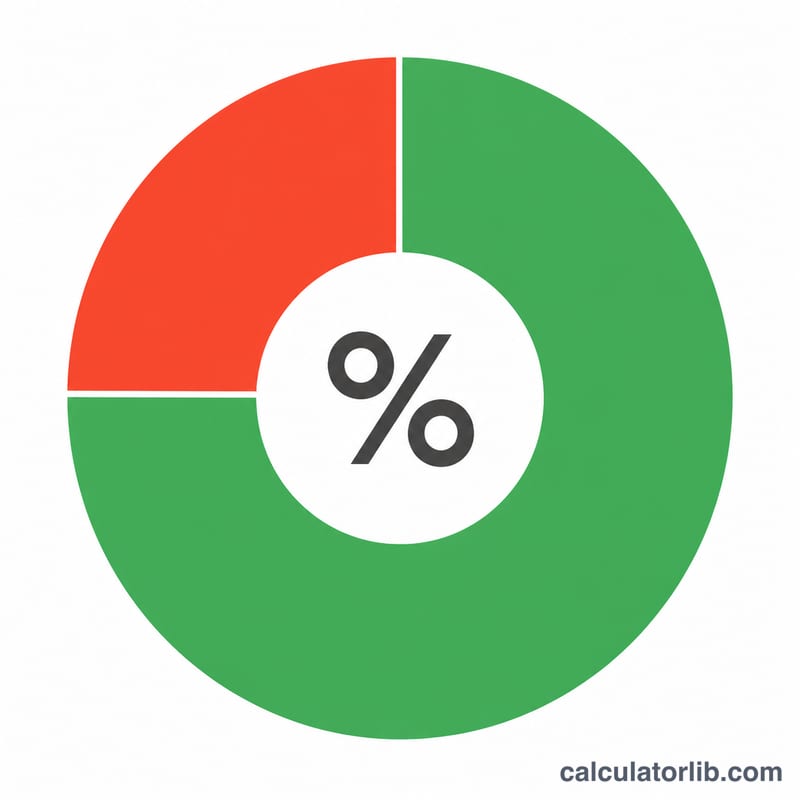
Suppose your gross monthly pay is 5,000 and your net deposit is 3,800. $$\text{Take-Home \%} = \frac{3{,}800}{5{,}000} \times 100 = 76\%$$ Your total deductions are \(5{,}000 - 3{,}800 = 1{,}200\), which is 24% of gross pay. So you keep 76 cents of every dollar earned.
FAQ
What's a normal take-home percentage? It varies widely by country, income, and benefits, but many workers keep roughly 65%–85% of gross pay after taxes and standard deductions.
Can I use annual figures? Yes — any matching period works. Just make sure gross and net cover the same span of time.
Why is my percentage lower than expected? Voluntary deductions like retirement plans, health premiums, and HSA contributions reduce net pay but are still money you've saved or spent on benefits, not lost.