
What is the CDN Bandwidth Cost Calculator?
A Content Delivery Network (CDN) caches and serves your website's static assets — images, video, JavaScript, CSS — from edge locations close to your users. Most CDN providers bill on two metrics: data transfer (measured in gigabytes egressed) and HTTP/HTTPS requests (often priced per million). This calculator combines both into a single estimated monthly bill and projects an annual figure so you can budget accurately and compare providers.
How to use it
Enter your expected monthly outbound traffic in GB, the provider's price per GB, the number of requests in millions, and the price per million requests. The calculator multiplies each component and adds them together. Pricing varies by provider and region — check your provider's pricing table (e.g. tiered or per-region rates) and use the rate that matches your traffic profile.
The formula explained
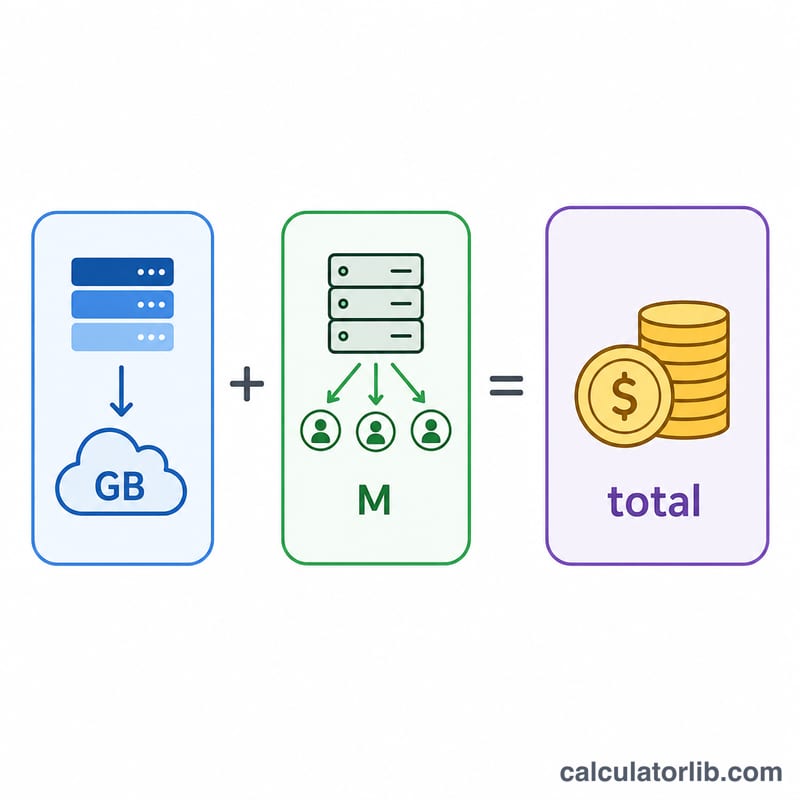
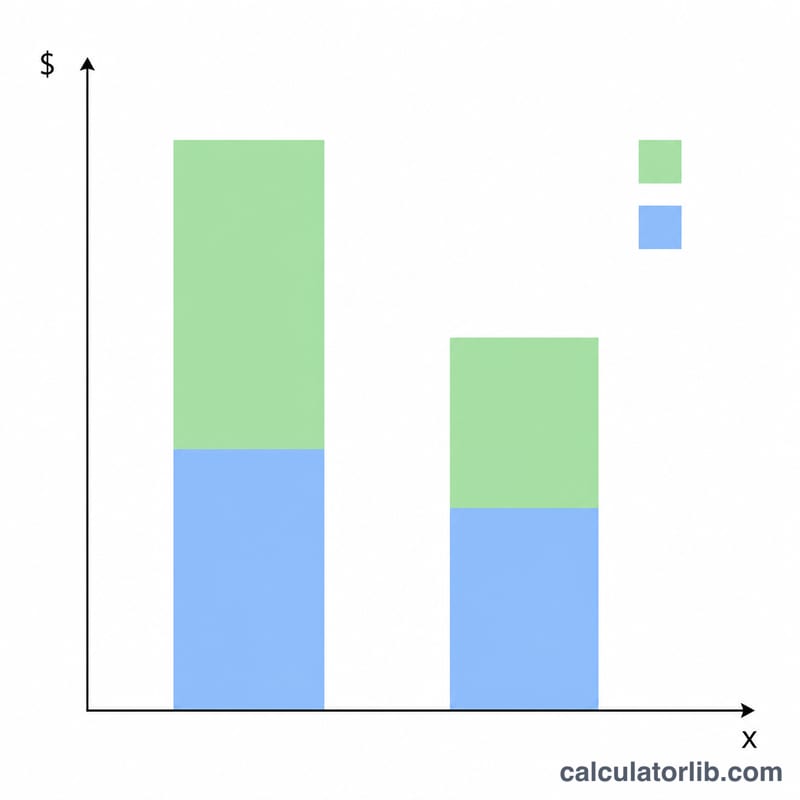
The cost model is straightforward: $$\text{cost} = (\text{monthlyTrafficGB} \times \text{pricePerGB}) + (\text{requestsMillions} \times \text{pricePerMillionRequests})$$ The first term is bandwidth cost, the second is request cost. The annual estimate simply multiplies the monthly total by 12. Note that some providers offer a free tier or volume discounts that this simple linear model does not capture.
Worked example
Suppose you serve 1,000 GB of traffic at $0.08/GB and handle 10 million requests at $0.75 per million. Bandwidth cost = \(1{,}000 \times 0.08 = \$80\). Request cost = \(10 \times 0.75 = \$7.50\). Total monthly cost = $87.50, and the annual estimate is $1,050.
FAQ
Why are requests priced separately? Each request consumes edge compute and connection resources, so providers charge for them independently of the bytes transferred.
Does this include the free tier? No. Many CDNs include a free monthly allowance — subtract that allowance from your traffic and requests before entering values for a more accurate estimate.
What about regional pricing? Egress rates differ by continent. If your audience is global, use a blended average rate or run the calculator once per region and sum the results.