
What Is the Concrete Volume Calculator?
This tool estimates how much concrete you need to pour a slab, footing, or pad. Enter the length and width in feet and the thickness in inches, and it returns the volume in cubic yards, cubic feet, and cubic meters — plus an estimate of how many 80 lb bags of premixed concrete the job requires. It is unit-friendly worldwide: dimensions are entered in standard US construction units, with a metric volume provided for convenience.
How to Use It
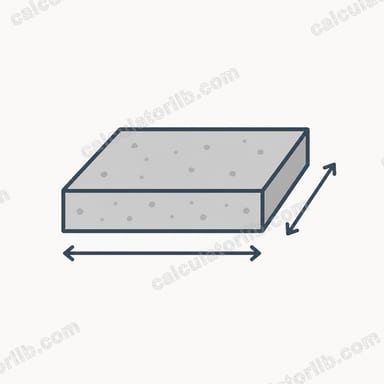
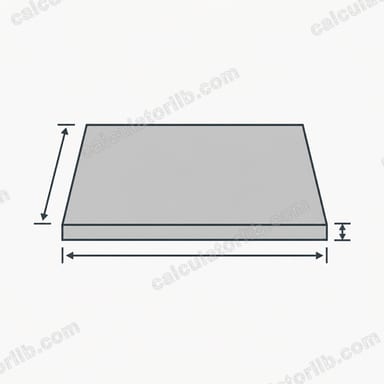
Measure the area to be filled. Enter the length and width in feet and the thickness (or depth) in inches. If you are pouring several identical slabs, set the number of slabs. The calculator multiplies the dimensions, converts thickness to feet, and totals the volume. Always order slightly more concrete than calculated — most pros add 5–10% for spillage and uneven subgrade.
The Formula Explained
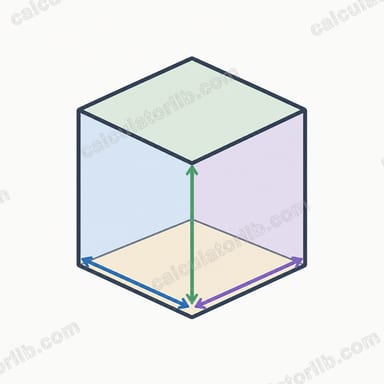
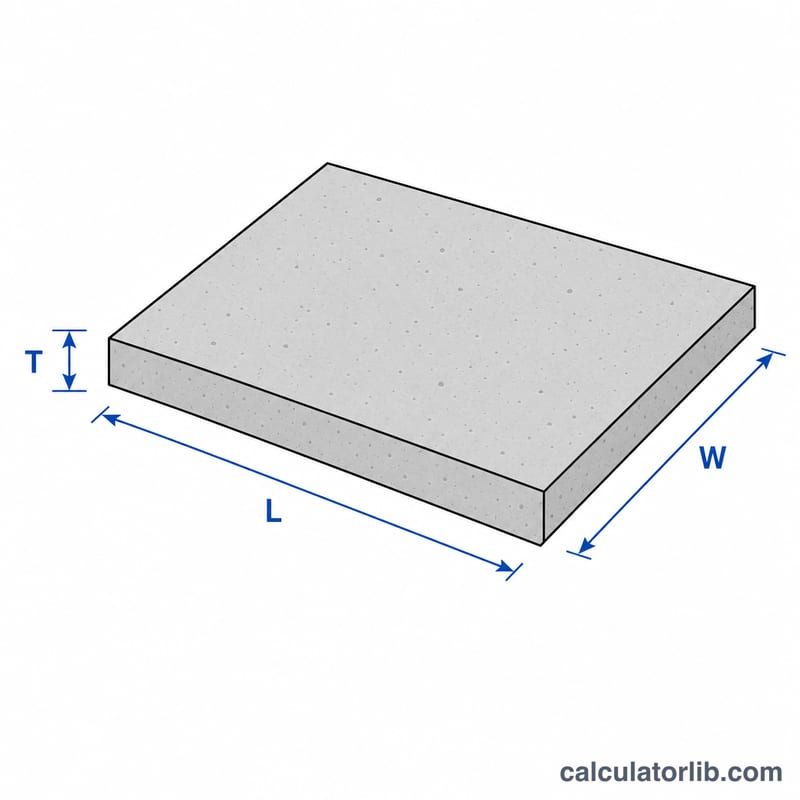
Concrete volume is simply length × width × thickness. Because thickness is usually measured in inches while length and width are in feet, we divide thickness by 12 to convert it to feet: $$V = L \times W \times \frac{T}{12}$$ The result is in cubic feet. Dividing by 27 converts cubic feet to cubic yards, the unit ready-mix suppliers use. One 80 lb bag yields roughly 0.6 cubic feet of mixed concrete.
Worked Example
Suppose you pour a 10 ft × 10 ft slab that is 4 inches thick. Thickness in feet is \(4 \div 12 = 0.3333\) ft. Volume = $$10 \times 10 \times 0.3333 = 33.33 \text{ cubic feet}$$ Dividing by 27 gives 1.23 cubic yards. At 0.6 cubic feet per 80 lb bag, that's about 56 bags — though for a slab this size ready-mix delivery is more practical.
FAQ
How much extra should I order? Add 5–10% to cover waste, spillage, and subgrade variation.
Why are bags rounded up? You cannot buy a fraction of a bag, so the count is rounded up to ensure you have enough.
What thickness should a driveway be? Residential driveways are typically 4 inches; heavier loads may call for 5–6 inches.