
What Is Cost Per Lead (CPL)?
Cost Per Lead (CPL) is a marketing metric that tells you how much you spend, on average, to generate a single lead. A lead is a potential customer who has expressed interest — by filling out a form, signing up for a newsletter, requesting a demo, or downloading content. CPL is one of the clearest ways to judge whether a campaign or channel is delivering value for the money you invest.
How to Use This Calculator
Enter your Total Marketing Spend for the period or campaign you want to evaluate, then enter the Number of Leads that spend generated. The calculator instantly divides the two to show your cost per lead. Compare this figure across channels (paid search, social, email) to see where your budget works hardest.
The Formula Explained
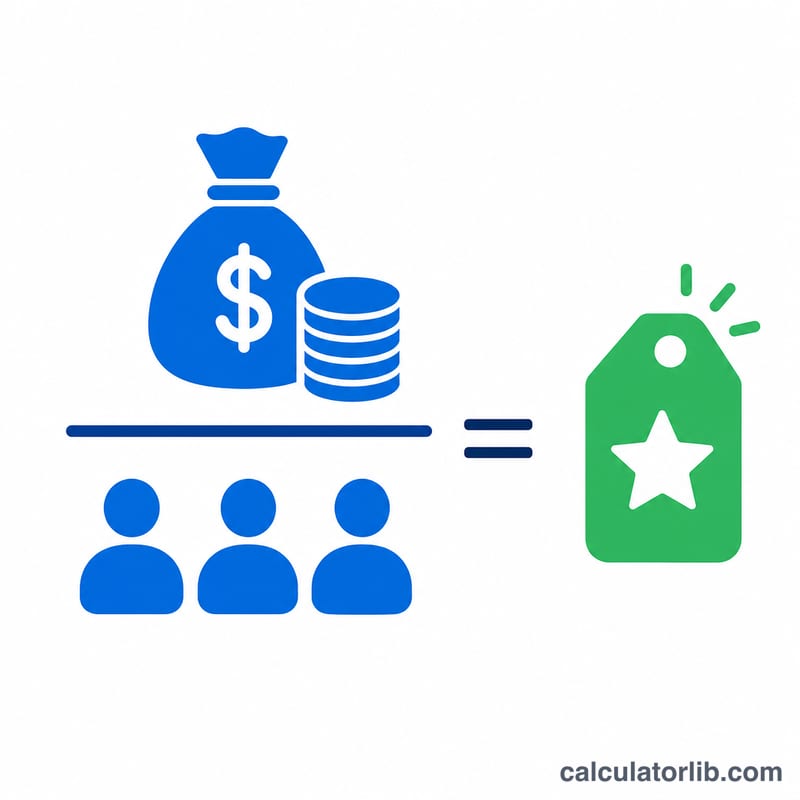
The math is simple:
$$\text{CPL} = \frac{\text{Total Marketing Spend (\$)}}{\text{Number of Leads}}$$
If you spent $5,000 on a campaign and it produced 200 leads, your CPL is \(\$5{,}000 \div 200 = \$25\) per lead. A lower CPL means you are acquiring interest more efficiently, but always weigh it against lead quality and eventual conversion rate.
Worked Example
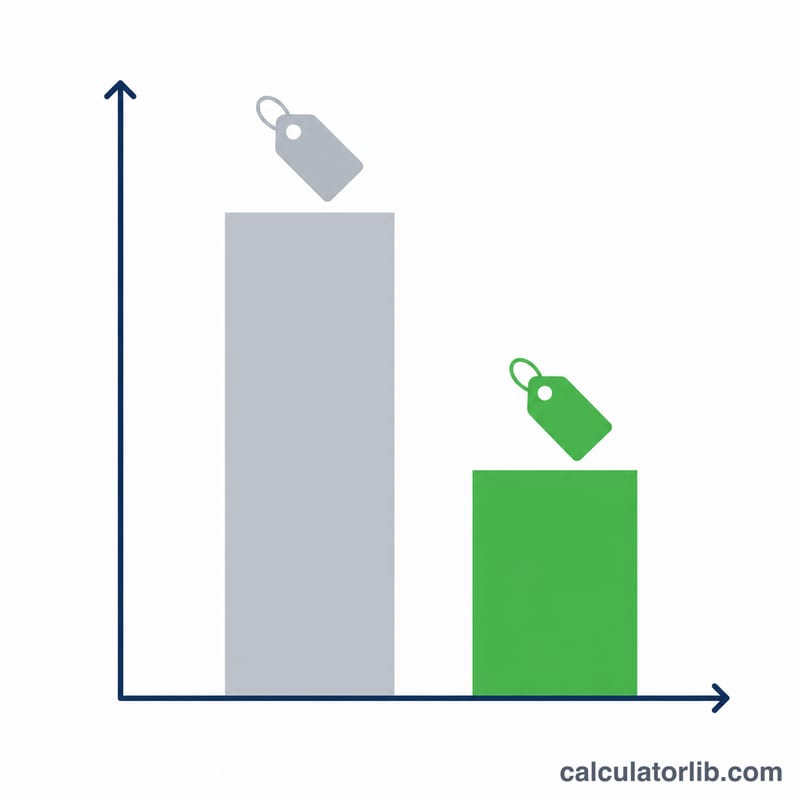
Suppose a SaaS company runs a LinkedIn campaign costing $8,000 that generates 320 leads. $$\text{CPL} = 8{,}000 \div 320 = \$25$$ If a separate Google Ads campaign costs $6,000 and yields 150 leads, its $$\text{CPL} = 6{,}000 \div 150 = \$40$$ LinkedIn is the more cost-effective channel here — assuming comparable lead quality.
FAQ
What is a good CPL? It varies widely by industry, channel, and product price. High-value B2B leads may justify a CPL of hundreds of dollars, while consumer offers may target a few dollars. Benchmark against your own historical data and customer lifetime value.
How is CPL different from CPA? CPL measures cost per lead (interest), while Cost Per Acquisition (CPA) measures cost per actual paying customer. CPA is always higher because not every lead converts.
How can I lower my CPL? Improve ad targeting, optimize landing pages, refine messaging, and pause underperforming channels so budget flows to the most efficient sources.