
What Is a Markdown Percentage?
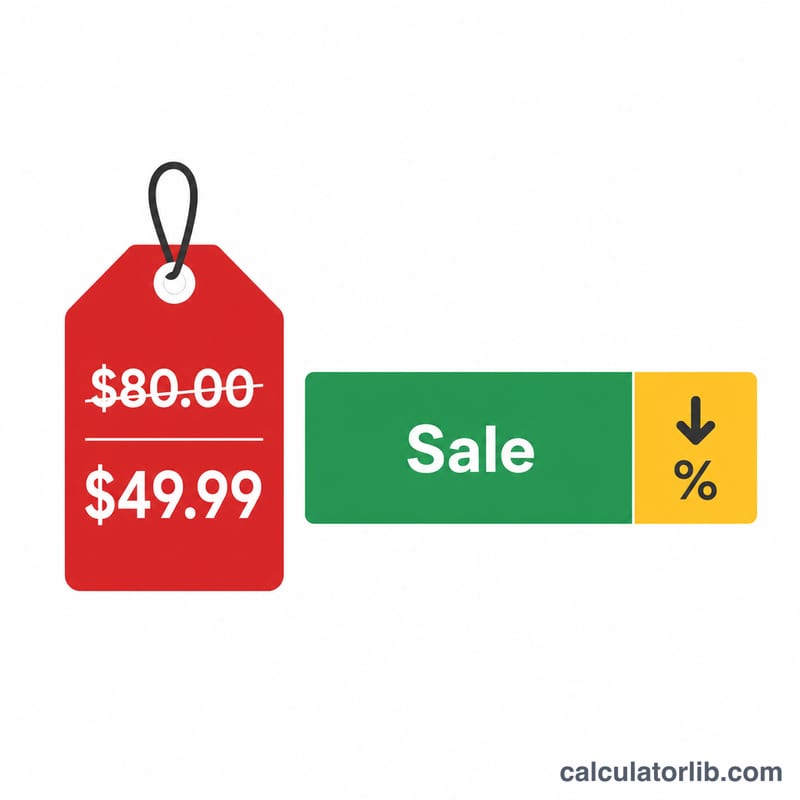
A markdown is a reduction from a product's original (or list) price. The markdown percentage expresses that reduction as a share of the original price, making it easy to compare deals regardless of the actual prices involved. Retailers use markdowns to clear inventory, run promotions, and drive sales, while shoppers use the markdown percentage to judge how good a discount really is.
How to Use This Calculator
Enter the original price (the price before the discount) and the sale price (the price after the discount). The calculator returns the markdown percentage, the amount off, and a summary of your inputs. It works with any currency since the result is a pure percentage.
The Formula Explained
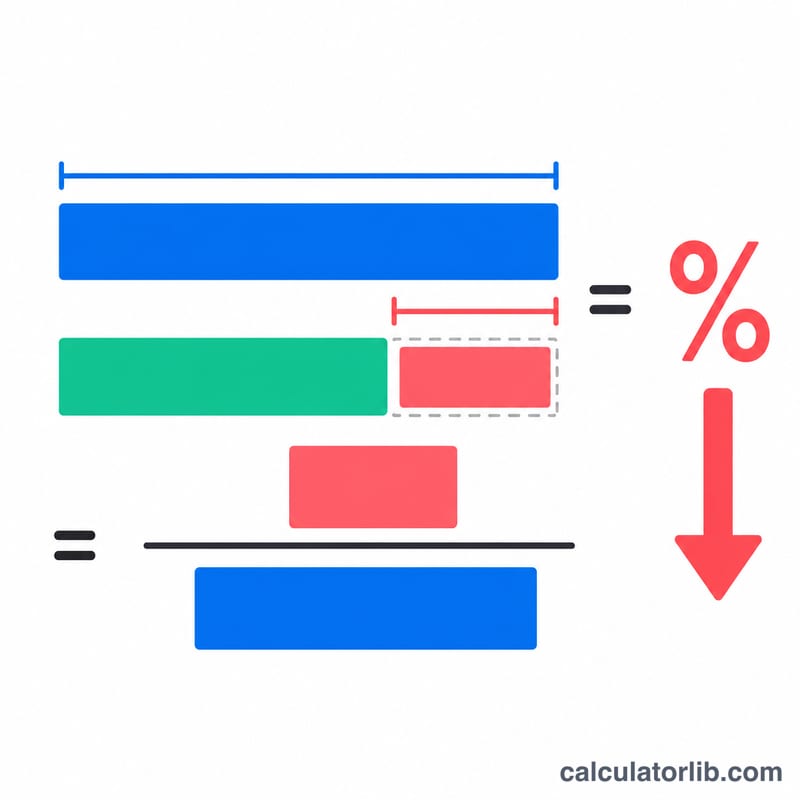
The markdown percentage is calculated as:
$$\text{Markdown \%} = \frac{\text{Original Price} - \text{Sale Price}}{\text{Original Price}} \times 100$$
First subtract the sale price from the original to get the amount off, then divide that by the original price and multiply by 100 to convert it to a percentage. Note that the markdown is always measured against the original price, not the sale price.
Worked Example
Suppose a jacket originally costs $120 and is on sale for $90. The amount off is \($120 - $90 = $30\). The markdown percentage is $$\$30 \div \$120 \times 100 = 25\%$$ So the jacket is marked down 25% off.
FAQ
Is markdown the same as margin? No. Markdown measures the reduction from the selling price, while margin measures profit relative to cost. They answer different questions.
Can the markdown be over 100%? Only if the sale price is negative, which is not realistic. A free item (sale price 0) equals a 100% markdown.
Why divide by the original price? Markdown is conventionally based on the original list price, so discounts are comparable across products and stores.