
What This Calculator Does
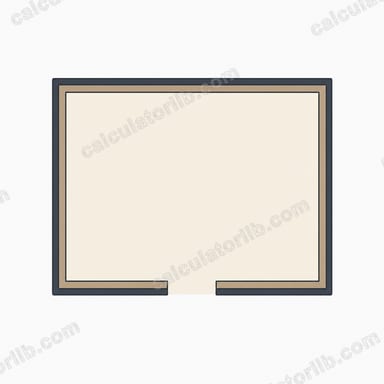
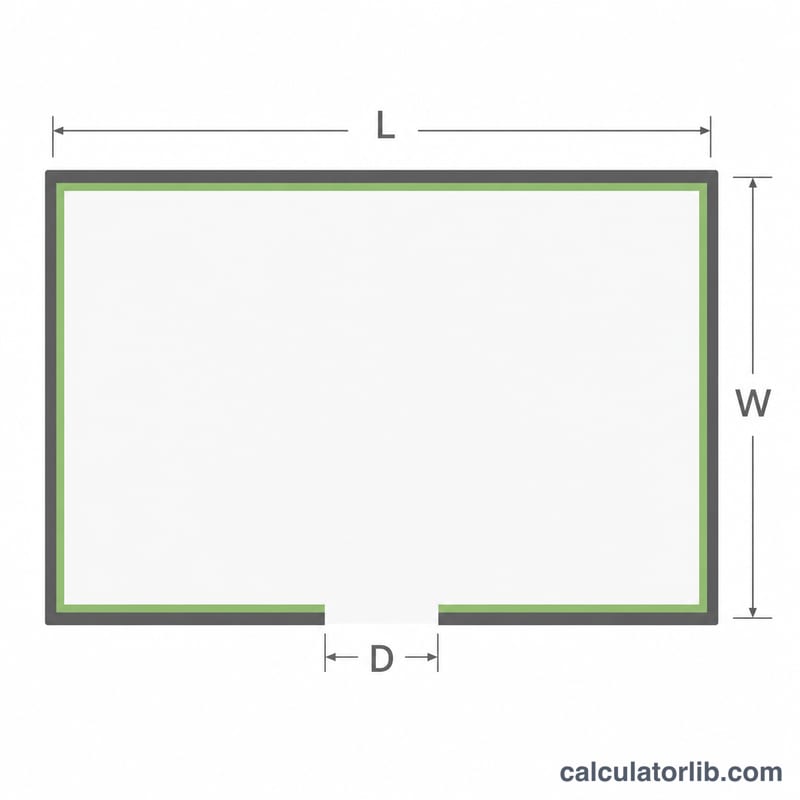
This tool estimates how much baseboard, base molding, or trim you need to run around the edge of a rectangular room. It first finds the room's perimeter, subtracts the width of doorways and other openings where no baseboard is installed, then adds a waste allowance for miter cuts, mistakes, and offcuts.
How to Use It
Enter the room's length and width in feet. In the doorway field, add up the widths of all door openings, archways, or other gaps along the walls where baseboard won't run, and enter the total. Choose a waste allowance — 10% is a common rule of thumb for trim with mitered corners. The calculator returns the linear feet to purchase.
The Formula Explained
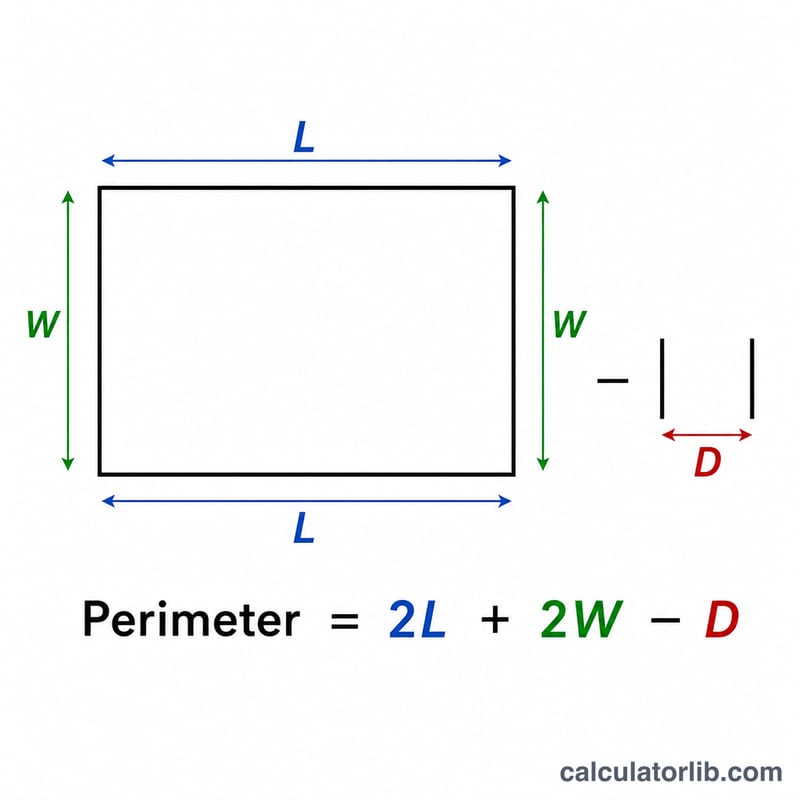
For a rectangle, perimeter is $$P = 2 \times (L + W)$$ We subtract the combined doorway width D to get the net run of wall: $$\text{net} = P - D$$ Finally we scale up by the waste factor: $$\text{buy} = \text{net} \times \left(1 + \frac{\text{waste}}{100}\right)$$ Rounding up to full board lengths at the store is recommended.
Worked Example
A 12 ft × 10 ft room has a perimeter of $$2 \times (12 + 10) = 44 \text{ ft}$$ With 3 ft of doorways, the net run is $$44 - 3 = 41 \text{ ft}$$ Adding a 10% waste allowance gives $$41 \times 1.10 = 45.1$$ linear feet of baseboard to buy.
FAQ
Should I include closet openings? Only subtract openings that truly have no baseboard. Many closets do get baseboard on the inside, so leave those in.
Does this work for non-rectangular rooms? For L-shaped or irregular rooms, measure each wall segment and add them, then subtract doorways. This tool assumes a simple rectangle.
How much waste should I add? 10% is typical; use 15% for rooms with many corners or if you're new to mitering trim.