
What Are Poker Pot Odds?
Pot odds are the relationship between the current size of the pot and the cost of a call you are facing. They tell you the minimum percentage of the time your hand must win (your equity) for a call to be profitable over the long run. If your chance of winning is higher than the pot odds percentage, calling is a +EV (positive expected value) decision.
How to Use This Calculator
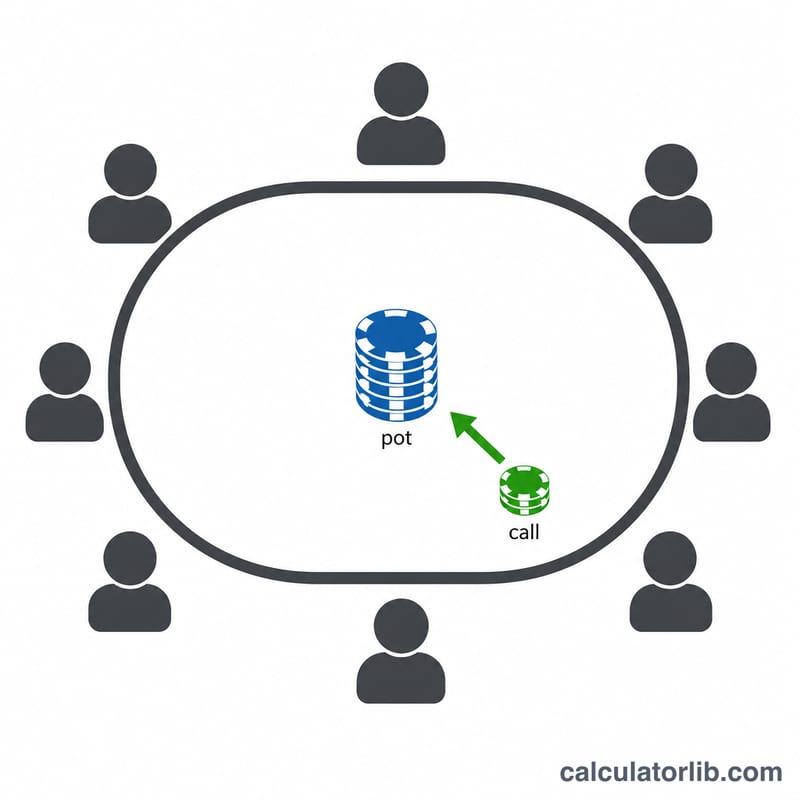
Enter the Current Pot Size — all the chips already in the middle before you act — and the Amount to Call, the chips you must put in to stay in the hand. The calculator returns your pot odds as a percentage, the equivalent equity you need, and the pot odds expressed as a clean ratio.
The Formula Explained
The core formula is:
$$\text{Pot Odds \%} = \frac{\text{Call}}{\text{Pot} + \text{Call}} \times 100$$
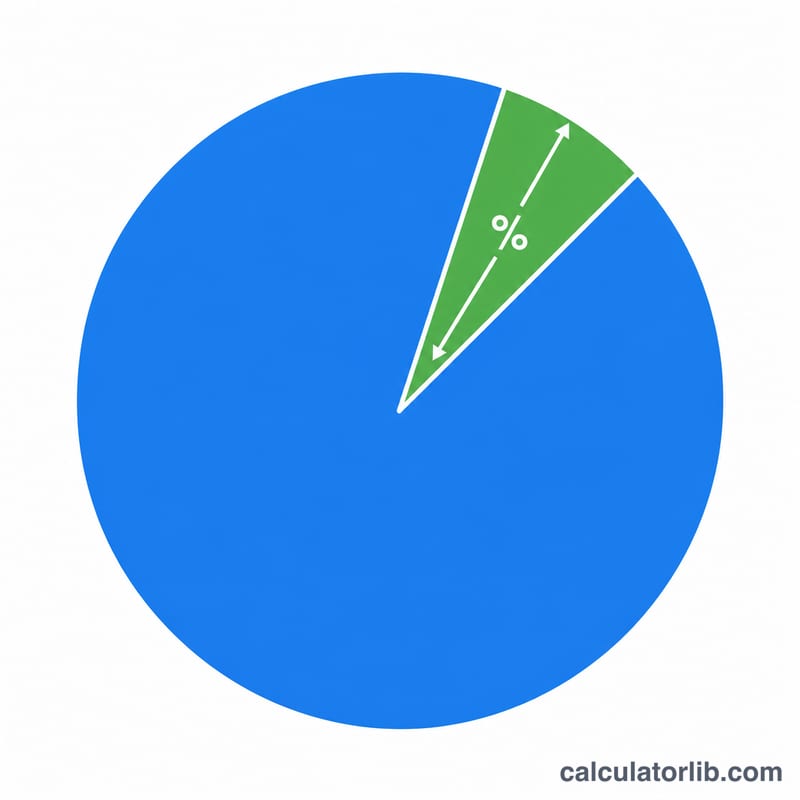
The denominator is the size of the pot after you call, because once you put your chips in they become part of the pot you are trying to win. The resulting percentage is exactly the equity threshold: win more often than this and the call profits.
Worked Example
Suppose the pot is $100 and your opponent bets, making the amount to call $20. Pot odds $$= \frac{20}{100 + 20} \times 100 = \frac{20}{120} \times 100 = \mathbf{16.67\%}$$ That means you only need to win the hand about 16.7% of the time to break even. The ratio is \(100 : 20 = 5 : 1\), meaning the pot is laying you 5-to-1 on your call.
FAQ
Should I include my call in the pot? Yes — this calculator uses the final pot (pot + call) in the denominator, which gives the equity-needed percentage directly.
How do I compare pot odds to my hand? Estimate your equity (e.g. using outs and the rule of 2 and 4) and call if it exceeds the pot odds percentage shown here.
What about implied odds? This tool covers direct pot odds only. Implied odds account for chips you expect to win on later streets and can justify calls even when raw pot odds fall short.