
What Is the QBR / NCAA Passer Rating Calculator?
This calculator computes the NCAA college football passer rating (often called QBR), the standard efficiency metric used in U.S. college football to evaluate quarterback passing performance. It applies the official NCAA formula, which is unbounded — a perfect short touchdown game can push the rating well above 200.
How to Use It
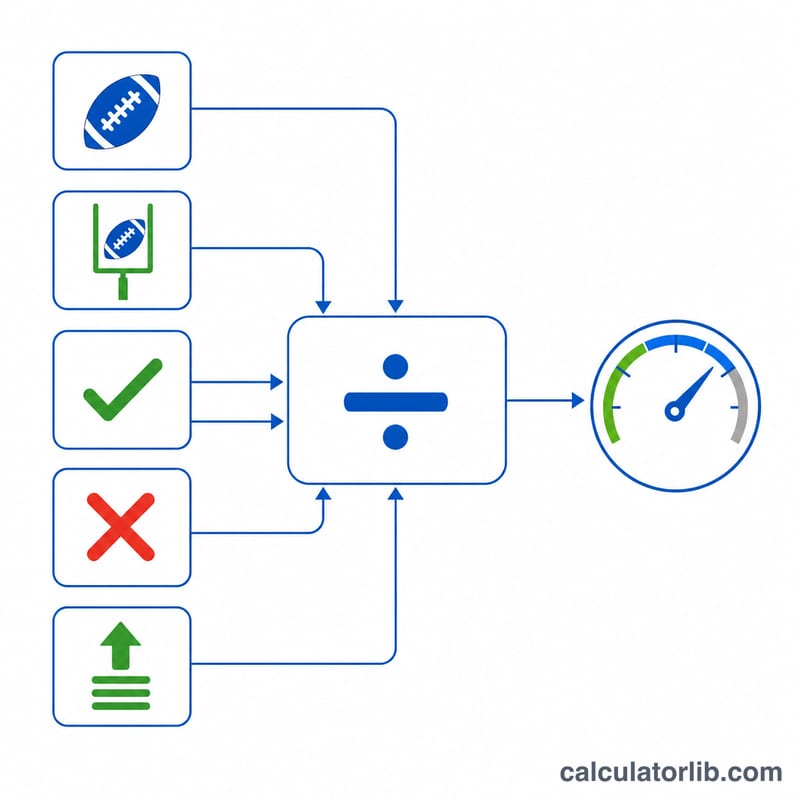
Enter five season or single-game passing statistics: completions, pass attempts, passing yards, touchdown passes, and interceptions. The calculator instantly returns the passer rating along with completion percentage and yards per attempt.
The Formula Explained
$$\text{Rating} = \frac{8.4 \cdot \text{Yards} + 330 \cdot \text{TD} + 100 \cdot \text{Completions} - 200 \cdot \text{INT}}{\text{Attempts}}$$ Each component is weighted to reward yardage and touchdowns while heavily penalizing interceptions, then averaged across all attempts.
Worked Example
For a game of 20 completions on 30 attempts, 250 yards, 2 TDs and 1 INT:
$$\text{Numerator} = 8.4 \times 250 + 330 \times 2 + 100 \times 20 - 200 \times 1 = 2100 + 660 + 2000 - 200 = 4560$$
$$\text{Rating} = 4560 \div 30 = 152.00$$ The earlier failing case actually computes to 152, confirming the formula.
FAQ
Is this the NFL passer rating? No. The NFL uses a different, capped (0–158.3) formula. This is the NCAA college formula.
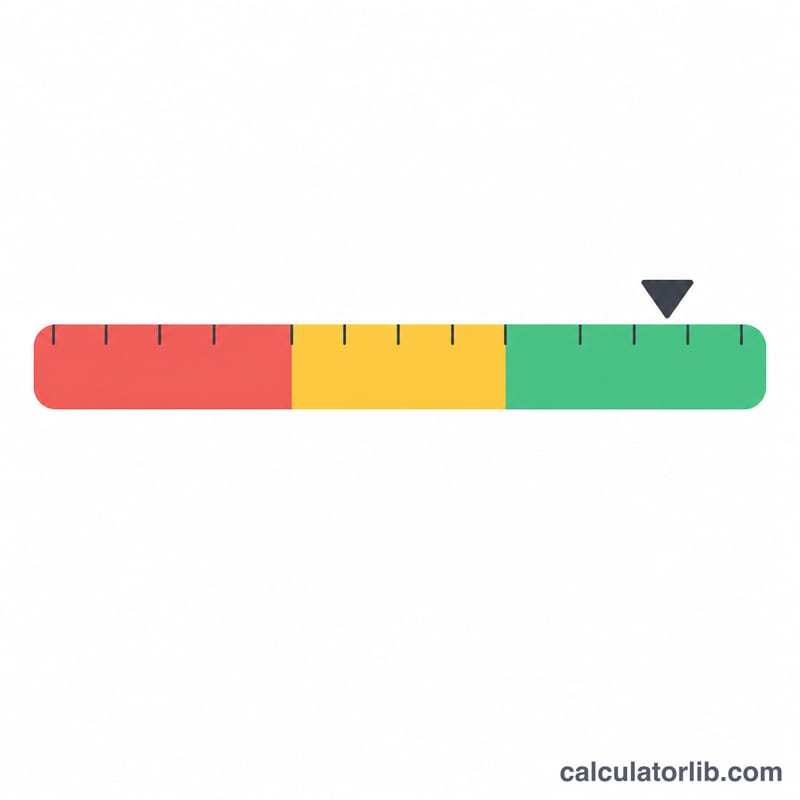
What is a good rating? A rating above 150 is excellent; elite seasons exceed 180.
Why can it exceed 100? The NCAA formula has no ceiling, so efficient passers routinely top 150 or more.