
What This Calculator Does
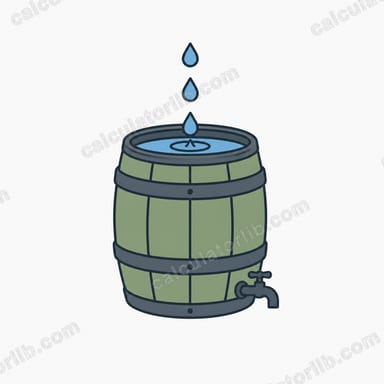
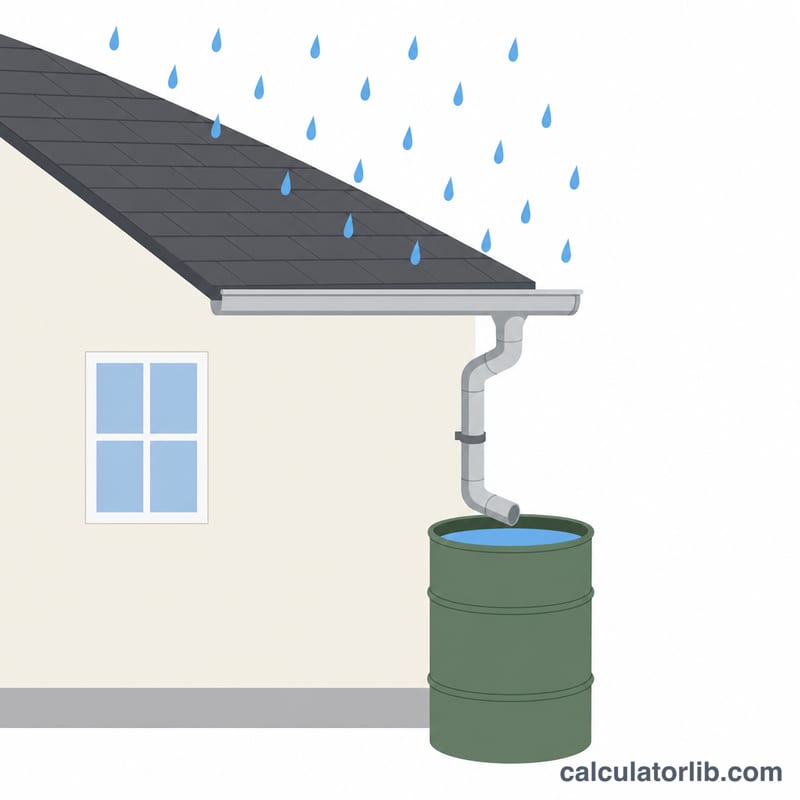
The Rainwater Harvesting Volume Calculator estimates how many gallons of water you can collect from a rooftop during a rain event or over a period of accumulated rainfall. It is useful for sizing storage tanks, planning irrigation systems, and understanding the water-saving potential of a rainwater catchment setup. The 0.623 factor used here is based on US units (square feet, inches, and US gallons).
How to Use It
Enter three values: the roof catchment area in square feet (use the building footprint, not the sloped surface, since rain falls vertically), the rainfall depth in inches, and a realistic collection efficiency percentage. Efficiency accounts for losses from splash, evaporation, first-flush diversion, and gutter overflow — most real systems run between 75% and 90%.
The Formula Explained
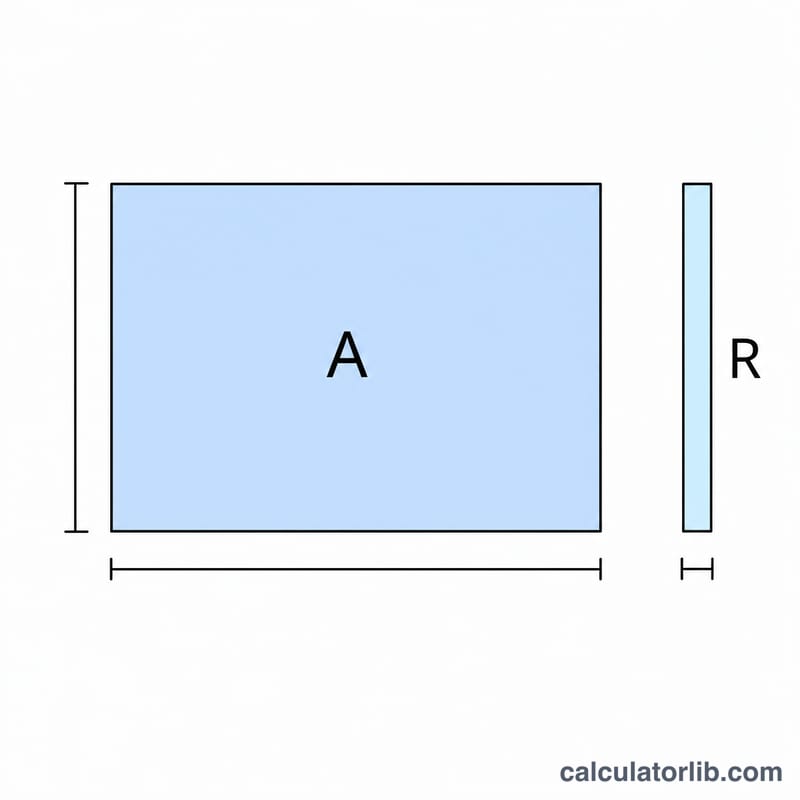
One inch of rain falling on one square foot equals 1/12 of a cubic foot. Since a cubic foot holds about 7.48 US gallons, that works out to roughly 0.623 gallons per square foot per inch of rain. Multiply by your area and rainfall, then scale by efficiency:
$$\text{V} = \text{Area} \times \text{Rainfall} \times 0.623 \times \frac{\text{Efficiency}}{100}$$
Worked Example
For a 1,000 ft² roof catching 2 inches of rain at 85% efficiency:
$$1000 \times 2 \times 0.623 = 1{,}246 \text{ gallons theoretical}$$
and
$$1246 \times 0.85 = \mathbf{1{,}059.1 \text{ gallons}}$$
realistically captured. That is enough to fill roughly two 500-gallon tanks.
FAQ
Should I use the sloped roof area? No. Use the horizontal footprint (length × width), because rainfall is measured as a vertical depth.
What efficiency should I assume? A common planning figure is 80–90%. Lower it if you use heavy first-flush diversion or have older gutters.
Can I use this for metric units? This tool uses US units (ft² and inches). The result row also shows the volume converted to liters and cubic feet for convenience.