
What Is the Grass Seed Calculator?
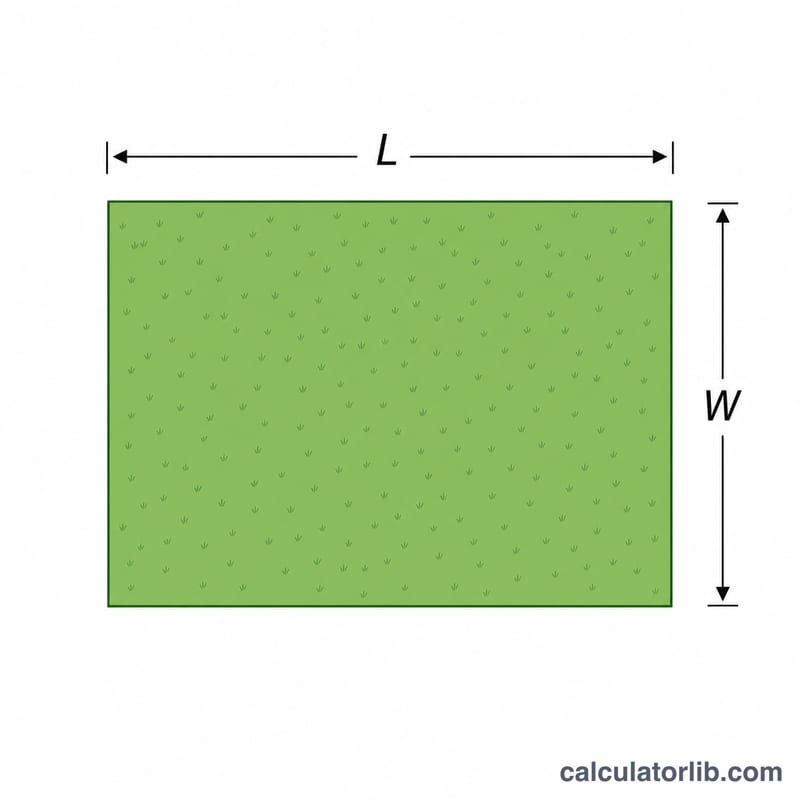
This calculator estimates how many pounds of grass seed you need to cover a lawn. It multiplies the lawn area (length × width in feet) by the recommended seeding rate, expressed in pounds per 1,000 square feet, then divides by 1,000. Whether you are seeding a brand-new lawn or overseeding an existing one, knowing the right amount prevents wasting seed and avoids thin, patchy coverage.
How to Use It
Enter your lawn's length and width in feet to get the area. Then enter the seeding rate from your seed bag's label. Typical rates are around 5–9 lbs per 1,000 ft² for new lawns and 3–5 lbs per 1,000 ft² for overseeding, but always follow your specific product's recommendation since seed size varies by species.
The Formula Explained
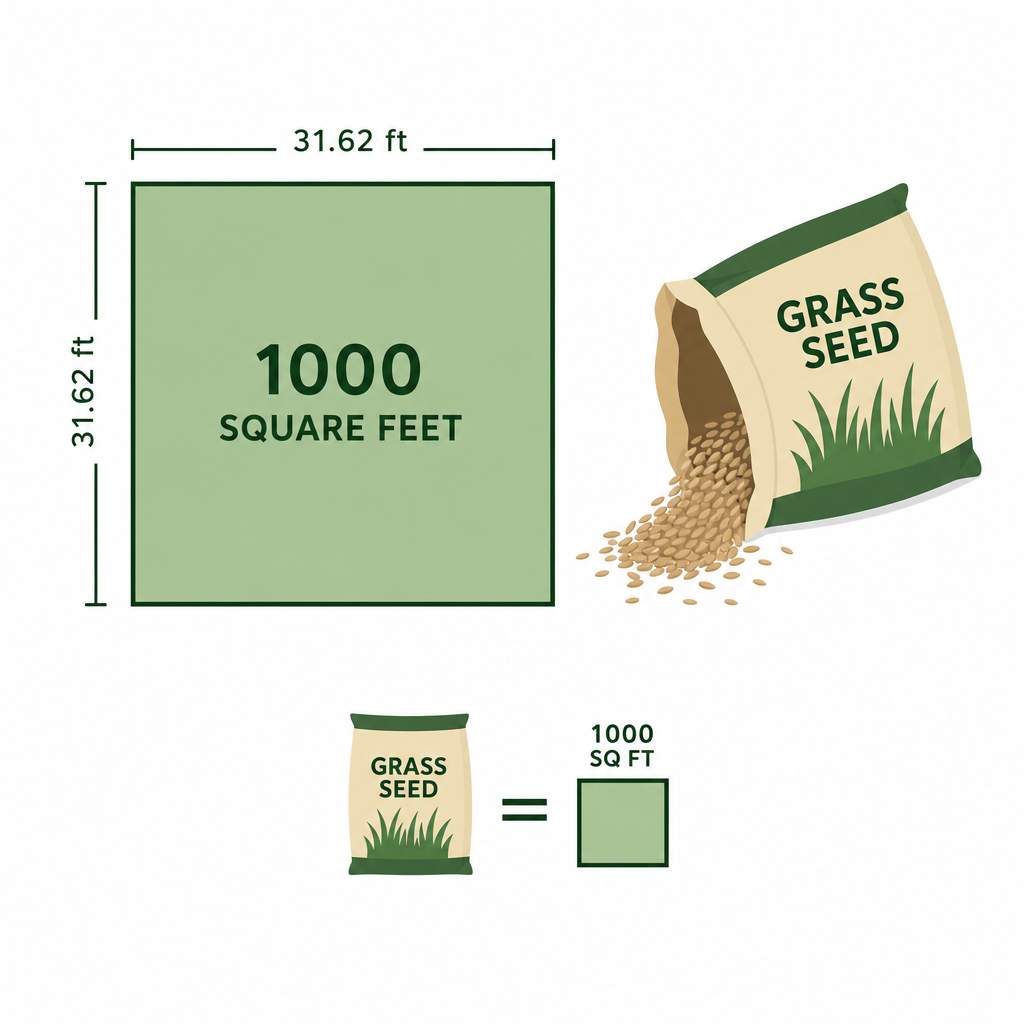
The math is simple: $$\text{Seed (lbs)} = \frac{\text{Length (ft)} \times \text{Width (ft)} \times \text{Rate (lbs/1{,}000 ft}^2)}{1000}$$ The area gives total coverage in square feet, and the rate tells you how much seed each 1,000-square-foot block requires. Dividing by 1,000 scales the rate to your actual area.
Worked Example
Suppose your lawn is \(50 \text{ ft} \times 40 \text{ ft} = 2{,}000 \text{ ft}^2\). With a new-lawn seeding rate of 5 lbs per 1,000 ft², the seed needed is $$2{,}000 \times 5 \div 1{,}000 = 10 \text{ lbs}$$ Buy slightly extra to account for edges and uneven spreading.
FAQ
What if my lawn isn't rectangular? Break it into rectangles, calculate each, and add the areas — or use an average length and width for an estimate.
Should I round up? Yes. It's better to buy a little extra seed than to run short mid-job, and leftover seed stores well if kept cool and dry.
Does the rate differ for overseeding vs. new lawns? Yes. Overseeding uses a lighter rate (often half of a new lawn) since existing turf fills in the gaps.