
What This Calculator Does
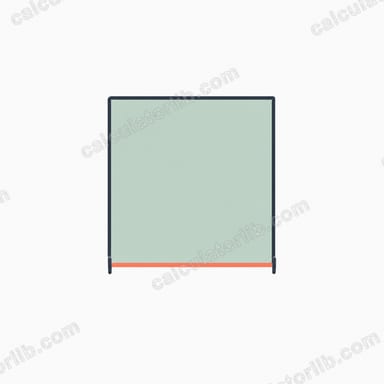
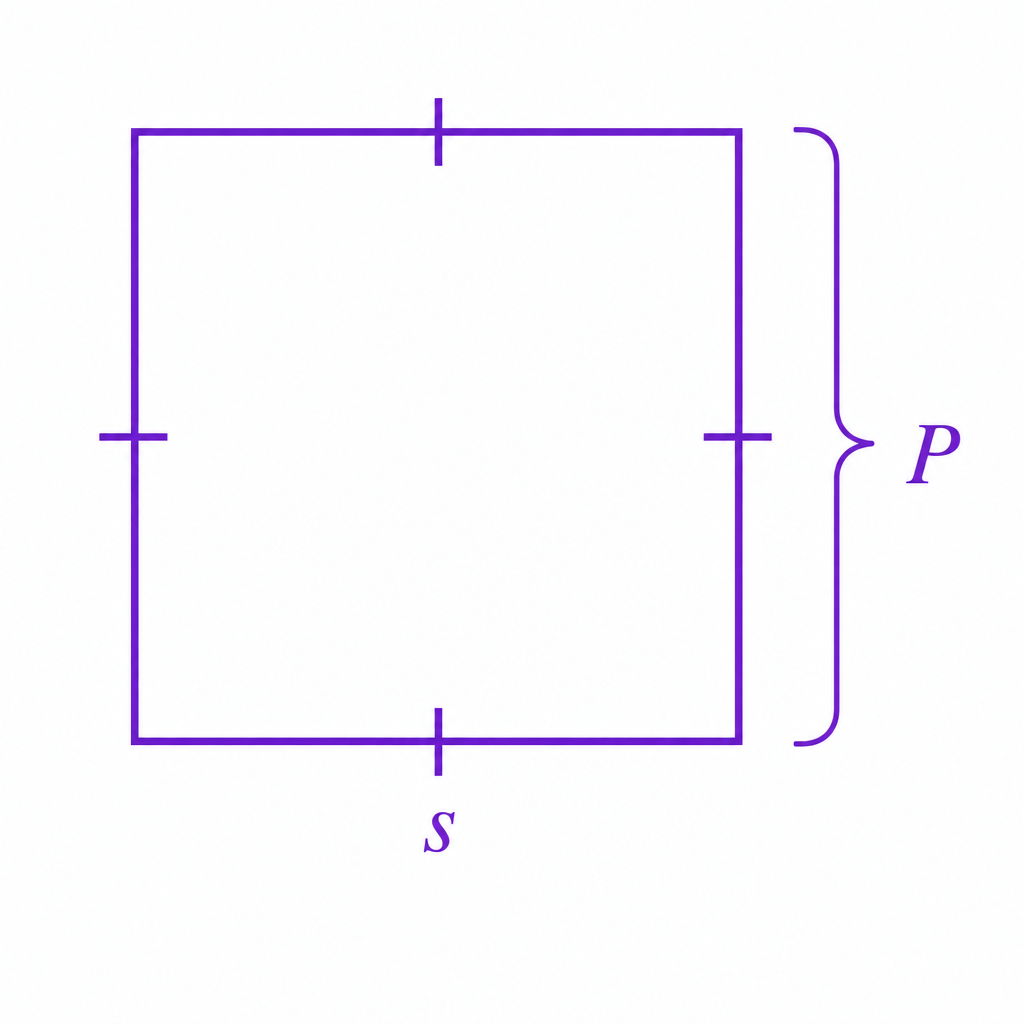
This tool finds the side length of a square when you know its perimeter. A square has four equal sides, so the perimeter is simply four times one side. Reversing that relationship, the side equals the perimeter divided by four. As a bonus, the calculator also reports the square's area and diagonal so you have the complete picture from a single input.
How to Use It
Enter the perimeter of your square in any unit (centimeters, meters, inches, etc.) and the calculator instantly returns the side length in the same unit. The area is given in square units and the diagonal in the same linear units. Make sure your perimeter value is consistent with the units you want for the answer.
The Formula Explained
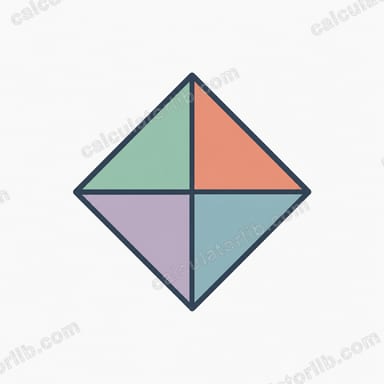
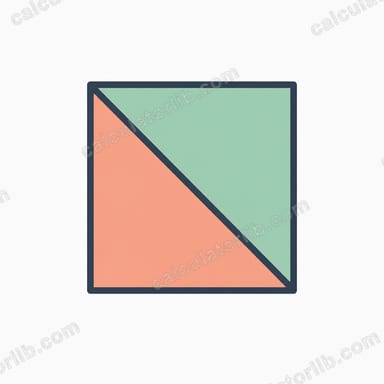
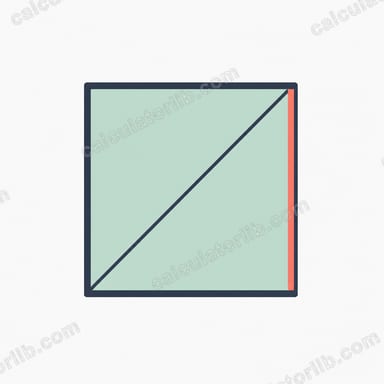
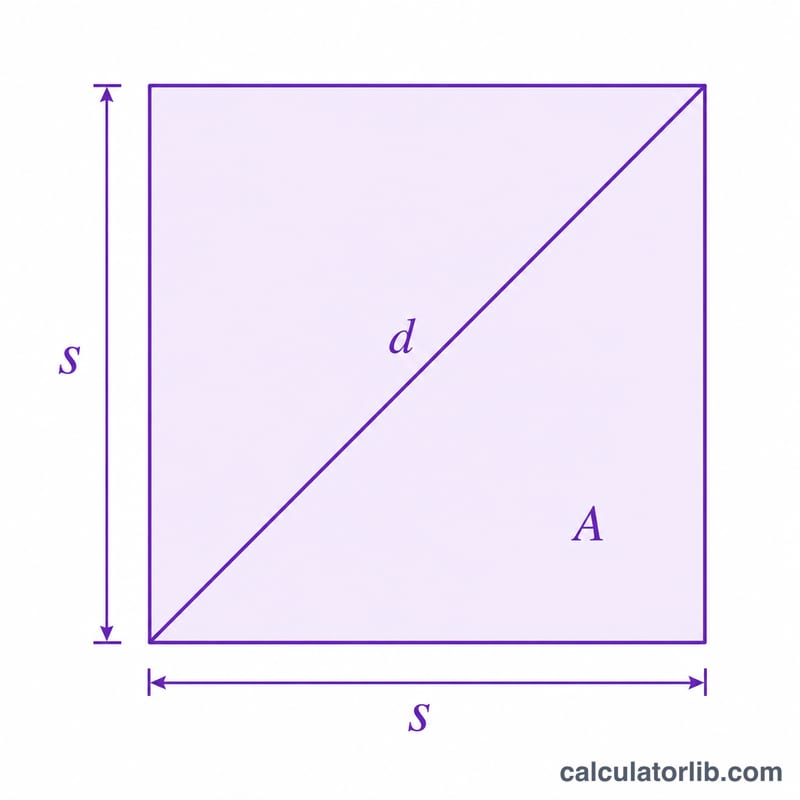
The perimeter of a square is the total distance around it: \(P = 4s\). Solving for the side gives \(s = P / 4\). From the side you can derive other properties: the area is \(A = s^2\) and the diagonal (which cuts the square corner to corner) is \(d = s\sqrt{2}\), a direct result of the Pythagorean theorem applied to two equal sides.
Worked Example
Suppose a square has a perimeter of 40 cm. The side length is $$s = 40 / 4 = 10 \text{ cm}.$$ The area is \(10^2 = 100\) square cm, and the diagonal is \(10 \times \sqrt{2} \approx 14.14\) cm.
FAQ
Can I use any unit? Yes. The side comes out in the same unit as your perimeter; area is in those units squared.
What if I only know the area? Then take the square root of the area to get the side, and multiply by 4 for the perimeter — a different calculation than this one.
Why divide by 4? Because all four sides of a square are equal, the perimeter is four identical side lengths added together, so one side is a quarter of the total.