
What Is a Savings Percentage?
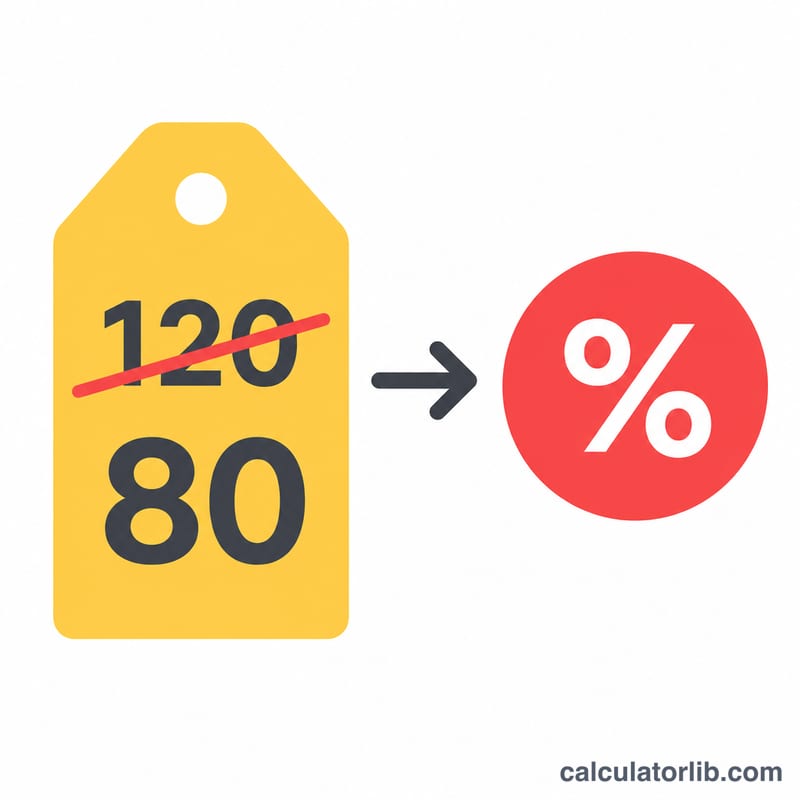
A savings percentage tells you how much of an item's original price you avoided paying. If a jacket normally costs $100 and you grab it for $75, you saved $25 — which is 25% of the original price. This calculator turns any "original price vs. price paid" pair into a clear percentage so you can compare deals fairly, regardless of the dollar amounts involved.
How to Use It
Enter the Original Price (the regular or list price before any discount) and the Price You Paid (your final checkout price). The calculator instantly shows the percentage you saved, plus the dollar amount saved as a quick cross-check. Use it for sales, coupons, clearance markdowns, or comparing two competing offers.
The Formula Explained
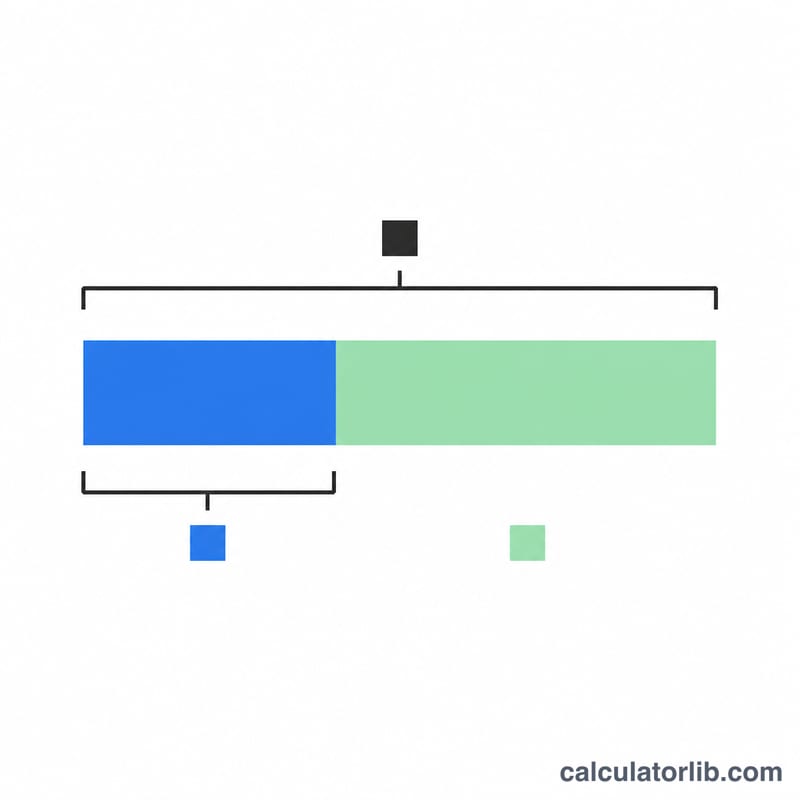
The calculation is simple: subtract the price you paid from the original price to get the amount saved, divide that by the original price, then multiply by 100 to convert the ratio into a percentage.
$$\text{Percent Saved} = \frac{\text{Original} - \text{Paid}}{\text{Original}} \times 100$$
Dividing by the original price (not the paid price) is what makes the result a true discount percentage that matches the "% off" sign in the store.
Worked Example
Suppose a pair of headphones lists for $200 and you buy them on sale for $150. Amount saved = \(200 - 150 = \$50\). Percent saved = $$50 \div 200 \times 100 = \textbf{25\%}.$$ So you scored a 25%-off deal.
FAQ
Is savings percentage the same as discount percentage? Yes — when measured against the original price, the percent you saved equals the discount percent advertised.
Why divide by the original price and not the price paid? Discounts are always quoted relative to the starting (original) price, so dividing by it gives the standard "% off" figure.
What if I paid more than the original price? The result will be negative, meaning you actually paid a premium rather than saving.