
What Is the Seed Starting Date Calculator?
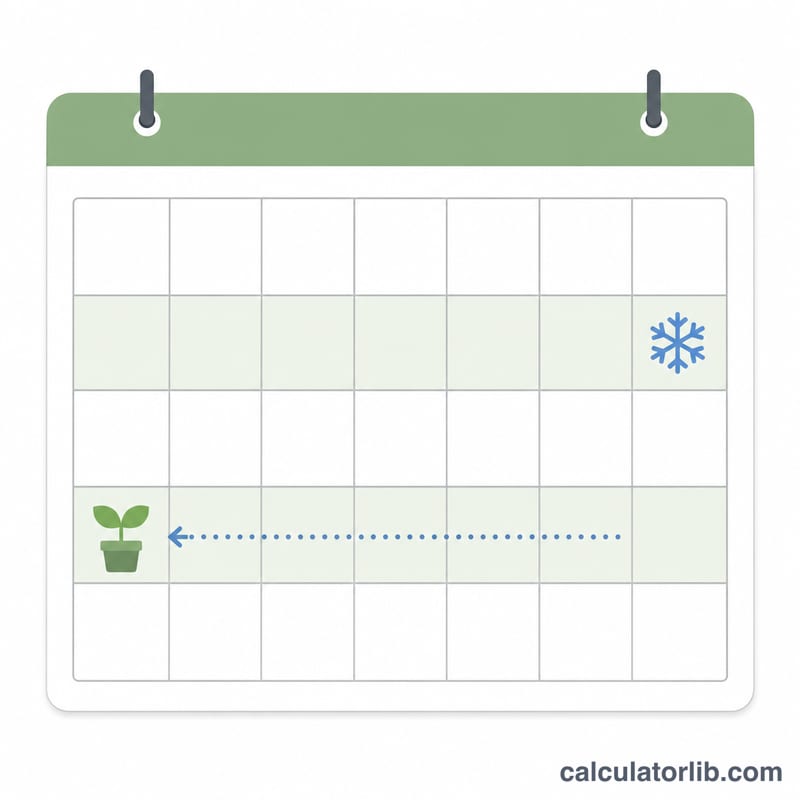
Most vegetable and flower seed packets tell you to "start seeds indoors X weeks before your last expected frost." This calculator does the date math for you: enter your local average last frost date and the number of weeks the packet recommends, and it tells you the exact day to sow.
How to Use It
1. Look up your region's average last spring frost date (your local extension service or a frost-date map gives this). 2. Enter that year, month, and day. 3. Read the "weeks before last frost" value from your seed packet — tomatoes are often 6–8 weeks, peppers 8–10, lettuce 4–6. 4. Enter it and get your indoor sowing date instantly. Fractional weeks (e.g. 6.5) are supported.
The Formula
The math is simple subtraction on the calendar:
$$\text{Start Date} = \text{LastFrost} - \left(\text{Weeks Before} \times 7\right)\ \text{days}$$
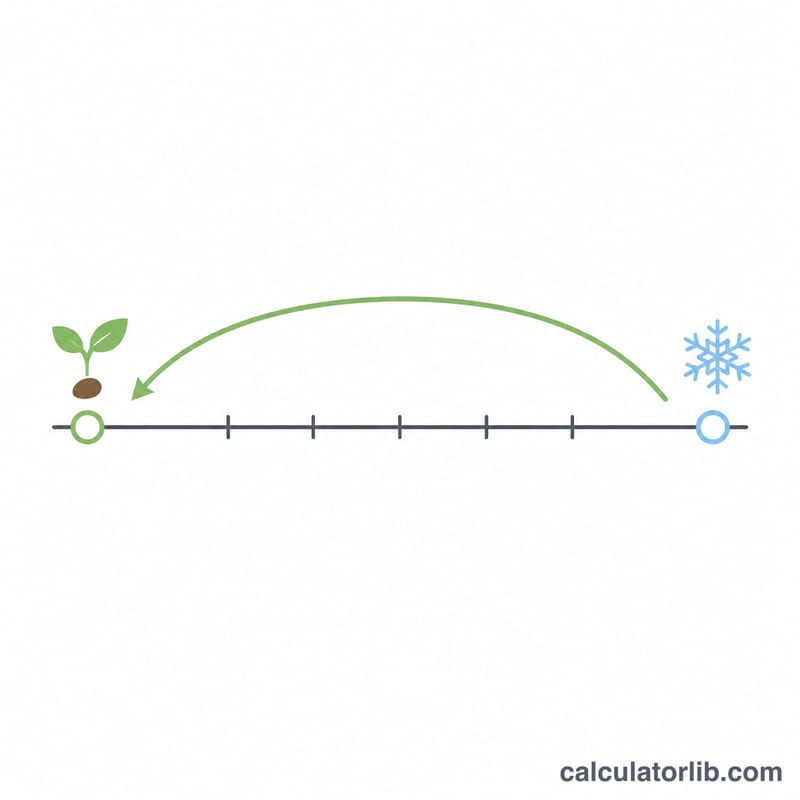
The calculator converts weeks to days (rounding to whole days), then counts backward across month and year boundaries using a true calendar so February lengths and month sizes are handled correctly.
Worked Example
Suppose your last frost is May 15, 2025 and your tomato packet says start 6 weeks before. \(6 \times 7 = 42\) days. Counting back 42 days from May 15 lands on April 3, 2025. That's your indoor sowing day.
FAQ
Should I start seeds indoors or direct sow? This tool assumes indoor starting; many fast crops (beans, squash) are direct-sown after frost instead.
What if my packet gives a range like 6–8 weeks? Use the larger number for a longer head start, or the smaller for sturdier, less leggy seedlings.
How accurate is the last frost date? It is an average — actual last frost varies year to year, so harden off and watch the forecast before transplanting outdoors.