
What Is Carrying Capacity?
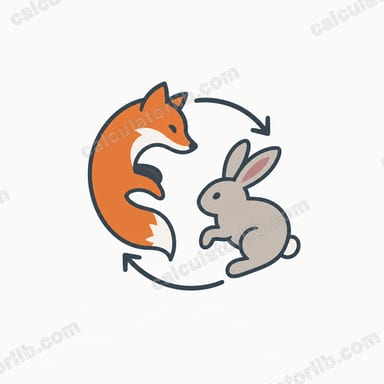
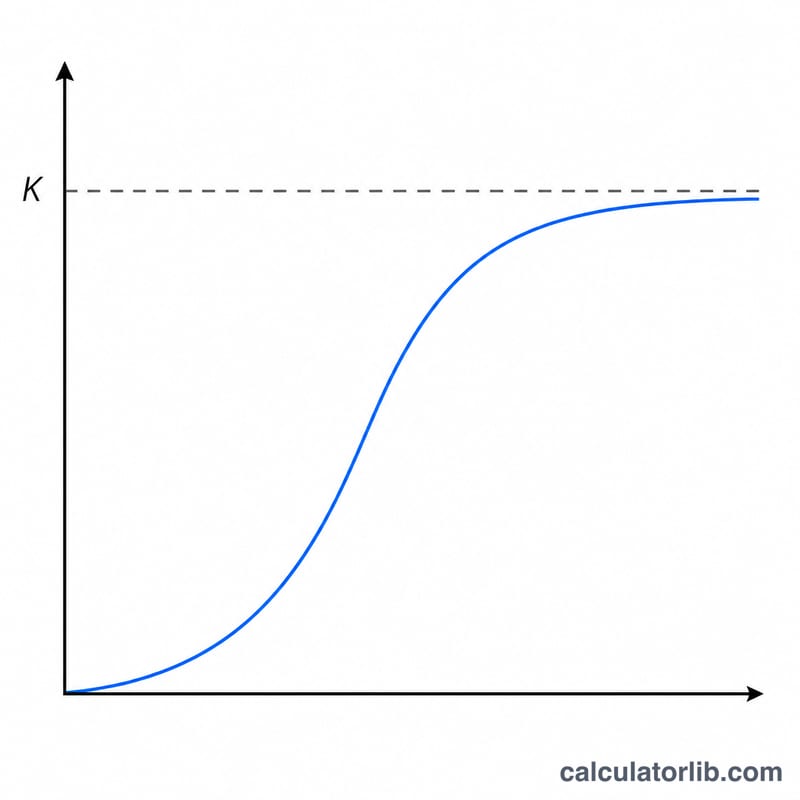
Carrying capacity, denoted K, is the maximum population size of a species that an environment can sustain indefinitely given the resources available — such as food, water, habitat space, or nutrients. It is a central concept in ecology and population biology and forms the upper limit in the logistic growth model. When a population is below K it tends to grow; as it approaches K, growth slows and stabilizes.
How to Use This Calculator
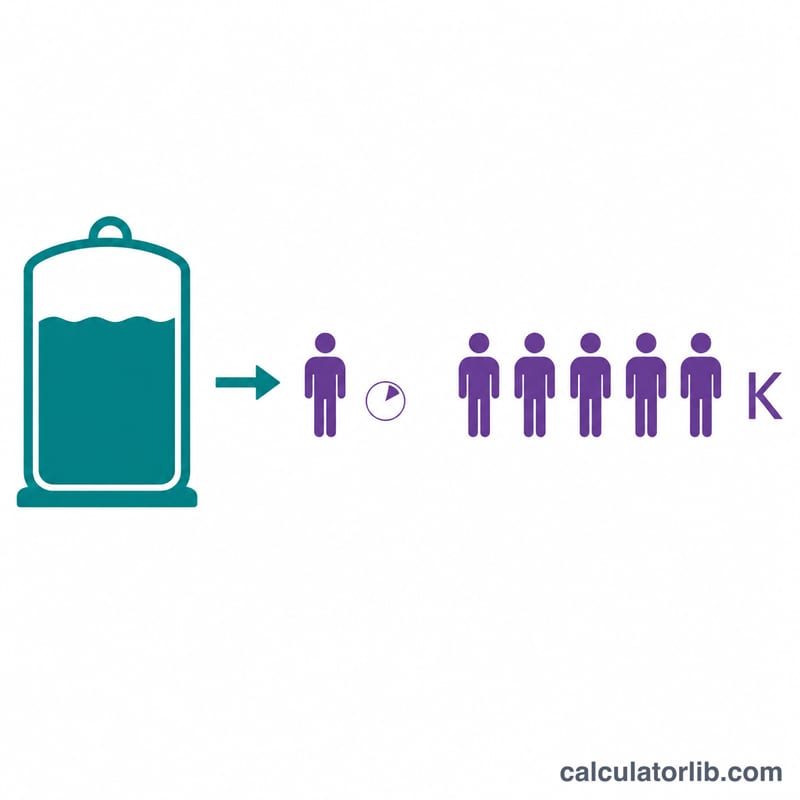
Enter the total available resources in the environment (for example, kilograms of food per year, liters of water, or units of any limiting resource) and the resource use per individual (the same resource consumed by one individual over the same period). The calculator divides the two to estimate how many individuals the environment can support.
The Formula Explained
The simple resource-limited form is:
$$K = \frac{\text{Available Resources}}{\text{Resource Use per Individual}}$$
The logic is straightforward: if you know the total pool of a limiting resource and how much each individual needs, the population can grow until that resource is fully allocated. Choose the single most limiting resource for the most realistic estimate, and keep both numbers in the same units and over the same time frame.
Worked Example
Suppose a meadow produces 100,000 kg of edible plant matter per year, and each grazing animal consumes 50 kg per year. Then $$K = \frac{100{,}000}{50} = 2{,}000 \text{ individuals}$$ The meadow can sustainably support about 2,000 grazers before food becomes the limiting factor.
FAQ
Is carrying capacity a fixed number? No. It changes with seasons, climate, disease, and resource fluctuations, so treat K as an estimate rather than a hard ceiling.
Which resource should I use? Use the most limiting resource — the one that runs out first (often food or water). That resource sets the true ceiling.
What if individuals share resources unevenly? Use an average per-individual consumption rate. For more detail, model age classes or use mean intake across the population.