
What Is This Calculator?
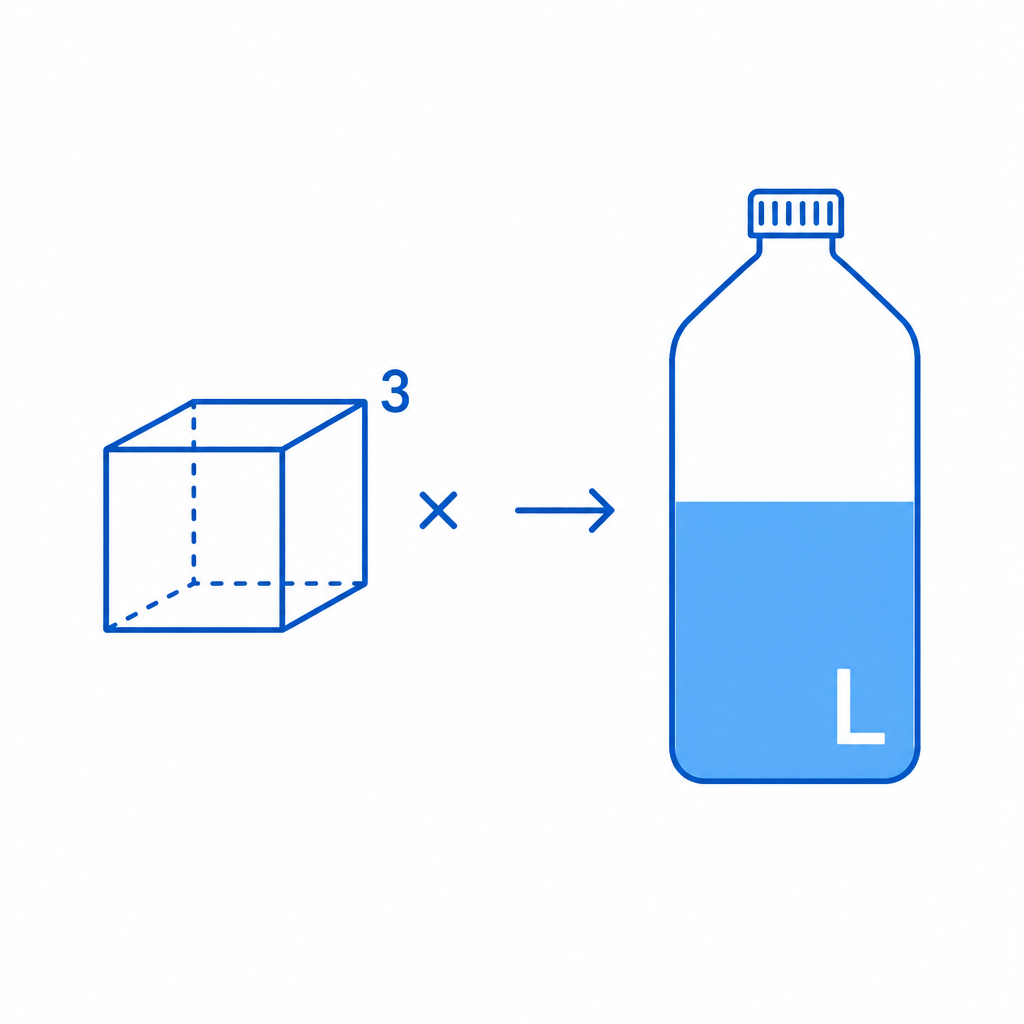
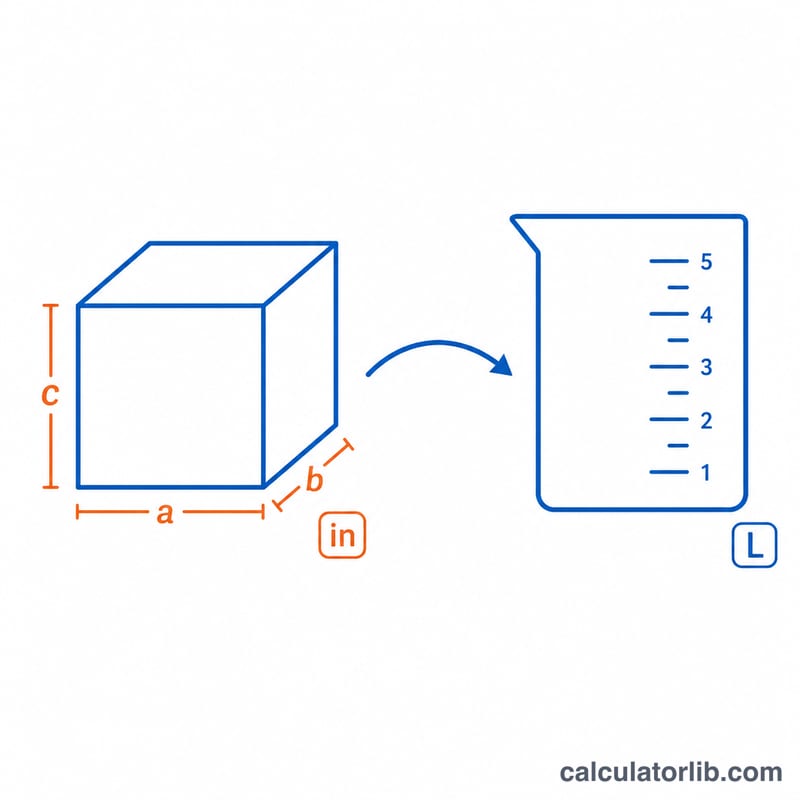
The Cubic Inches to Liters Calculator converts a volume expressed in cubic inches (in³) into liters (L). Cubic inches are an imperial/US customary unit of volume widely used to describe engine displacement, container capacity, and small enclosures, while the liter is the standard metric unit of volume. This tool is universal and works for any application worldwide.
How to Use It
Enter the volume in cubic inches into the input field and the calculator instantly returns the equivalent in liters. For example, a classic American engine rated at 350 cubic inches converts neatly to about 5.7 liters — which is why such engines are marketed as "5.7L" engines.
The Formula Explained
The conversion uses the fixed factor:
$$\text{Liters} = \text{Cubic Inches} \times 0.0163871$$This comes from the definition of an inch as exactly 2.54 cm. One cubic inch equals \(2.54^3 = 16.387064\) cubic centimeters, and since 1 liter = 1000 cubic centimeters, one cubic inch equals 0.016387064 liters, rounded here to 0.0163871.
Worked Example
Suppose you have a tank measured at 500 cubic inches. Multiply: $$500 \times 0.0163871 = 8.19355 \text{ liters}$$ So a 500 in³ container holds roughly 8.19 liters.
FAQ
How many liters are in one cubic inch? One cubic inch equals approximately 0.0163871 liters.
How do I convert liters back to cubic inches? Divide the liter value by 0.0163871 (or multiply by 61.0237).
Why are engines listed in both cubic inches and liters? Engine displacement is the total swept volume of all cylinders; it can be expressed in either unit, and many markets use liters while older or domestic-market US engines use cubic inches.