
What Is the Cubic Centimeters to Liters Calculator?
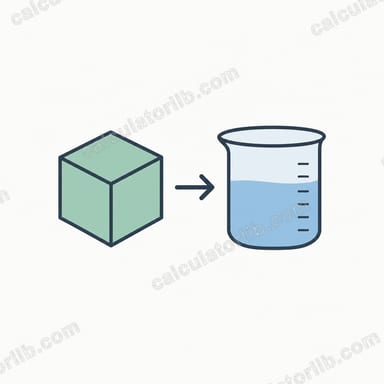
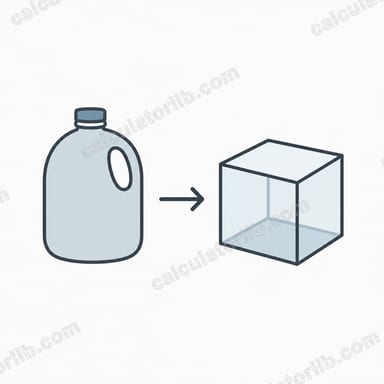
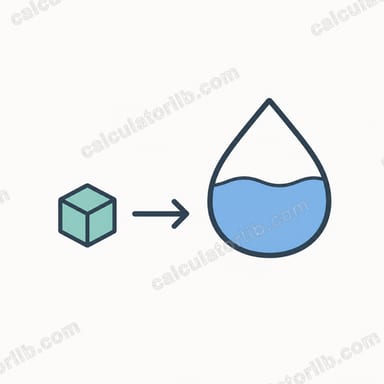
This tool converts a volume measured in cubic centimeters (cc, also written cm³) into liters (L). The cubic centimeter and the liter are both metric units of volume, and they share a simple, exact relationship: one liter equals exactly 1,000 cubic centimeters. This conversion is universal and not tied to any country or industry.
How to Use It
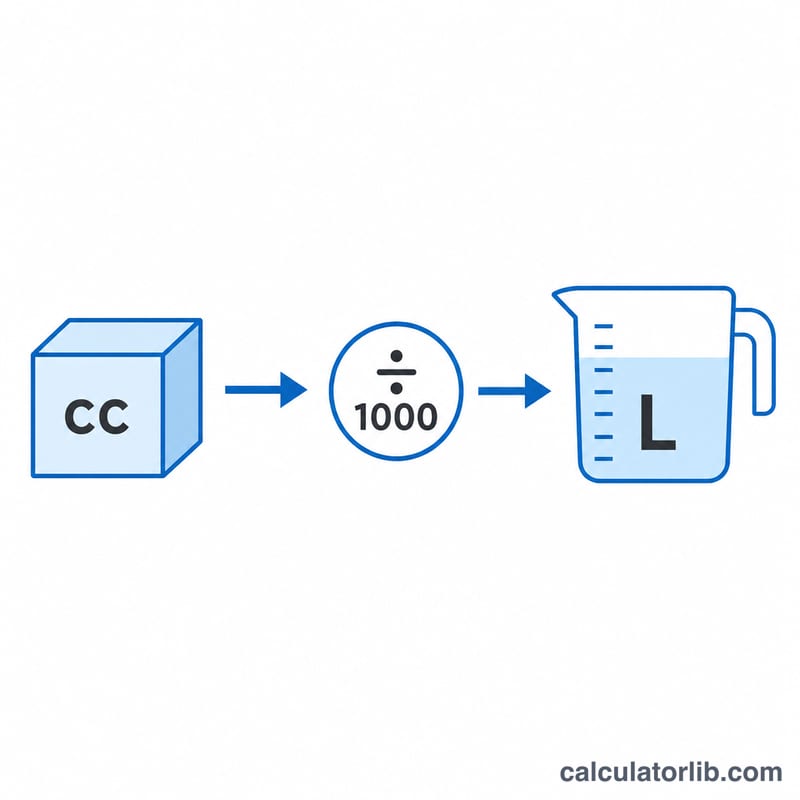
Enter the volume in cubic centimeters in the input box and the calculator instantly returns the equivalent volume in liters. The result is shown to full precision, and a summary table confirms your input and the conversion factor used.
The Formula Explained
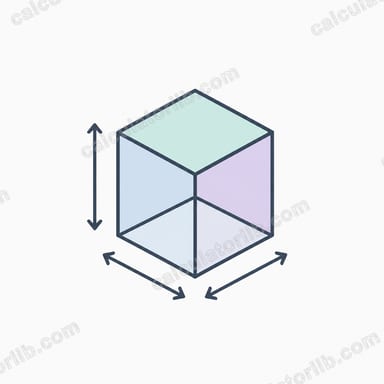
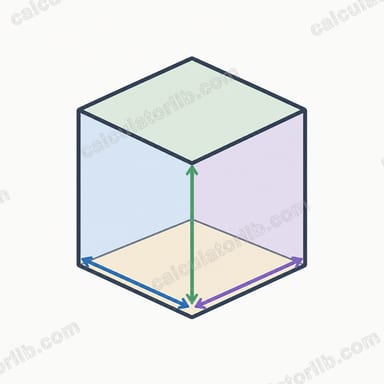
The conversion uses the relationship \(\text{L} = \text{cc} / 1000\). Because 1 liter is defined as 1,000 cubic centimeters (a liter is a cube 10 cm on each side, which is \(10 \times 10 \times 10 = 1{,}000 \text{ cm}^3\)), dividing the cubic-centimeter value by 1,000 gives the number of liters. The factor of 1,000 is exact, so the conversion introduces no rounding of its own.
$$\text{Liters} = \frac{\text{Volume (cm}^3\text{)}}{1000}$$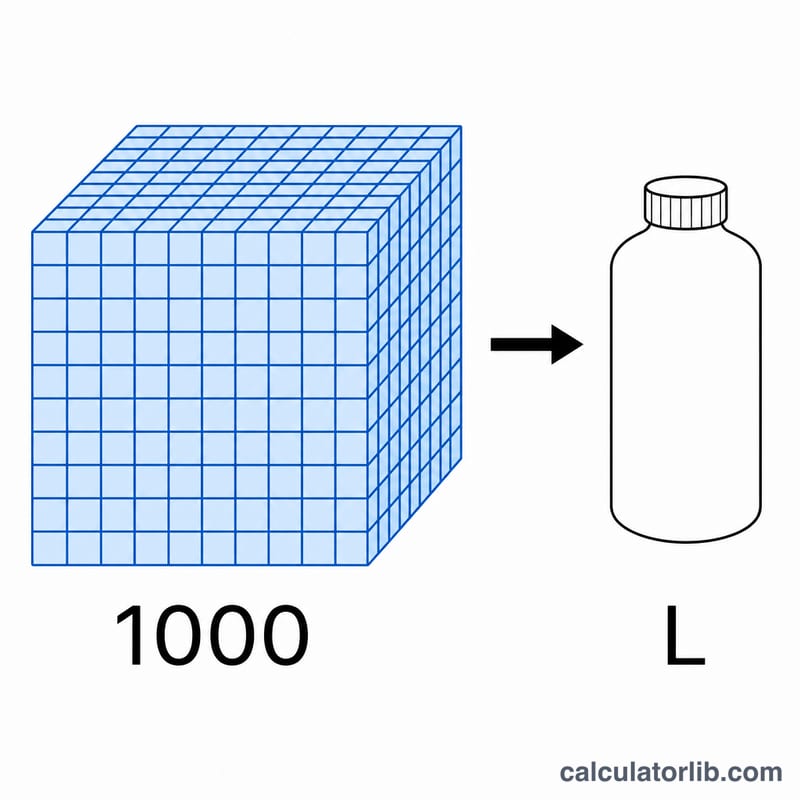
Worked Example
Suppose an engine displacement is 2,500 cc. To find the volume in liters, divide by 1,000:
$$2{,}500 \div 1000 = 2.5 \text{ L}$$So a 2,500 cc engine is a 2.5-liter engine — exactly how engine sizes are commonly described.
FAQ
Is 1 cc the same as 1 milliliter? Yes. One cubic centimeter equals exactly one milliliter, so \(1{,}000 \text{ cc} = 1{,}000 \text{ mL} = 1 \text{ L}\).
Why are engine sizes given in cc and liters? Smaller engines are often quoted in cc (e.g. 125 cc), while larger ones are quoted in liters (e.g. 2.0 L). Both describe the same physical displacement; you simply divide cc by 1,000 to convert.
How do I convert liters back to cubic centimeters? Multiply the liters by 1,000. For example, \(0.75 \text{ L} \times 1000 = 750 \text{ cc}\).