
What is the Deep Sleep Calculator?
The Deep Sleep Calculator estimates how much slow-wave (deep) sleep you get each night based on your total sleep time and the percentage of that time spent in the deep stage. Deep sleep is the most physically restorative phase, when the body repairs tissue, strengthens the immune system, and consolidates memory. For most healthy adults it makes up roughly 15–20% of total sleep.
How to use it
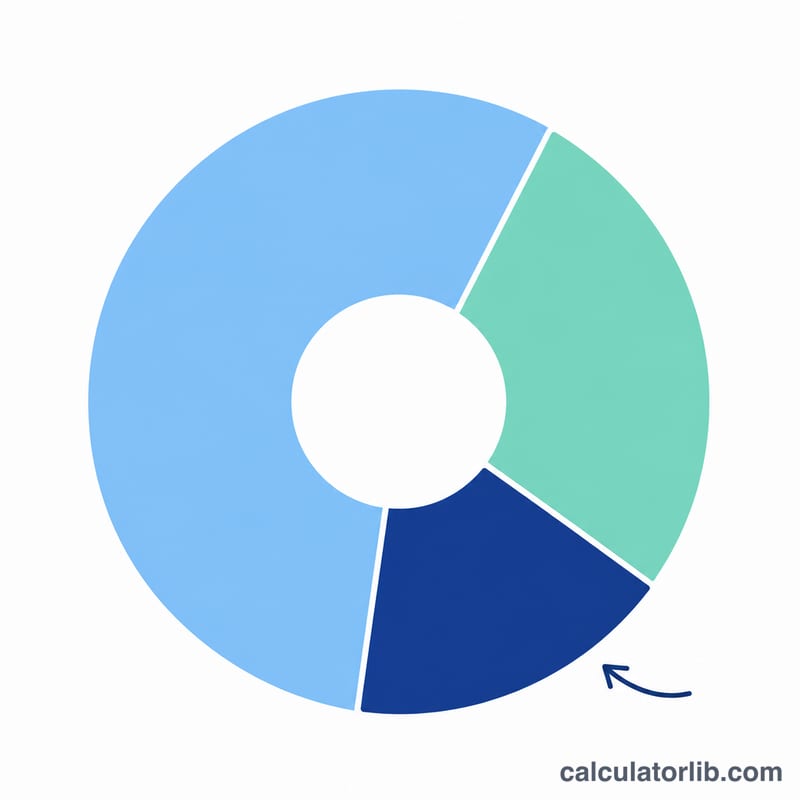
Enter your total sleep as hours plus any extra minutes, then enter your estimated deep sleep percentage. If you don't have data from a sleep tracker, 18% is a reasonable starting point for an adult. The calculator returns your deep sleep in both minutes and hours.
The formula explained
First the total sleep time is converted to minutes: $$T = \text{hours} \times 60 + \text{minutes}$$ Then deep sleep is simply that total multiplied by the deep fraction: $$D = T \times \frac{p}{100}$$ The result is purely proportional, so doubling either your sleep time or your deep percentage doubles your deep sleep minutes.
Worked example
Suppose you sleep 8 hours (480 minutes) and your tracker reports 18% deep sleep. Deep sleep $$= 480 \times 0.18 = 86.4 \text{ minutes}$$ or about 1.44 hours per night. That falls within the healthy adult range of roughly 70–110 minutes for an 8-hour night.
FAQ
How much deep sleep do I need? Most adults need roughly 1–2 hours of deep sleep per night, which is the 13–23% range many trackers report.
Does deep sleep decrease with age? Yes. Deep sleep typically declines as we get older, so older adults often see a lower percentage even with the same total sleep.
Is this a medical measurement? No. This is an estimate based on a percentage you provide. Only a sleep study (polysomnography) or validated tracker can measure your actual sleep stages.