
What is a power nap calculator?
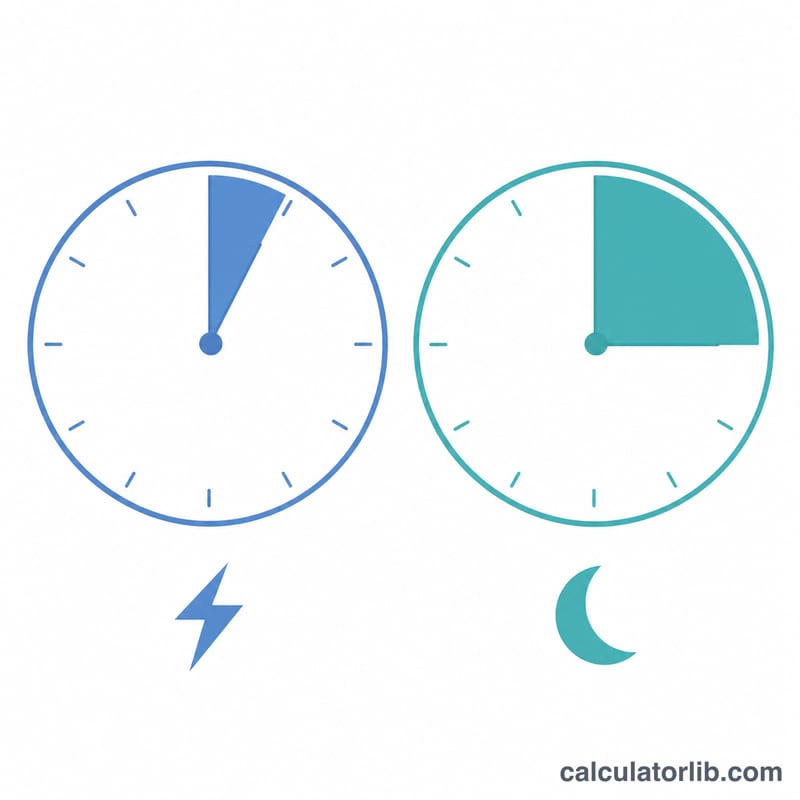
This tool tells you exactly when to set your alarm for a refreshing nap. Sleep scientists generally recommend two ideal nap lengths: a 20-minute power nap, which boosts alertness without leaving you groggy, and a 90-minute full-cycle nap, which completes one entire sleep cycle (light sleep, deep sleep, and REM) so you wake naturally. Napping for an awkward duration in between can leave you in deep sleep when the alarm rings, causing "sleep inertia" — that heavy, disoriented feeling.
How to use it
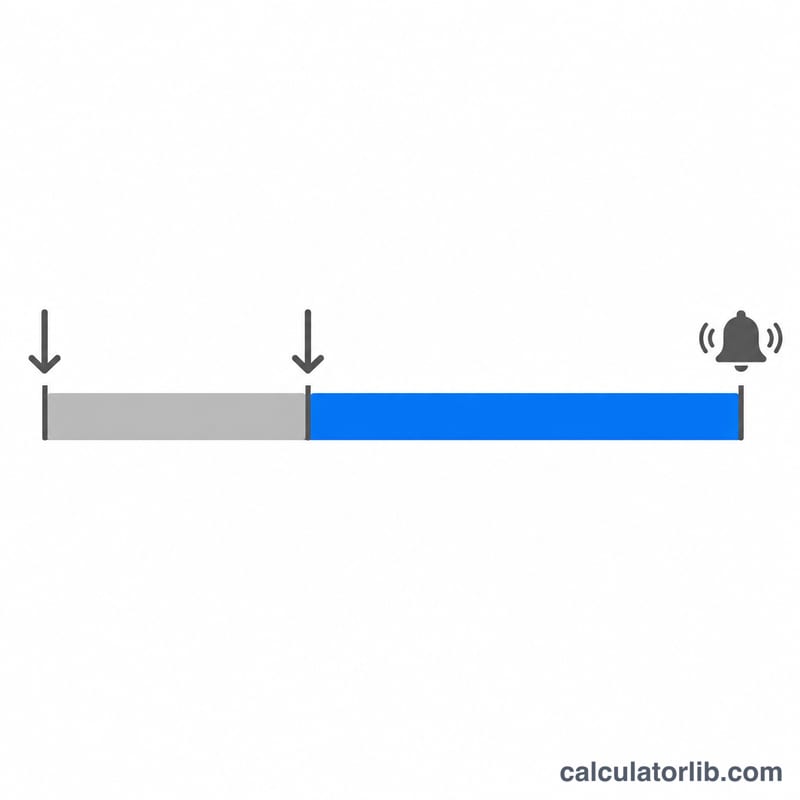
Enter the time you plan to lie down, choose a 20- or 90-minute nap, and add how long you usually take to fall asleep (5–15 minutes is typical). The calculator adds the fall-asleep buffer to the nap length and returns the precise wake-up time in 24-hour format.
The formula explained
The math is simple time arithmetic carried out in minutes since midnight:
$$\text{wake} = \text{nap start} + \text{fall-asleep buffer} + \text{nap length}$$, wrapped around a 24-hour clock. For example, lying down at 14:00 for a 20-minute power nap with a 10-minute buffer gives a total of 30 minutes in bed, so the alarm is set for 14:30.
Worked example
You lie down at 2:00 PM (14:00). You pick a full-cycle 90-minute nap and know you take about 10 minutes to drift off. Total time in bed = \(10 + 90 = 100\) minutes. $$14\text{:}00 + 100\ \text{minutes} = 15\text{:}40$$ so you set your alarm for 3:40 PM.
FAQ
Is a 20- or 90-minute nap better? Choose 20 minutes when you need a quick alertness boost and want to avoid grogginess. Choose 90 minutes when you have time and want full restorative benefits.
Why add a fall-asleep buffer? Most people don't fall asleep instantly. Adding the time it takes you to drift off ensures your actual sleep — not just time in bed — hits the target length.
Are longer naps bad? Naps of 30–60 minutes often interrupt deep sleep and cause the worst grogginess, which is why this tool focuses on the 20- and 90-minute sweet spots.