
What Is the Fat Burning Zone?
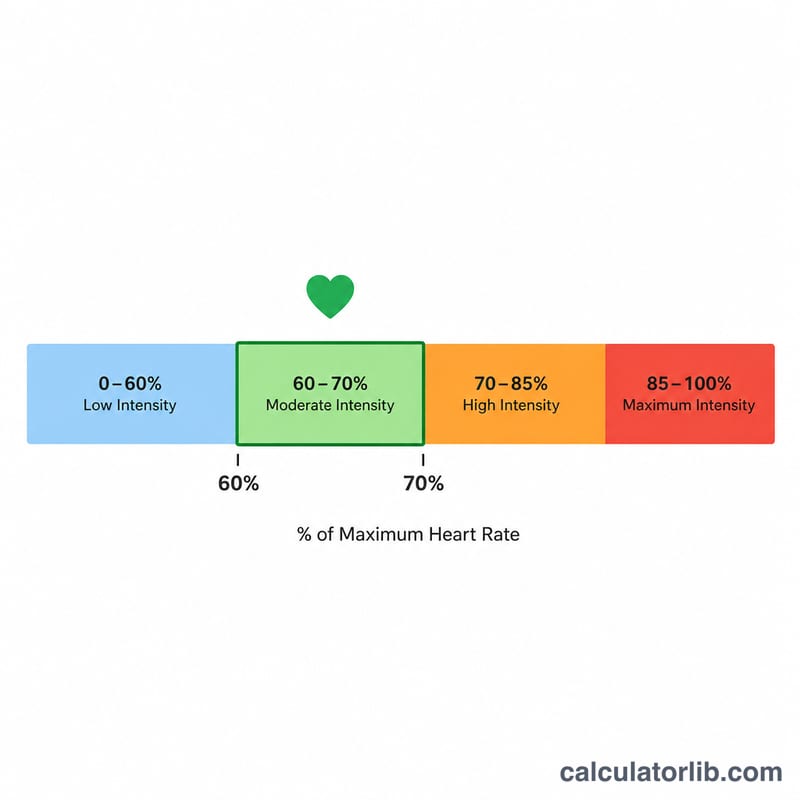
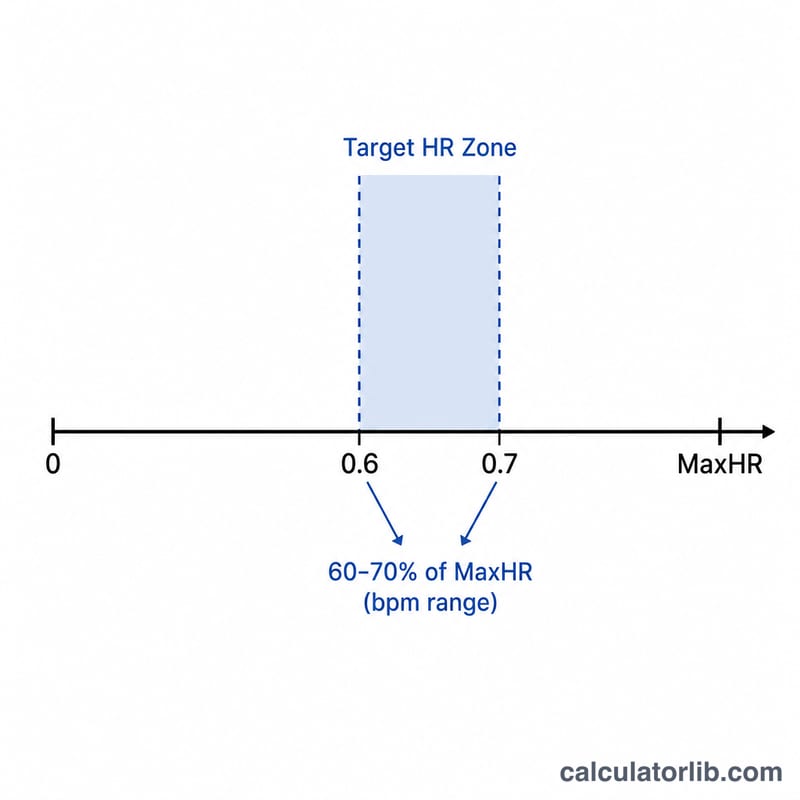
The fat burning zone is a heart rate range — typically 60% to 70% of your maximum heart rate — where your body relies on a higher proportion of fat for fuel during exercise. This calculator estimates that zone from your age using the classic 220 − age maximum heart rate formula, then applies your chosen lower and upper intensity percentages.
How to Use It
Enter your age in years. The default intensity range of 60–70% reflects the commonly cited fat-burning band, but you can adjust the lower and upper percentages to match your training plan. The calculator returns your estimated maximum heart rate plus the lower and upper beats-per-minute (bpm) targets for the zone.
The Formula Explained
First, maximum heart rate is estimated as \(\text{MaxHR} = 220 - \text{age}\). The fat burning zone bounds are then a percentage of that value:
$$\text{lower bound} = \text{MaxHR} \times \frac{\text{lower\%}}{100}$$$$\text{upper bound} = \text{MaxHR} \times \frac{\text{upper\%}}{100}$$All results are rounded to whole beats per minute for practical use during a workout.
Worked Example
For a 40-year-old: maximum heart rate is
$$\text{MaxHR} = 220 - 40 = 180 \text{ bpm}$$The lower bound at 60% is
$$180 \times 0.60 = 108 \text{ bpm}$$and the upper bound at 70% is
$$180 \times 0.70 = 126 \text{ bpm}$$So this person should aim to keep their heart rate between roughly 108 and 126 bpm for fat-burning cardio.
FAQ
Is the fat burning zone the best way to lose fat? Lower-intensity exercise burns a higher percentage of calories from fat, but higher-intensity workouts burn more total calories. Both can support fat loss — total energy expenditure matters most.
How accurate is 220 − age? It is a population estimate and can be off by 10–20 bpm for individuals. For precision, a measured or lab-tested max heart rate is better.
Should I check with a doctor? Yes — if you have heart conditions or are new to exercise, consult a healthcare professional before starting an intense program.