
What Is Heat Pump COP?
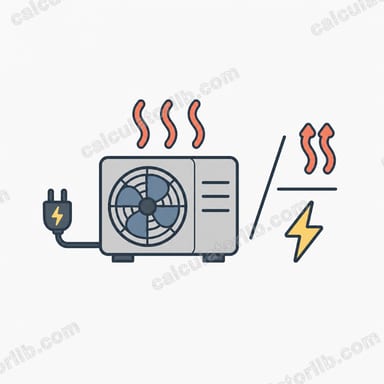
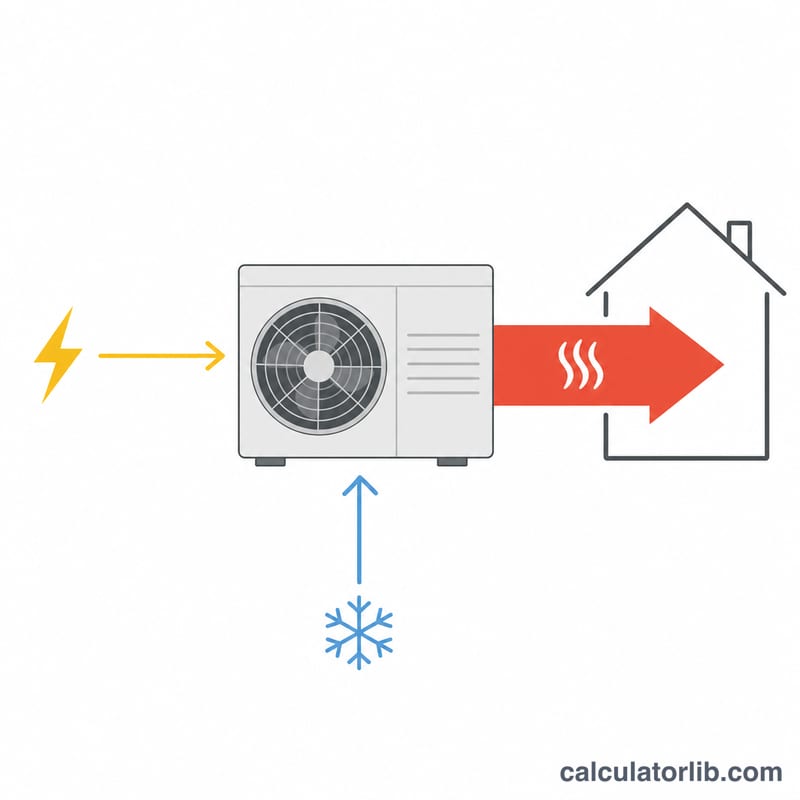
The Coefficient of Performance (COP) is the single most important efficiency metric for a heat pump. It tells you how many units of heat the unit delivers for every unit of electrical energy it consumes. A COP of 3 means the pump produces 3 kW of heat from just 1 kW of electricity — the extra energy is pulled, for free, from the outside air, ground, or water. This is why heat pumps can be far cheaper to run than electric resistance or gas heating.
How to Use This Calculator
Enter the heat pump's heat output in kilowatts (the thermal heating capacity, often listed on the data sheet) and its electrical input in kilowatts (the power the compressor and fans draw). The calculator divides output by input to give the COP, plus an equivalent efficiency percentage. Use figures measured at the same operating conditions for an accurate result.
The Formula Explained
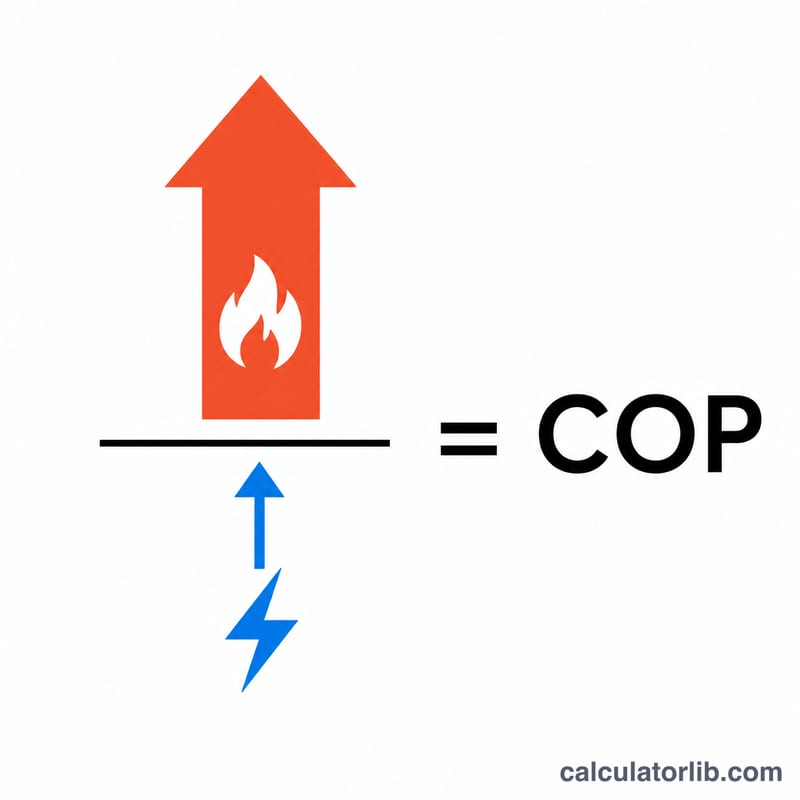
The relationship is simply $$\text{COP} = \frac{\text{heat output}}{\text{electrical input}}$$. Because heat pumps move heat rather than generate it, the COP is almost always greater than 1, typically between 2 and 5 for modern air-source units. Higher COP values mean lower running costs and lower carbon emissions.
Worked Example
A heat pump delivers 9 kW of heat while drawing 3 kW of electricity. $$\text{COP} = 9 \div 3 = \mathbf{3.0}$$ That equals an equivalent efficiency of 300% — for every kilowatt of electricity bought, three kilowatts of heat reach the home.
FAQ
What is a good COP? A COP of 3 or higher is generally considered efficient for an air-source heat pump; ground-source systems can reach 4–5.
Does COP change with weather? Yes. COP falls as outdoor temperatures drop because the pump works harder, which is why a seasonal average (SCOP) is also useful.
How does COP differ from EER? COP describes heating efficiency, while EER (or SEER) describes cooling efficiency. Both are output-over-input ratios.