
What Is the Lumens to Lux Calculator?
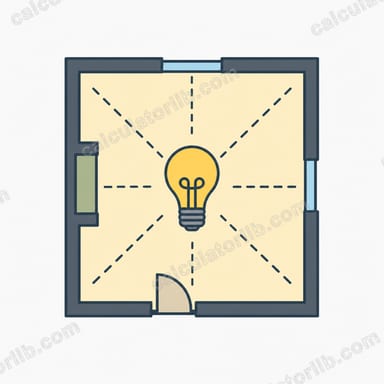
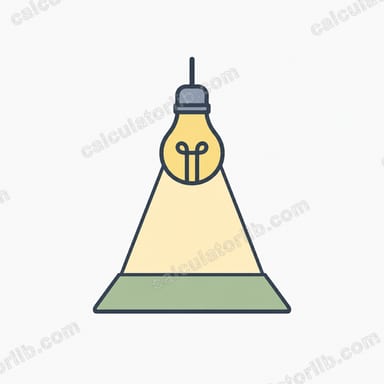
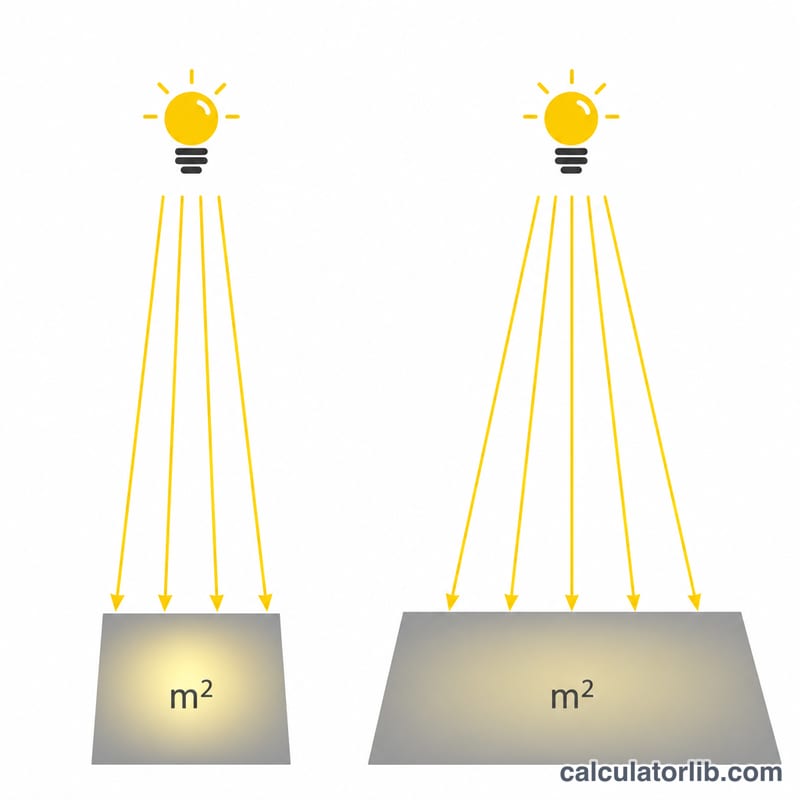
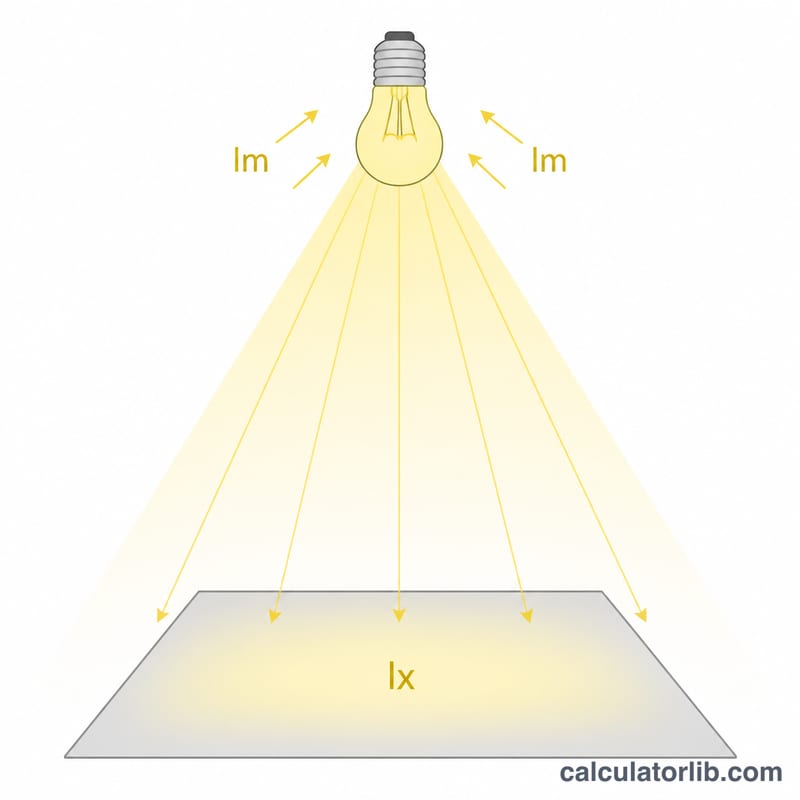
This tool converts luminous flux (measured in lumens, lm) into illuminance (measured in lux, lx). Lumens describe the total amount of visible light a source emits, while lux tells you how brightly that light falls on a surface. Because lux accounts for the area being lit, the same lumen output spread over a larger surface produces fewer lux.
How to Use It
Enter the total luminous flux of your light source in lumens, then enter the illuminated area in square metres. The calculator divides the lumens by the area to return the illuminance in lux. This is ideal for checking whether a room, desk, or workspace meets lighting recommendations.
The Formula Explained
One lux is defined as one lumen per square metre:
$$\text{lux} = \dfrac{\text{lumens}}{\text{area (m}^2\text{)}}$$
So if you spread 1,000 lumens evenly over 1 m², you get 1,000 lux. Spread the same 1,000 lumens over 10 m² and you get just 100 lux.
Worked Example
Suppose a ceiling fixture emits 2,400 lumens and lights a room measuring 12 m². The illuminance is $$2{,}400 \div 12 = 200 \text{ lux}$$ — adequate for general living areas but a little low for detailed reading or kitchen tasks, which typically want 300–500 lux.
FAQ
Are lumens and lux the same thing? No. Lumens measure total light output; lux measures how concentrated that light is on a surface. Lux depends on both lumens and area.
How many lux do I need? Rough guides: hallways 100 lux, living rooms 150–300 lux, kitchens and offices 300–500 lux, and detailed work areas 500–1000 lux.
Does this account for distance or beam angle? This calculator assumes the flux is spread evenly over the stated area. For point sources and beam angles, illuminance also varies with distance (the inverse-square law).