
What Is Mole Fraction?
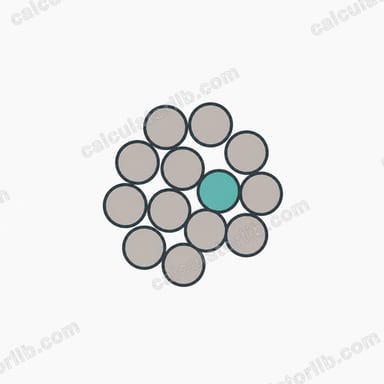
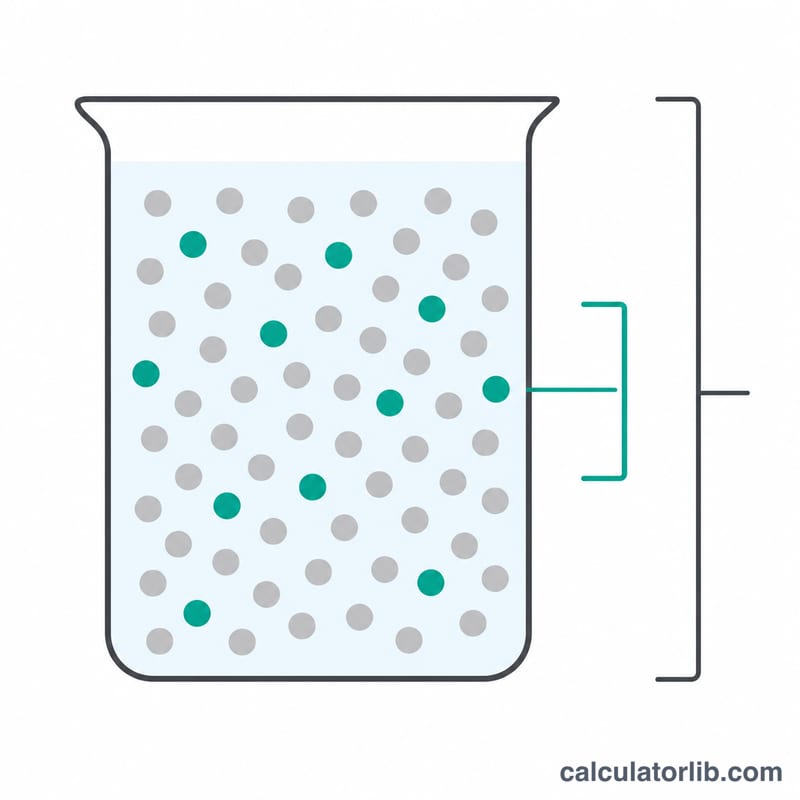
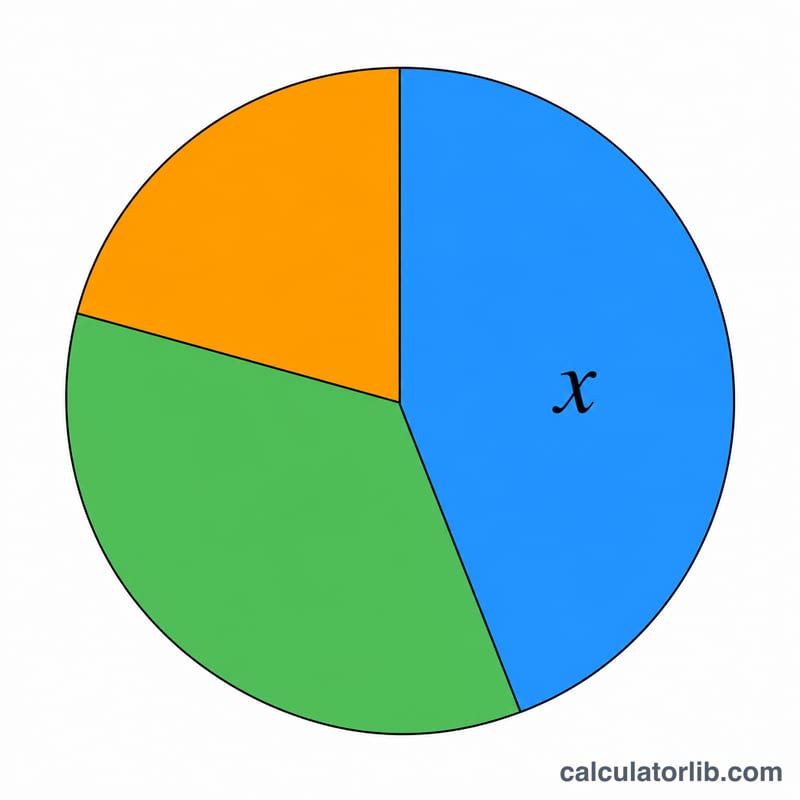
The mole fraction is a way of expressing the concentration of a component in a mixture. It is the ratio of the number of moles of one component to the total number of moles of all components present. Because it is a ratio of like quantities, mole fraction is dimensionless and always falls between 0 and 1. The sum of the mole fractions of every component in a mixture equals exactly 1.
How to Use This Calculator
Enter the moles of the component you are interested in (component A) and the combined moles of all the other components in the mixture. The calculator divides the moles of A by the total moles to return its mole fraction, the equivalent percentage, the mole fraction of the remaining components, and the total moles.
The Formula Explained
The mole fraction of component i is given by $$x_i = \dfrac{n_i}{n_{\text{total}}}$$ where \(n_i\) is the moles of component i and \(n_{\text{total}}\) is the sum of moles of all components. Multiply the result by 100 to express it as a mole percent (mol%).
Worked Example
Suppose a solution contains 2 moles of ethanol and 8 moles of water. The total is \(2 + 8 = 10\) moles. The mole fraction of ethanol is $$\frac{2}{10} = 0.2,$$ or 20%. The mole fraction of water is \(\frac{8}{10} = 0.8\), and \(0.2 + 0.8 = 1\), confirming the sum rule.
FAQ
Is mole fraction the same as percentage? No, but they are related — multiply the mole fraction by 100 to get the mole percent.
Can mole fraction be greater than 1? No. It ranges from 0 (component absent) to 1 (pure component).
What if I have more than two components? Add up the moles of everything except your component of interest and enter that total as the "other components" value.