

What Is Post-Judgment Interest?
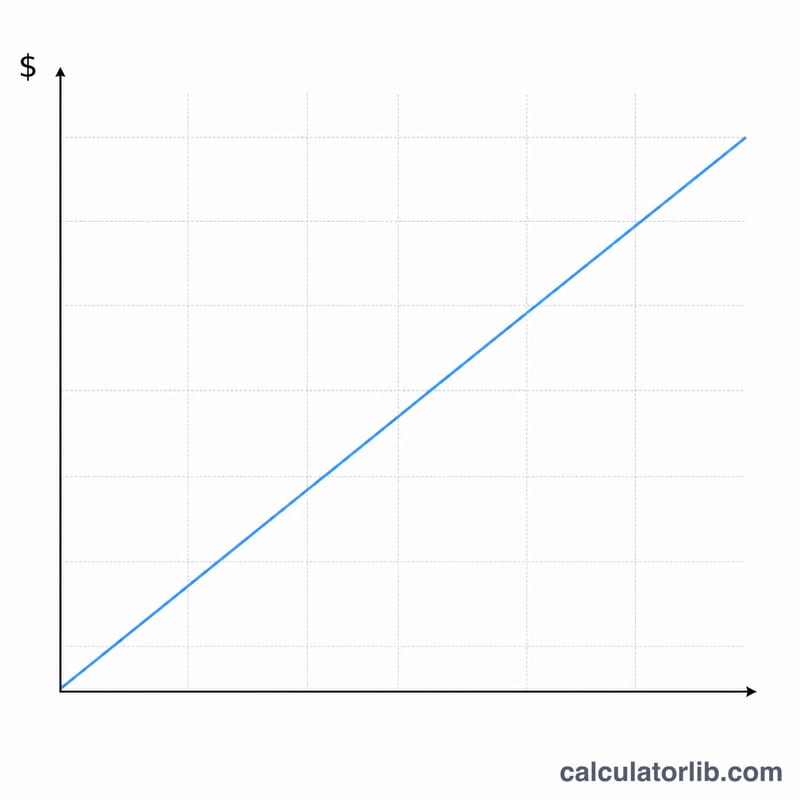
Post-judgment interest is the interest that accrues on a money judgment from the date it is entered until it is fully paid. Courts award it to compensate the prevailing party for the delay in receiving payment. This calculator uses the common simple-daily-interest method, where interest builds on the original judgment amount (no compounding).
How to Use This Calculator
Enter three values: the judgment amount (the principal owed), the annual interest rate as a percentage, and the number of days that have passed since judgment. The tool returns the accrued interest, the daily interest amount, and the total now owed. Always confirm the correct statutory rate, because rates vary by jurisdiction (state versus federal) and sometimes reset periodically.
The Formula Explained
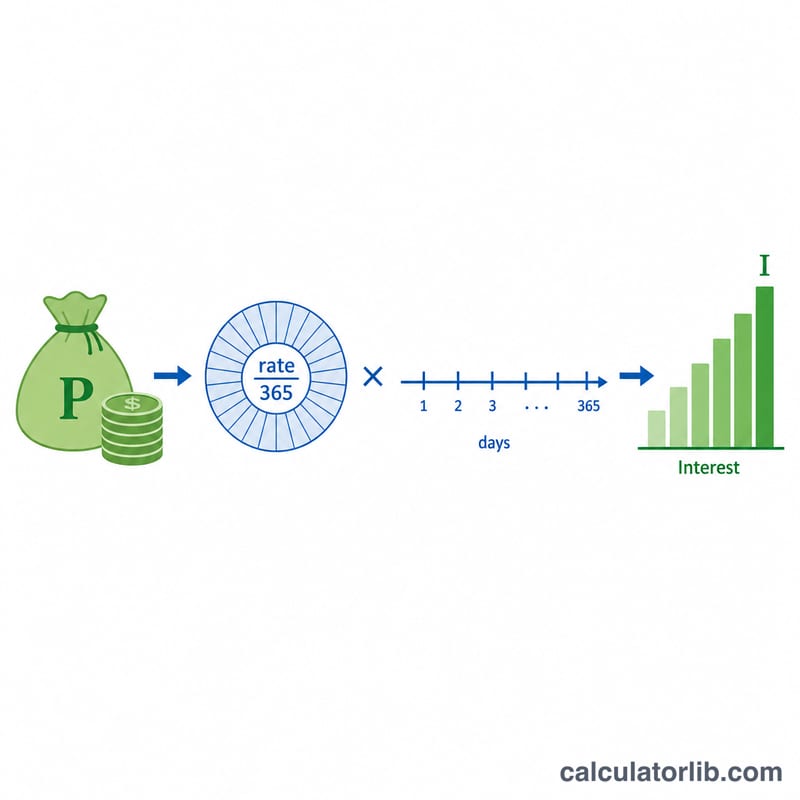
The calculation converts the annual rate to a daily rate by dividing by 365, then multiplies by the principal and the number of days:
$$\text{Interest} = \text{Principal} \times \left(\frac{\text{Annual Rate}}{365}\right) \times \text{Days Elapsed}$$The total amount owed is simply the principal plus this accrued interest. Because the method is simple (not compound), interest is always computed on the original principal only.
Worked Example
Suppose a court enters a judgment of $10,000 with a 5% annual interest rate, and 365 days pass. The daily rate is \(0.05 \div 365 = 0.000136986\). Interest \(= 10{,}000 \times 0.000136986 \times 365 = \$500.00\). The total owed is \(\$10{,}000 + \$500 = \$10{,}500\). Over a single full year at 5%, this equals the annual rate exactly.
FAQ
Is this compound or simple interest? This uses simple interest on the original principal, which is the standard approach for most post-judgment interest statutes.
Why divide by 365? Daily interest is typically based on a 365-day year. Some jurisdictions use 360 days, so verify your local rule.
What rate should I use? Use the statutory or contractual rate that applies to your judgment. Rates differ widely by jurisdiction and over time, so check the official source for your case.