
What Is Net Profit Margin?
Net profit margin is one of the most important profitability ratios in business and marketing. It tells you what percentage of every dollar of revenue is left over as actual profit after all costs — including operating expenses, taxes, interest, and overhead — have been paid. A higher margin means your business keeps more of what it earns, while a thin margin signals that costs are eating into sales.
How to Use This Calculator
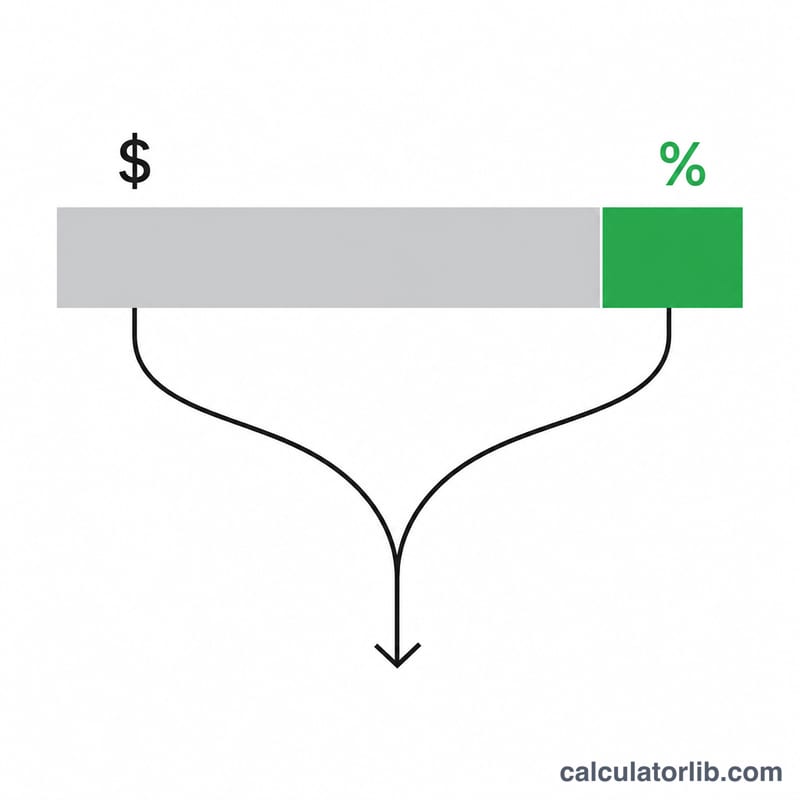
Enter your Total Revenue (all income from sales over a period) and your Net Profit (what remains after every expense). The calculator divides net profit by revenue, multiplies by 100, and returns your margin as a percentage. Use it to compare campaigns, products, time periods, or to benchmark against industry averages.
The Formula Explained
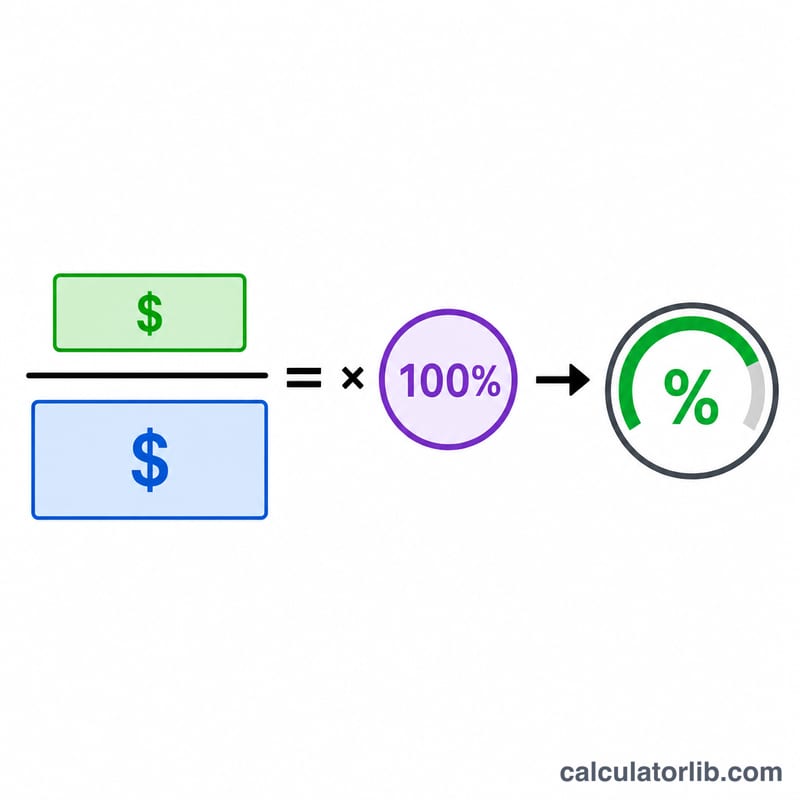
The calculation is simple:
$$\text{Net Profit Margin (\%)} = \frac{\text{Net Profit}}{\text{Revenue}} \times 100$$Revenue is the top line of your income statement; net profit is the bottom line. Dividing the two normalizes profit relative to the size of the business so you can compare a small shop to a large enterprise fairly.
Worked Example
Suppose a marketing agency generated $200,000 in revenue last quarter and, after paying salaries, software, ads, and taxes, was left with $30,000 in net profit. The margin is
$$(30{,}000 \div 200{,}000) \times 100 = 15\%$$That means for every dollar earned, 15 cents became profit.
FAQ
Is a higher margin always better? Generally yes, but very high margins may also mean you are under-investing in growth. Compare against your industry norms.
What is a good net profit margin? It varies widely — software firms may exceed 20%, while retail and food often run 2–8%. Context matters.
What if net profit is negative? A negative margin means the business is operating at a loss; the calculator will show a negative percentage.