
What Is a Pack-Year?
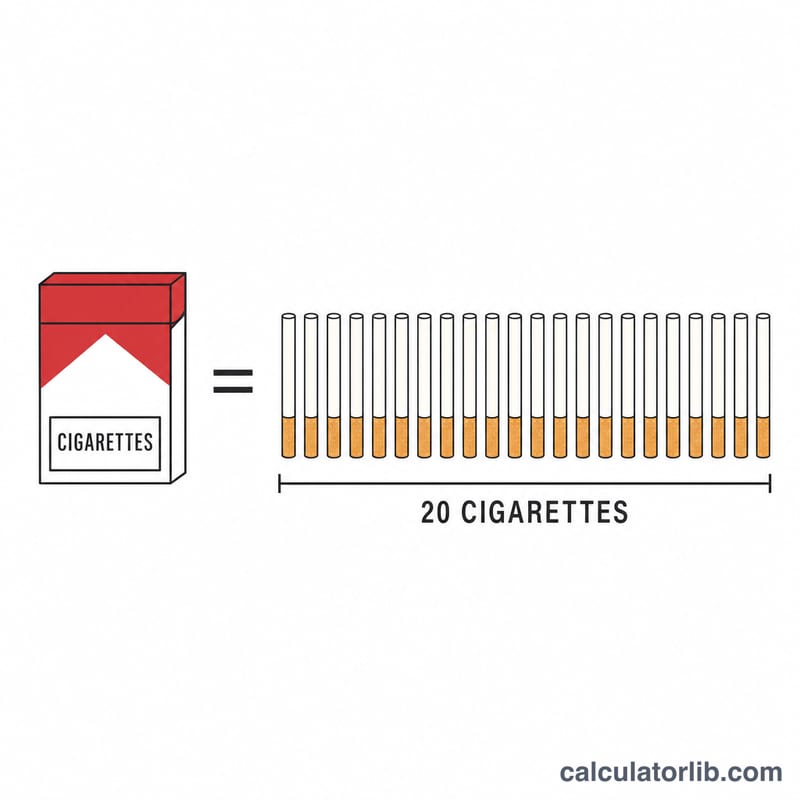
A pack-year is a standardized way to quantify a person's lifetime exposure to tobacco smoke. One pack-year is defined as smoking one pack of cigarettes (20 cigarettes) per day for one full year. Clinicians use pack-years to assess lung cancer risk, decide on screening eligibility (such as low-dose CT scans), and evaluate the impact of smoking on overall health.
How to Use This Calculator
Enter the average number of cigarettes you smoke (or smoked) per day and the total number of years you have smoked. The calculator divides cigarettes per day by 20 to get packs per day, then multiplies by the number of years to give your total pack-years. If your habit changed over time, you can compute separate periods and add the pack-years together.
The Formula Explained
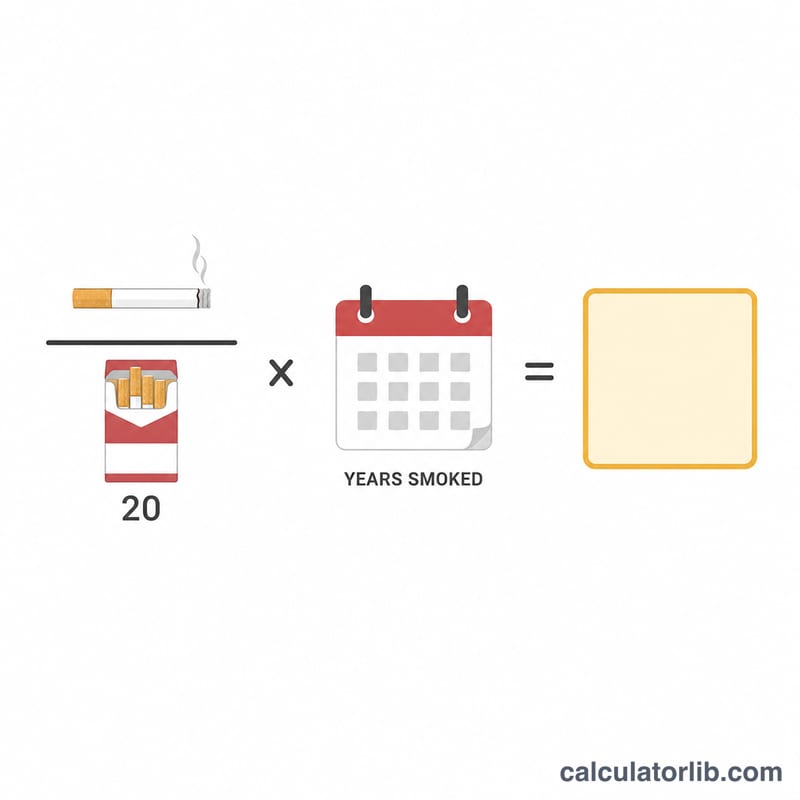
The equation is simply:
$$\text{Pack-Years} = \frac{\text{Cigarettes per day}}{20} \times \text{Years smoked}$$The division by 20 converts a count of cigarettes into "packs," since a standard pack contains 20 cigarettes. Multiplying packs per day by years gives a cumulative dose-like figure.
Worked Example
Suppose someone smoked 30 cigarettes per day for 15 years. Packs per day = \(30 \div 20 = 1.5\).
$$\text{Pack-Years} = 1.5 \times 15 = 22.5$$This gives 22.5 pack-years. A history of 20 or more pack-years is often used as a threshold for lung cancer screening discussions.
FAQ
Is a higher pack-year number worse? Yes — more pack-years generally correlate with greater health risk, including lung cancer and COPD.
Do I count years I have quit? No. Only count the years you were actively smoking.
Does this replace medical advice? No. Pack-years are an estimate for discussion with a healthcare professional, not a diagnosis.