
What Is the Times Interest Earned Ratio?
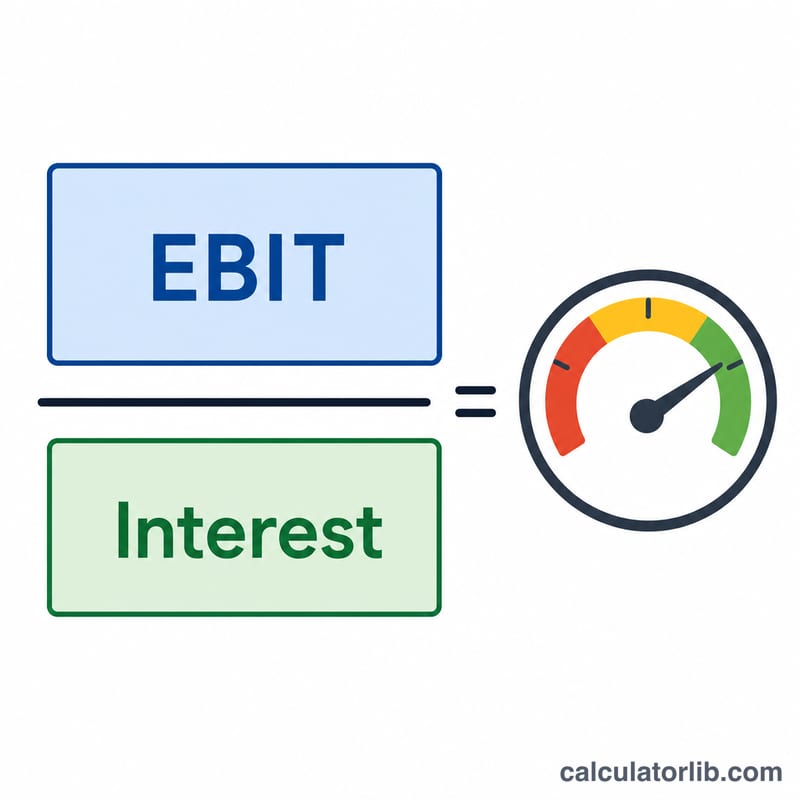
The Times Interest Earned (TIE) ratio, also called the interest coverage ratio, is a solvency metric that shows how many times a company's operating earnings can cover its interest expense. A higher TIE indicates a stronger ability to meet debt obligations, while a low or below-1 ratio signals that earnings may not be sufficient to pay interest.
How to Use This Calculator
Enter your company's EBIT (Earnings Before Interest and Taxes) and its total Interest Expense for the same period. The calculator divides EBIT by interest expense and returns the ratio expressed as a number of "times." Use figures from the same income statement period (annual or quarterly) for an accurate result.
The Formula Explained
The formula is simply $$\text{TIE} = \frac{\text{EBIT}}{\text{Interest Expense}}$$ EBIT is operating profit before deducting interest and taxes. Interest expense is the cost of all borrowings during the period. The result tells you how many times over the company could pay its interest from operating earnings.
Worked Example
Suppose a company reports EBIT of $500,000 and interest expense of $100,000. The TIE ratio is $$500{,}000 \div 100{,}000 = 5.0$$ This means earnings cover interest five times over — generally considered a healthy, comfortable cushion for lenders.
FAQ
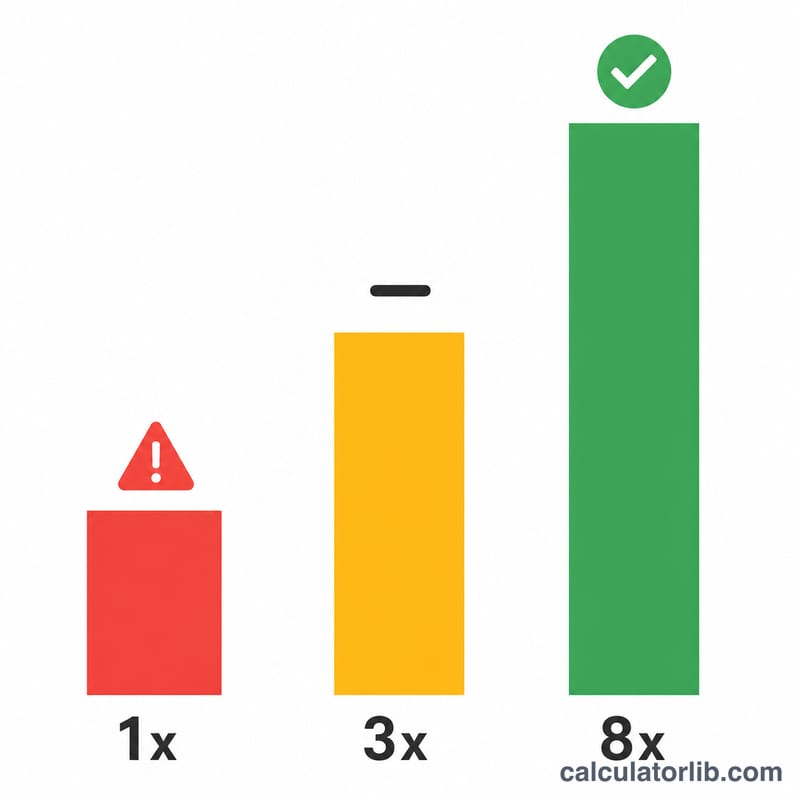
What is a good TIE ratio? A ratio of 2.5 or higher is often viewed as healthy, though acceptable levels vary by industry. Capital-intensive industries may operate safely at lower ratios.
What does a TIE below 1 mean? A ratio under 1 means the company is not generating enough operating income to cover its interest payments, a warning sign of potential default risk.
Is TIE the same as interest coverage ratio? Yes — the terms are used interchangeably, both dividing EBIT by interest expense.