

What Is the Interest Coverage Ratio?
The interest coverage ratio (ICR), also called times interest earned (TIE), measures how many times a company can pay the interest on its outstanding debt using its operating earnings. It is one of the most widely watched solvency and credit metrics, used by lenders, bondholders and equity analysts to gauge default risk.
How to Use This Calculator
Enter your company's EBIT (earnings before interest and taxes, also called operating income) and the total interest expense for the same period. The calculator divides the two to give the coverage ratio as a multiple. A higher number means more comfortable coverage.
The Formula Explained
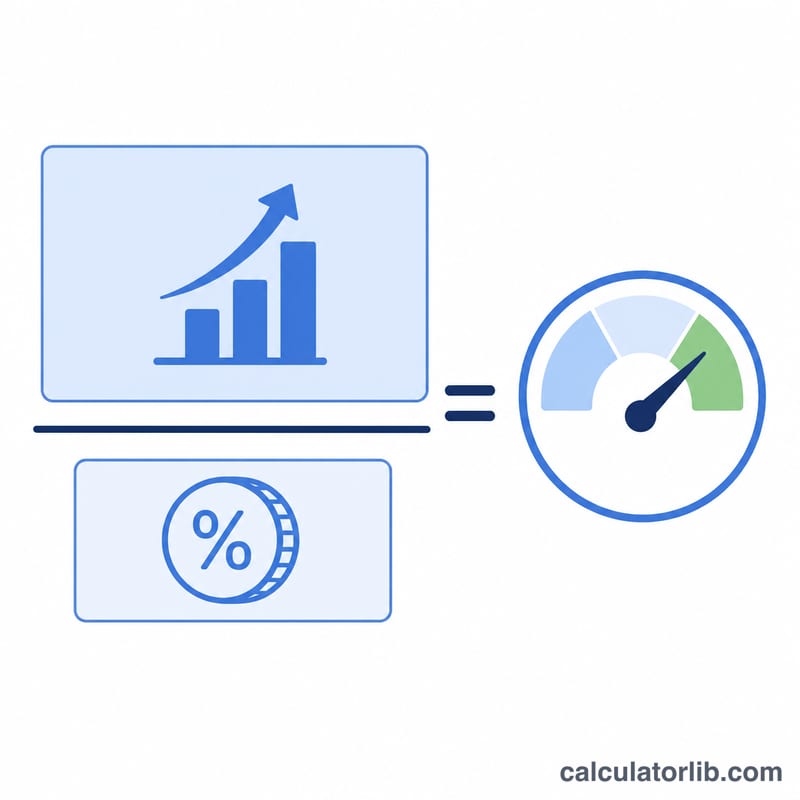
The formula is simply:
$$\text{Interest Coverage Ratio} = \frac{\text{EBIT}}{\text{Interest Expense}}$$
EBIT represents the profit available to service debt before financing costs and taxes. Dividing it by the interest expense shows how many times over that earnings figure could pay the interest bill. A ratio of \(1.0\) means earnings exactly cover interest with nothing to spare.
Worked Example
Suppose a firm reports EBIT of $500,000 and interest expense of $100,000. The ratio is $$\$500{,}000 \div \$100{,}000 = 5.0$$ This means operating earnings could cover the interest payment five times — generally considered healthy.
FAQ
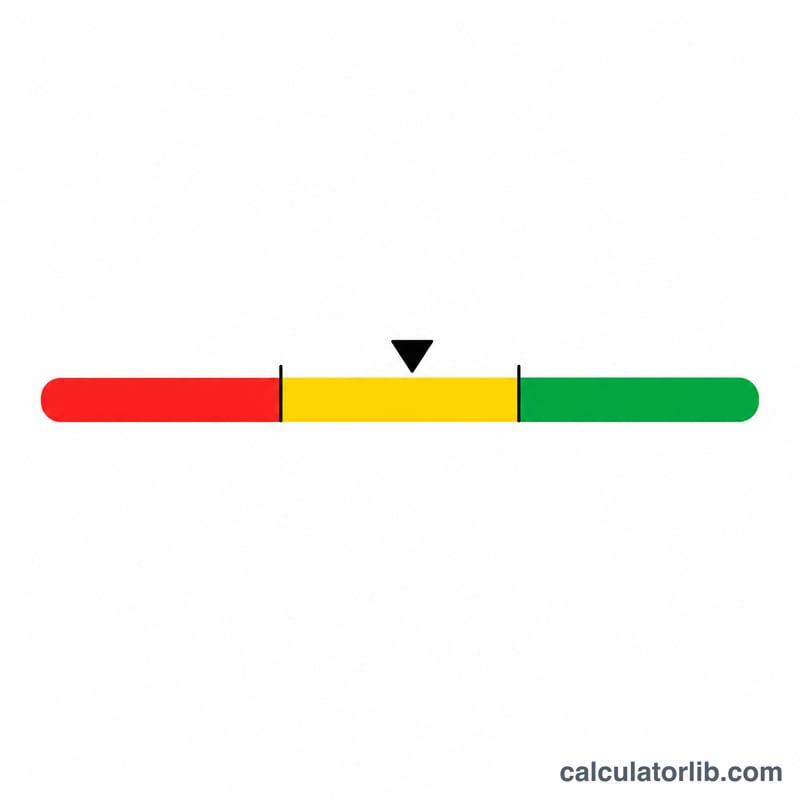
What is a good interest coverage ratio? A ratio above 2.0–2.5 is typically seen as acceptable, while above 3.0 is comfortable. Below 1.5 raises concern, and below 1.0 means the company is not earning enough to cover its interest.
Is interest coverage the same as times interest earned? Yes. "Times interest earned" (TIE) is another common name for exactly the same EBIT ÷ interest expense calculation.
What if interest expense is zero? If a company has no debt interest, the ratio is undefined (division by zero); it effectively has unlimited coverage. This calculator returns 0 in that case to avoid an error — interpret it as "not applicable."