

What Is the Quick Ratio?
The quick ratio, also called the acid-test ratio, is a liquidity metric that measures a company's ability to pay its short-term obligations using only its most liquid assets. Unlike the current ratio, it excludes inventory, because inventory can take time to convert into cash. A higher quick ratio signals stronger short-term financial health.

How to Use This Calculator
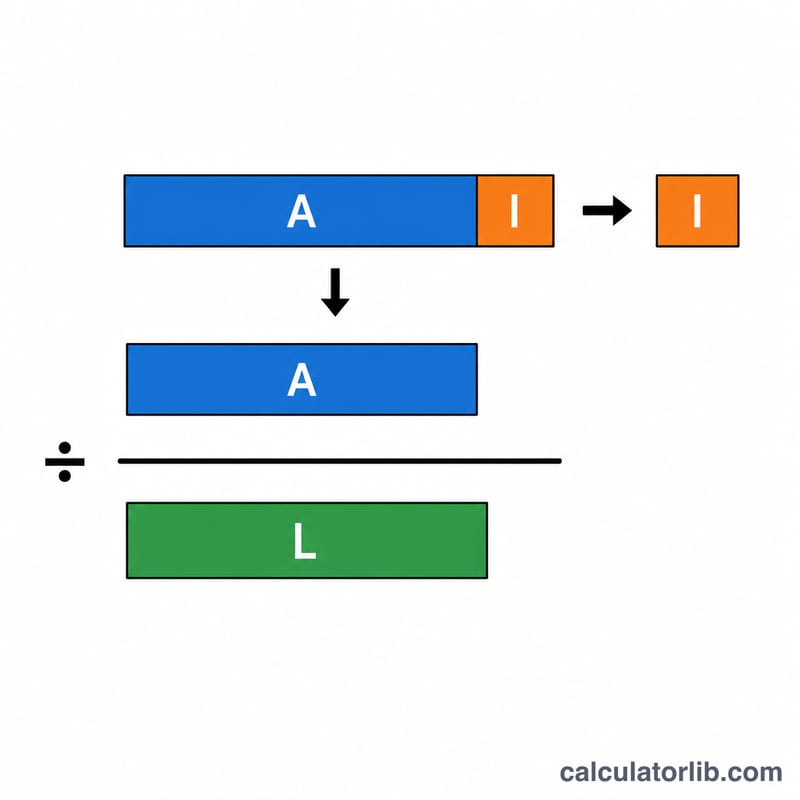
Enter three figures straight from the balance sheet: total current assets, inventory, and total current liabilities. The calculator subtracts inventory from current assets to get "quick assets," then divides by current liabilities. The result tells you how many dollars of quick assets are available for every dollar of short-term debt.
The Formula Explained
$$\text{Quick Ratio} = \frac{\text{Current Assets} - \text{Inventory}}{\text{Current Liabilities}}$$ A ratio of \(1.0\) means the company has exactly enough liquid assets to cover its current liabilities. Many analysts consider a ratio of \(1.0\) or higher to be healthy, though ideal values vary by industry.
Worked Example
Suppose a company has $100,000 in current assets, $40,000 in inventory, and $50,000 in current liabilities. Quick assets \(= \$100{,}000 - \$40{,}000 = \$60{,}000\). $$\text{Quick Ratio} = \frac{\$60{,}000}{\$50{,}000} = 1.2$$ The company holds $1.20 of liquid assets for every $1.00 of short-term debt — a comfortable position.
FAQ
How is the quick ratio different from the current ratio? The current ratio includes inventory in the numerator; the quick ratio excludes it, making it a stricter, more conservative test of liquidity.
What is a good quick ratio? A value of \(1.0\) or above is generally considered healthy, but capital-light or service businesses may operate safely below that.
Can the quick ratio be too high? Yes — a very high ratio may indicate idle cash that could be reinvested to generate returns rather than sitting unused.