
What is the Angle Cut Calculator?
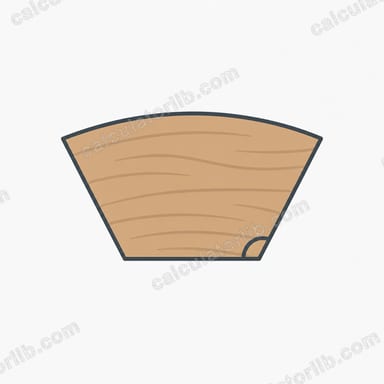
The Angle Cut Calculator helps carpenters, fabricators, and DIYers work out two key measurements for an angled cut: the offset (the perpendicular rise gained across a horizontal run) and the cut length (the diagonal distance of the cut itself). Given a run length and a cut angle, simple trigonometry gives you both numbers instantly — no protractor guesswork required.
How to use it
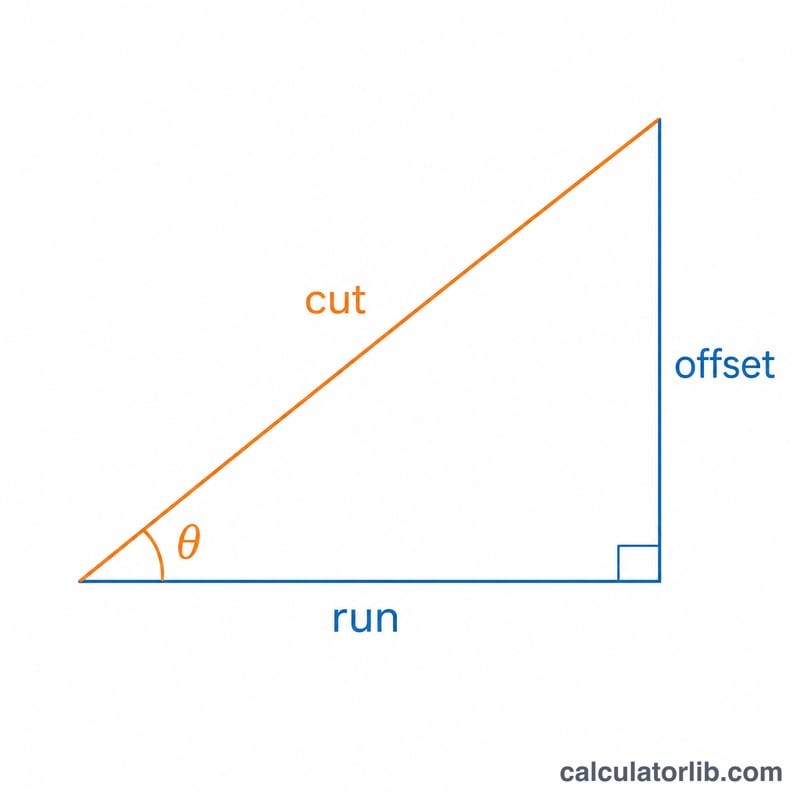
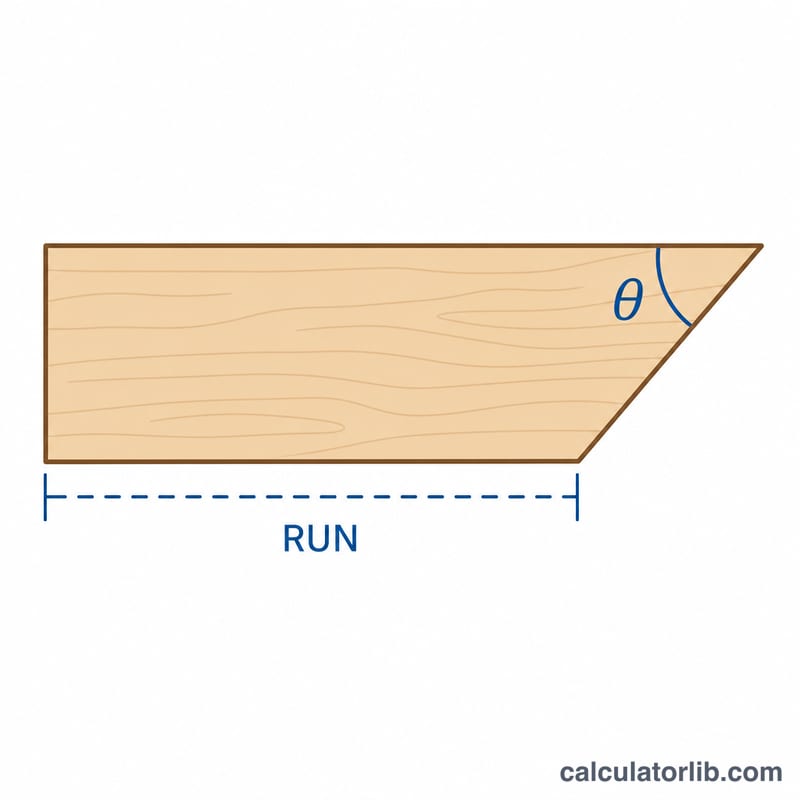
Enter the run — the horizontal (adjacent) distance the cut spans — in any unit you like (mm, cm, inches, feet). Then enter the cut angle in degrees, measured from the run. The calculator returns the offset in the same unit as the run, plus the true cut length you need to mark on your material.
The formula explained
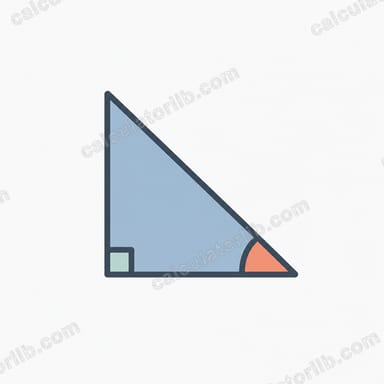
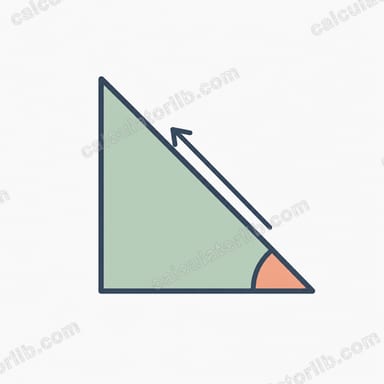
The run and offset form the two legs of a right triangle, and the cut is the hypotenuse. The offset is the opposite side, so $$\text{offset} = \text{run} \times \tan(\text{angle})$$ The cut length follows from the adjacent side and the cosine: $$\text{cut} = \frac{\text{run}}{\cos(\text{angle})}$$ Angles are converted to radians using \(\text{angle} \times \pi / 180\) before the trig functions are applied.
Worked example
Suppose the run is 100 mm and the cut angle is 30°. Then $$\text{offset} = 100 \times \tan(30°) = 100 \times 0.5774 \approx 57.74 \text{ mm}$$ and $$\text{cut length} = \frac{100}{\cos(30°)} = \frac{100}{0.8660} \approx 115.47 \text{ mm}$$ So a 30° cut across a 100 mm run rises 57.74 mm and the blade travels 115.47 mm.
Practical Cutting Tips
- Mark from the run leg. The calculator assumes the angle is measured from the run (the baseline). Lay your tape along that same edge and mark the offset and cut length consistently from one reference point so errors don't compound.
- Account for blade kerf. The saw removes material equal to the blade width (typically 1–3 mm). Mark which side of the line is the keeper, and cut on the waste side so the finished piece keeps its full computed length.
- Cut slightly long, then trim to fit. For trim and finish work, leave 1–2 mm and pare back with a block plane, sander, or a second light pass. It is far easier to remove material than to add it.
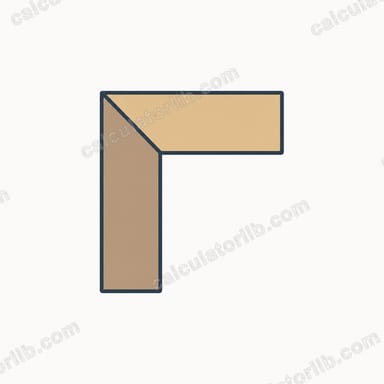
- Confirm the angle reference. A 30° cut from the run is a 60° blade tilt on many miter saws (because saws often reference the perpendicular). Decide whether your angle is from the run or from the blade scale before dialing it in.
- Verify the offset against material width. Make sure the calculated offset (rise) actually fits within the width of your stock — a steep angle on a narrow board can run the cut off the edge before it reaches the marked length.
- Cut a scrap test piece first when the cut is critical or repeated, then check it against the actual opening before committing your good material.
This is general workshop guidance; always follow your tool's safety instructions and wear appropriate eye and hearing protection.
FAQ
Which unit should I use? Any consistent unit — the offset and cut length come out in the same unit as the run you enter.
Why can't I enter 90°? At 90° the run is zero and \(\cos(90°) = 0\), which makes the cut length undefined. The tool caps the angle just under 90°.
Is the angle measured from the run or the cut? It is measured from the run (the adjacent horizontal leg) to the cut line.