
What is the Angle of Elevation?
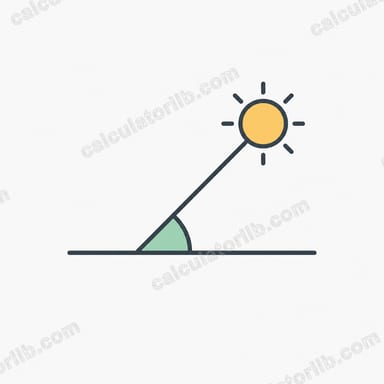
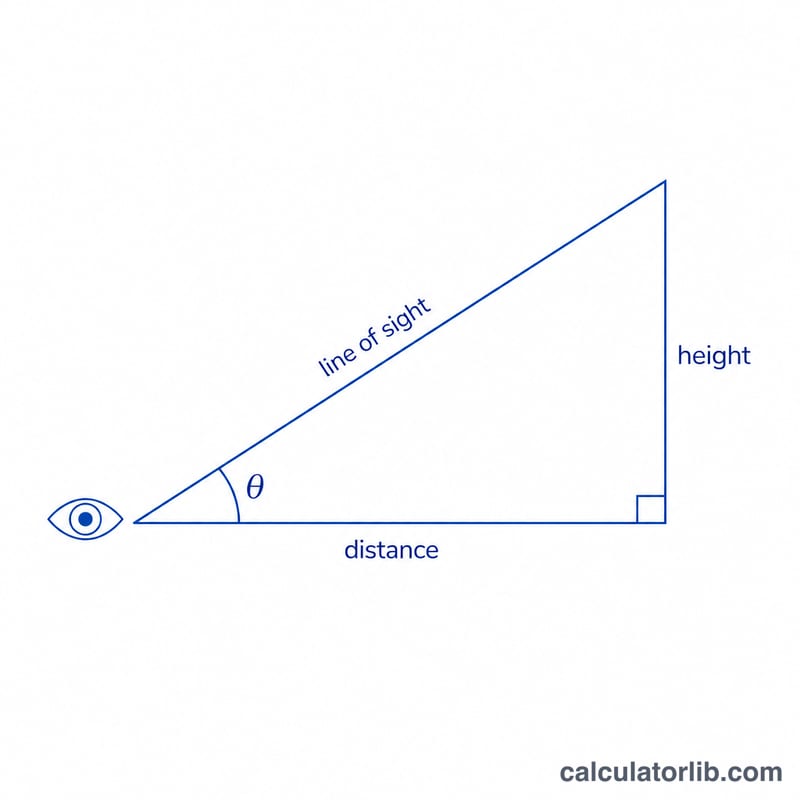
The angle of elevation is the angle between the horizontal line of sight and an object positioned above it. If you know how high an object rises (the vertical height) and how far away it is horizontally (the distance), you can find this angle with a single trigonometric calculation. This tool is universal — it works with any consistent unit (metres, feet, kilometres) as long as height and distance use the same one.
How to use this calculator
Enter the vertical height (rise) of the object and the horizontal distance to it. The calculator returns the angle of elevation in degrees and radians, the line-of-sight (hypotenuse) length, and the slope expressed as a percentage grade.
The formula explained
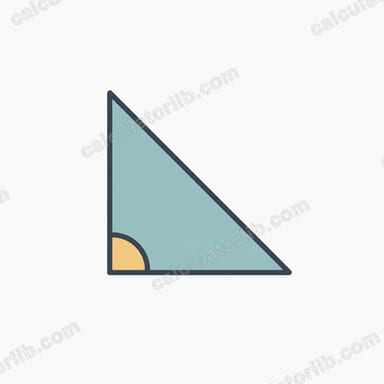
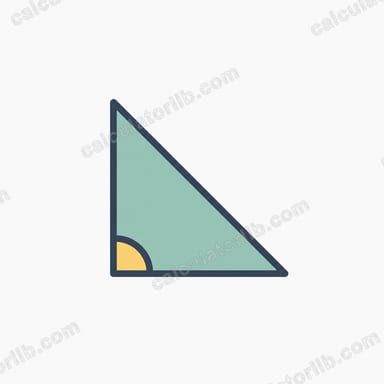
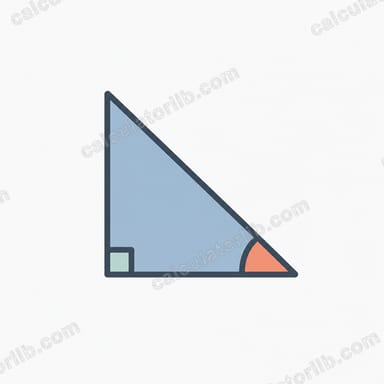
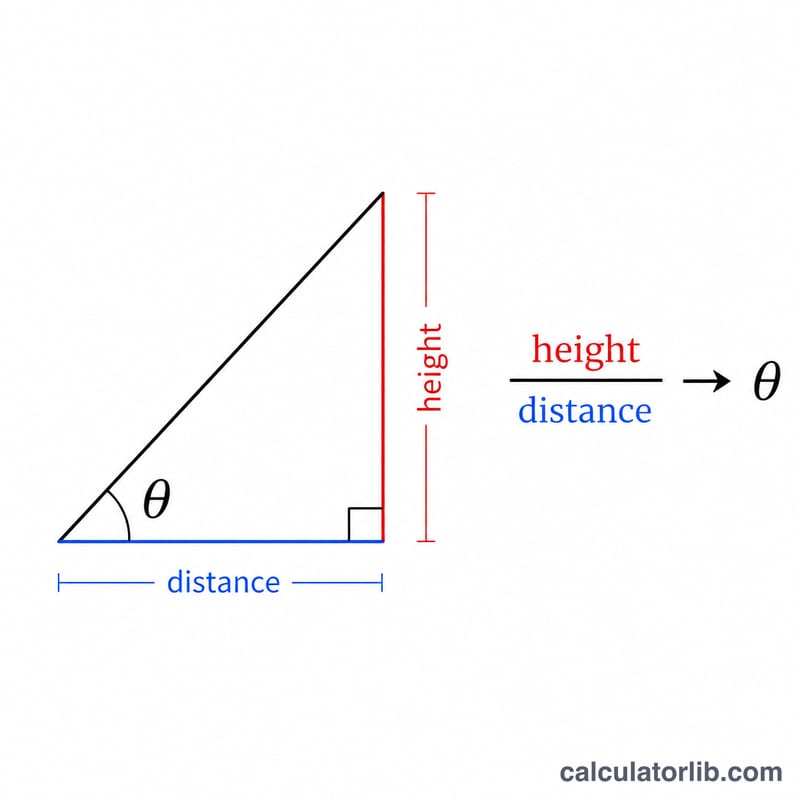
In a right triangle, height is the side opposite the angle and distance is the side adjacent to it. Since the tangent of the angle equals opposite over adjacent, the angle is the inverse tangent (arctan) of that ratio:
$$\theta = \arctan\!\left(\frac{\text{Height}}{\text{Distance}}\right)$$The straight-line distance to the object — the hypotenuse — follows from the Pythagorean theorem: \(L = \sqrt{h^{2} + d^{2}}\).
Worked example
Suppose a tower is 10 m tall and you stand 20 m from its base. The angle of elevation is $$\arctan(10 / 20) = \arctan(0.5) \approx 26.57°.$$ The line of sight is $$\sqrt{10^{2} + 20^{2}} = \sqrt{500} \approx 22.36 \text{ m},$$ and the grade is 50%.
FAQ
What if distance is zero? If the object is directly overhead, the angle of elevation is 90°.
Do the units matter? Only that height and distance use the same unit. The angle is dimensionless.
What is grade percentage? Grade is rise over run expressed as a percent: \((\text{height} / \text{distance}) \times 100\). A 100% grade equals a 45° angle.