
What is the Trapezoid Angle Calculator?
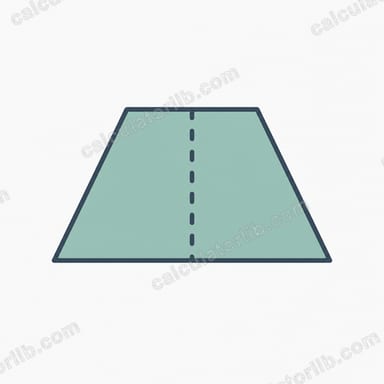
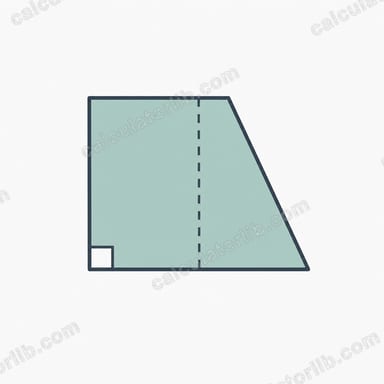
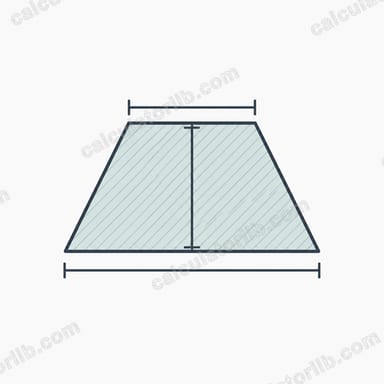
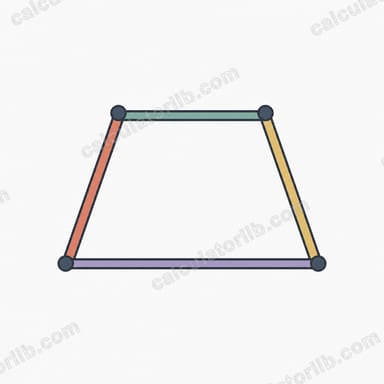
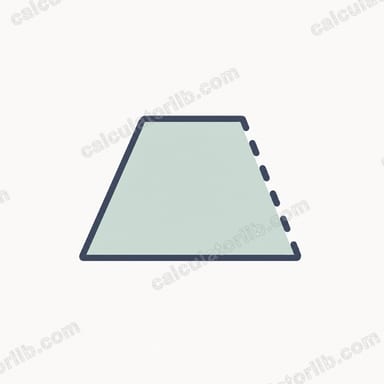
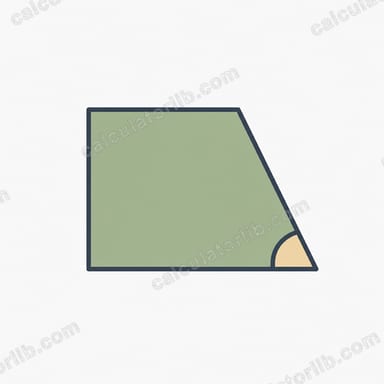
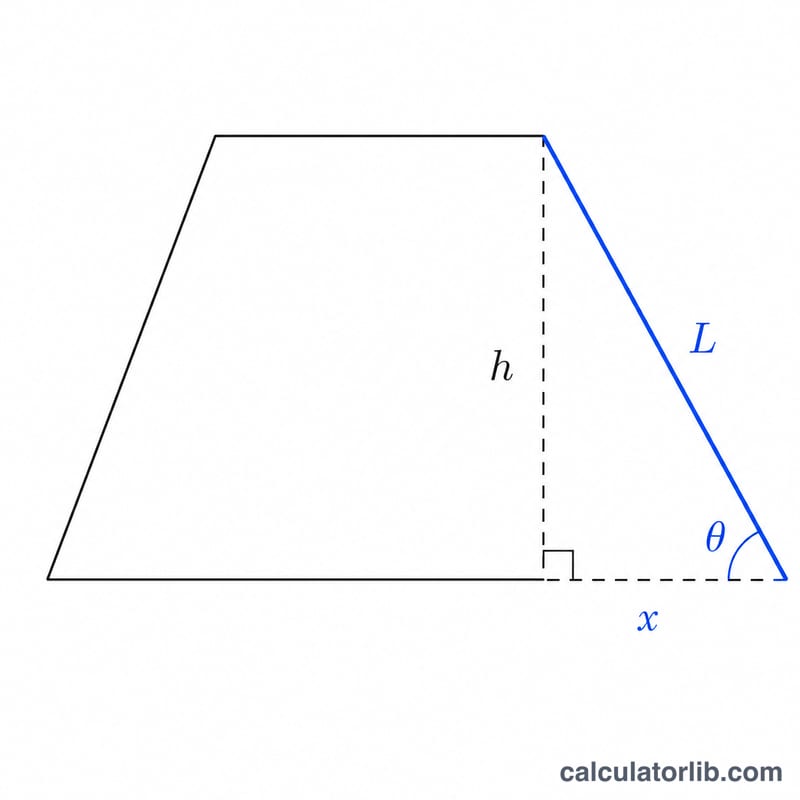
A trapezoid (or trapezium) has two parallel sides of different lengths joined by two slanted legs. This calculator finds the interior angles formed by a leg with the two parallel bases, along with the actual length of the slanted leg. You only need two measurements: the vertical height between the parallel sides and the horizontal offset (how far the leg runs sideways across that height).
How to use it
Enter the height (the perpendicular distance between the two parallel sides) and the horizontal offset of the leg. The tool returns the bottom angle (where the leg meets the longer base), the supplementary top angle, and the leg length. Use consistent units — both inputs in the same units (cm, inches, etc.).
The formula explained
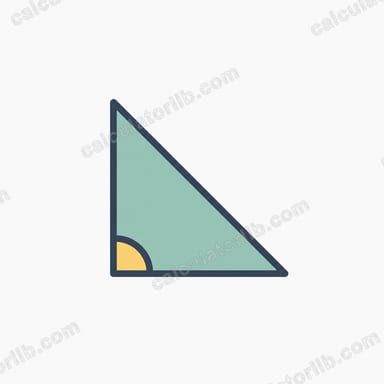
The slanted leg, the height, and the horizontal offset form a right triangle. The base angle is the inverse tangent of opposite over adjacent: \(\theta = \arctan(\text{height} / \text{offset})\). Because the bottom and top angles sit on the same straight leg between two parallel lines, they are co-interior (supplementary) angles, so they add to \(180^{\circ}\). The leg length is the hypotenuse: \(\sqrt{\text{height}^{2} + \text{offset}^{2}}\).
$$\begin{gathered} \theta_{\text{bottom}} = \tan^{-1}\!\left(\frac{\text{Height}}{\left|\text{Offset}\right|}\right) \\[1.2em] \theta_{\text{top}} = 180^{\circ} - \theta_{\text{bottom}} \qquad L = \sqrt{\text{Height}^{2} + \text{Offset}^{2}} \end{gathered}$$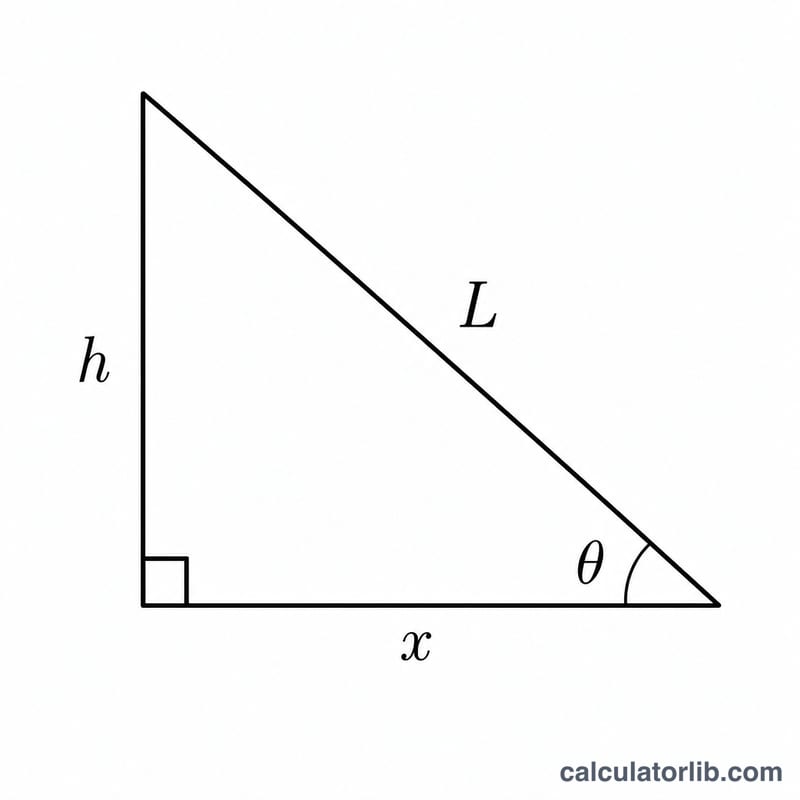
Worked example
Suppose height = 4 and offset = 3. The base angle is \(\arctan(4/3) = 53.13^{\circ}\). The top angle is \(180 - 53.13 = 126.87^{\circ}\). The leg length is \(\sqrt{16 + 9} = \sqrt{25} = 5\). This is the classic 3-4-5 right triangle.
FAQ
What if the offset is zero? A zero offset means the leg is vertical, giving a base angle of exactly \(90^{\circ}\) (a right trapezoid).
Why do the angles sum to 180°? The two parallel bases are cut by the same leg, forming co-interior angles, which are always supplementary.
Can I use negative offset? Yes — the calculator uses the absolute value of the offset, so direction does not change the angle magnitude.