
What Is the Ape Index?
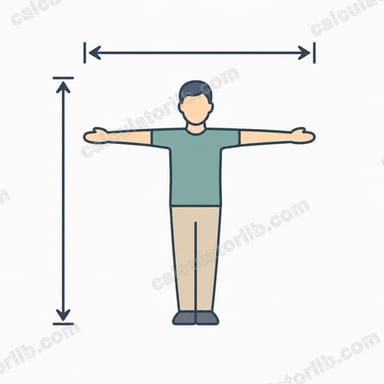
The ape index (sometimes called the "ape factor" or gorilla index) is a simple comparison between your arm span and your height. For most people, arm span and height are roughly equal. When your arm span is longer than your standing height, you have a positive ape index — a trait that is especially prized in sports like rock climbing, swimming, basketball and boxing, where extra reach is a genuine advantage. This calculator works with centimeters and gives an instant result, so you can quickly find out where you stand.
How to Use This Calculator
Measuring takes about a minute and is easiest with a partner:
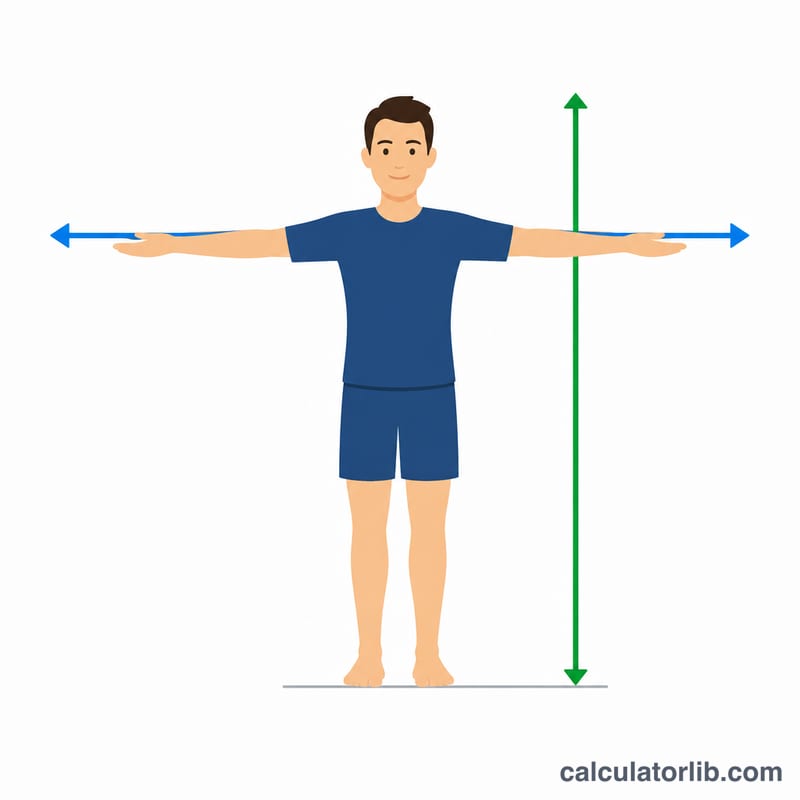
- Height: Stand barefoot against a wall, look straight ahead, and mark the top of your head. Measure from the floor to the mark in centimeters.
- Arm span: Stand with your back to a wall and stretch both arms out horizontally, palms forward. Measure from the tip of one middle finger to the tip of the other.
- Enter both numbers above and the calculator returns your ape index instantly.
The Formula Explained
There are two common ways to express the ape index. The first is a simple difference:
- \(\text{Ape index (difference)} = \text{Arm span} - \text{Height}\)
- \(\text{Ape index (ratio)} = \text{Arm span} \div \text{Height}\)
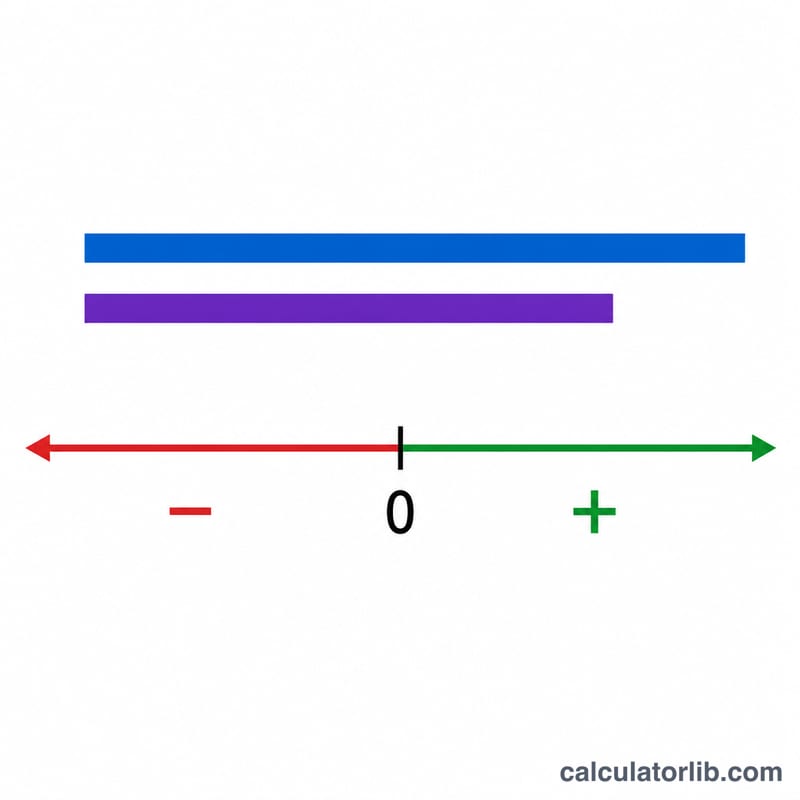
A difference of 0 cm (or a ratio of 1.0) means your arm span and height are equal — sometimes called a "neutral" or "zero" ape index. A positive number means your reach exceeds your height; a negative number means your height exceeds your reach.
Worked Example
Suppose your height is 178 cm and your arm span is 184 cm:
- Difference: $$184 - 178 = +6 \text{ cm}$$
- Ratio: $$184 \div 178 = 1.034$$
This person has a positive ape index of +6 cm, meaning slightly above-average reach — a useful edge for climbing and reach-based sports.
Interpreting Your Ape Index
The ape index is the simple difference between your arm span and your height: \(\text{Ape Index} = \text{Arm Span} - \text{Height}\). It is often also expressed as a ratio (arm span ÷ height). A result tells you how your reach compares to your stature.
- Positive ape index (arm span longer than height, ratio greater than 1.0): your reach exceeds your stature. The larger the positive number, the more pronounced the advantage in sports that reward reach.
- Neutral ape index (arm span roughly equal to height, ratio near 1.0): this is the most common configuration. Leonardo da Vinci's Vitruvian Man assumed exactly this 1:1 proportion.
- Negative ape index (arm span shorter than height, ratio below 1.0): your reach is shorter than your stature. This is less common but entirely normal.
For most people the difference falls within roughly −2 cm to +2 cm, with a ratio very close to 1.0. Values outside about ±5 cm are relatively uncommon.
In reach-based sports a positive ape index is generally seen as advantageous. A commonly cited threshold is around +5 cm or more, which begins to provide a noticeable edge:
- Rock climbing — extra reach lets you span between holds, so a positive index (often +5 cm and above) is frequently cited among elite climbers.
- Swimming — longer arms increase the propulsive surface and stroke length; many world-class swimmers have notably positive indices.
- Boxing & combat sports — reach (closely related to arm span) lets a fighter strike from a safer distance, so a positive index is prized.
- Basketball — wingspan well beyond height aids defense, rebounding and shot-blocking, and is routinely measured at the draft combine.
Keep in mind the ape index is only one of many factors in athletic performance; technique, strength, flexibility and conditioning matter far more for most people.
Ape Index Across Different Body Proportions
The table below shows several realistic height and arm-span pairings with the computed difference (ape index in cm), the arm span ÷ height ratio, and a plain-language label. The ratio is rounded to three decimals.
| Height (cm) | Arm Span (cm) | Difference (cm) | Ratio | Label |
|---|---|---|---|---|
| 165 | 163 | −2 | 0.988 | Negative (reach shorter than height) |
| 170 | 170 | 0 | 1.000 | Neutral (equal proportions) |
| 178 | 184 | +6 | 1.034 | Positive (advantageous reach) |
| 190 | 200 | +10 | 1.053 | Strongly positive (significant reach edge) |
| 175 | 176 | +1 | 1.006 | Slightly positive (within typical range) |
Notice that the same difference in centimeters yields a slightly smaller ratio for taller people, because the difference is divided by a larger height. For comparing athletes of different sizes, the ratio is often the fairer measure, while the raw centimeter difference is quicker to read.
Frequently Asked Questions
What is a good ape index? For climbers, anything positive helps, and +5 cm or more is considered advantageous. Most people fall between −2 and +2 cm.
Can I change my ape index? No. It is determined by your skeletal proportions and does not change with training. You can only improve how effectively you use your reach.
Is a negative ape index bad? Not at all. Shorter arms can help with leverage in some lifts and pressing movements, so it simply suits different activities.