What this calculator does
The Daily Caffeine Intake Calculator adds up the caffeine you consume across common beverages — brewed coffee, espresso, tea, energy drinks and cola — and shows your total in milligrams (mg) for the day. It then compares that total to 400 mg, the daily amount that health authorities such as the U.S. FDA and EFSA generally consider safe for healthy adults. The 400 mg ceiling is a general guideline, not a personalized medical recommendation.
How to use it
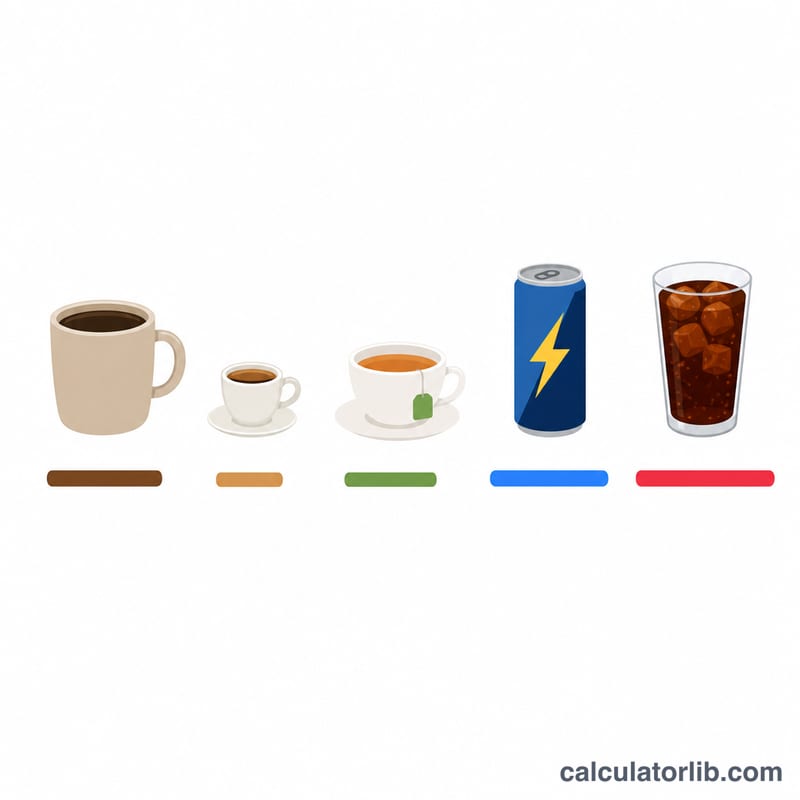
Enter how many servings of each drink you have on a typical day. The calculator uses standard average caffeine values: 95 mg per 8 oz brewed coffee, 63 mg per espresso shot, 47 mg per 8 oz tea, 80 mg per 8 oz energy drink, and 34 mg per 12 oz cola. Actual content varies by brand, brew strength and cup size, so treat the result as an estimate.
The formula explained
For each drink the contribution is servings × mg per serving. The total is the sum of all contributions:
$$\text{Total (mg)} = 95\,\text{Coffee} + 63\,\text{Espresso} + 47\,\text{Tea} + 80\,\text{Energy} + 34\,\text{Soda}$$The percent of the safe limit is total ÷ 400 × 100:
$$\text{Percent of Limit} = \frac{\text{Total (mg)}}{400} \times 100\%$$A value over 100% means you are above the recommended daily ceiling. The amount remaining is:
$$\text{Remaining (mg)} = 400 - \text{Total (mg)}$$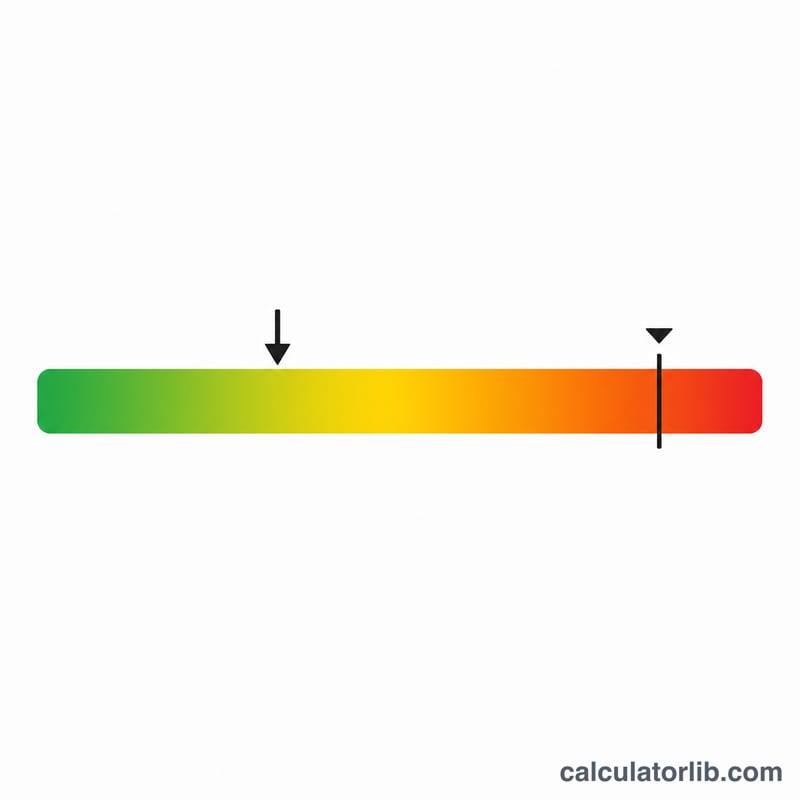
Worked example
Suppose you drink 2 cups of coffee, 1 cup of tea, and 1 energy drink. Coffee = \(2 \times 95 = 190\) mg; tea = \(1 \times 47 = 47\) mg; energy = \(1 \times 80 = 80\) mg. Total:
$$190 + 47 + 80 = 317\,\text{mg}$$which is
$$\frac{317}{400} \times 100 = 79.25\%$$of the safe limit, leaving 83 mg of headroom.
FAQ
Is 400 mg the limit for everyone? No. Pregnant people are usually advised to stay under about 200 mg, and individuals sensitive to caffeine or with certain conditions may need much less. Always follow your doctor's advice.
Why do real drinks differ from the averages here? Caffeine depends on bean type, brew time, steeping and serving size. A large specialty coffee can exceed 300 mg by itself.
Does caffeine in chocolate or supplements count? Yes — any caffeine source adds up. This tool covers the most common drinks; add other sources mentally if needed.