
What is the Corrected Magnesium Calculator?
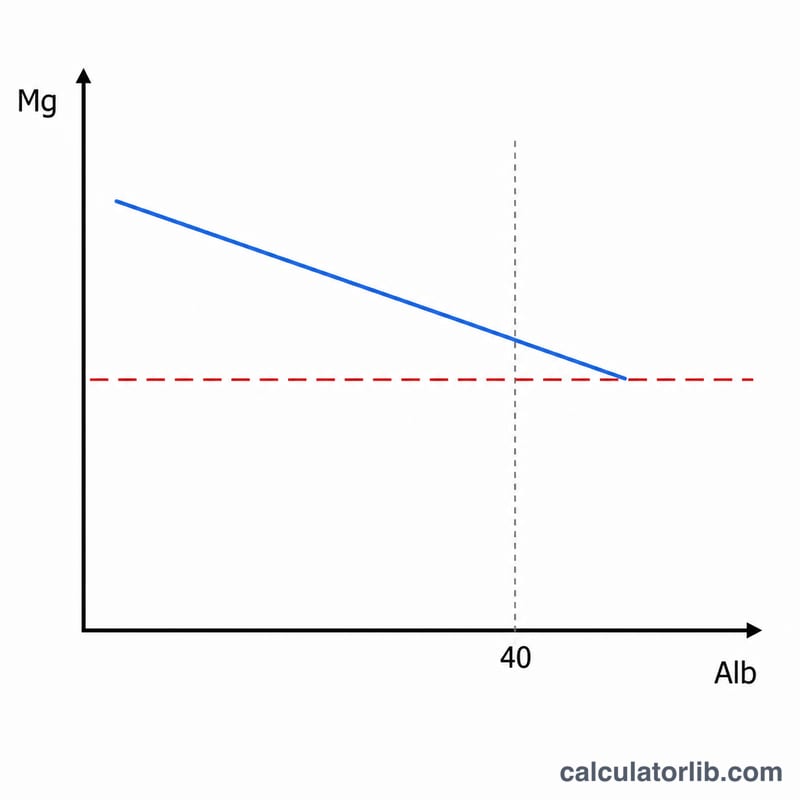
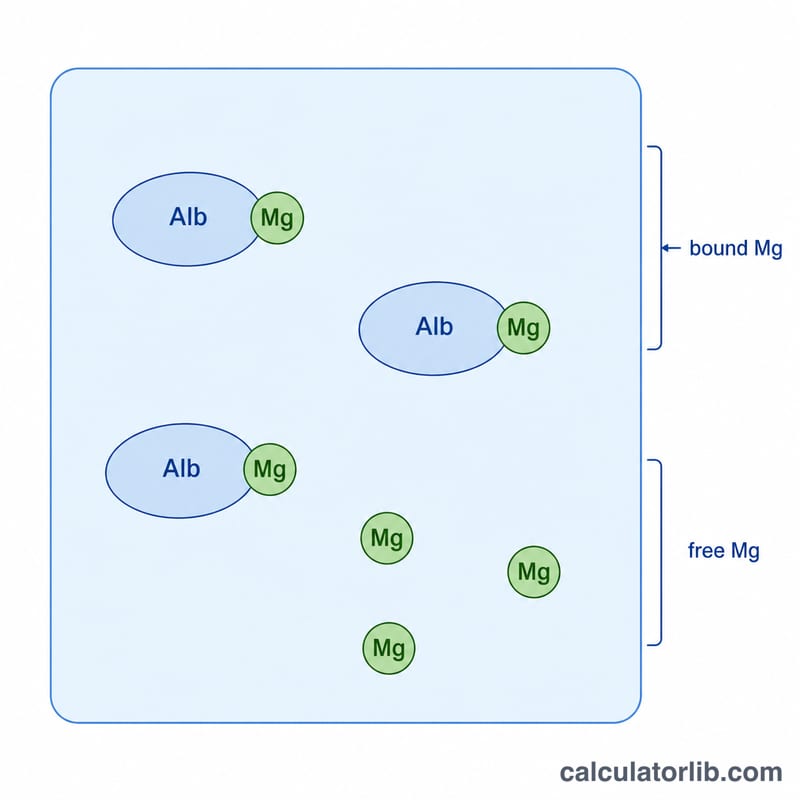
Most circulating magnesium is bound to plasma proteins, chiefly albumin. When albumin is low (hypoalbuminemia), the measured total serum magnesium can underestimate the physiologically active level. This calculator estimates an albumin-corrected magnesium value, normalized to a reference albumin of 40 g/L, so clinicians can interpret magnesium results in patients with abnormal protein levels.
How to use it
Enter the patient's measured serum magnesium in mmol/L and the serum albumin in g/L. The calculator returns the corrected magnesium concentration. If albumin is below 40 g/L the corrected value rises slightly; if albumin is above 40 g/L it falls. The correction is an estimate and should always be interpreted alongside clinical findings and, where indicated, ionized magnesium measurement.
The formula explained
The adjustment uses: $$\text{Corrected Mg} = \text{Measured Mg} + 0.005 \times \left(40 - \text{Albumin}\right)$$ Here 40 g/L is the assumed normal albumin and 0.005 mmol/L is the change in bound magnesium per g/L of albumin. The bracketed term measures how far albumin deviates from normal, and the product shifts the magnesium reading accordingly.
Worked example
A patient has a measured magnesium of 0.70 mmol/L and albumin of 30 g/L. $$\text{Corrected Mg} = 0.70 + 0.005 \times \left(40 - 30\right) = 0.70 + 0.005 \times 10 = 0.70 + 0.05 = \textbf{0.75 mmol/L}$$ The corrected value is higher because the low albumin reduced the measured total magnesium.
FAQ
Is this the same as corrected calcium? It is analogous — both adjust a protein-bound electrolyte for albumin — but the constants differ.
What units should I use? Magnesium in mmol/L and albumin in g/L. Convert other units before entering.
Does correction replace a lab test? No. It is an estimate; ionized magnesium is the definitive measurement when accuracy is critical.