

What is the Duckworth-Lewis Calculator?
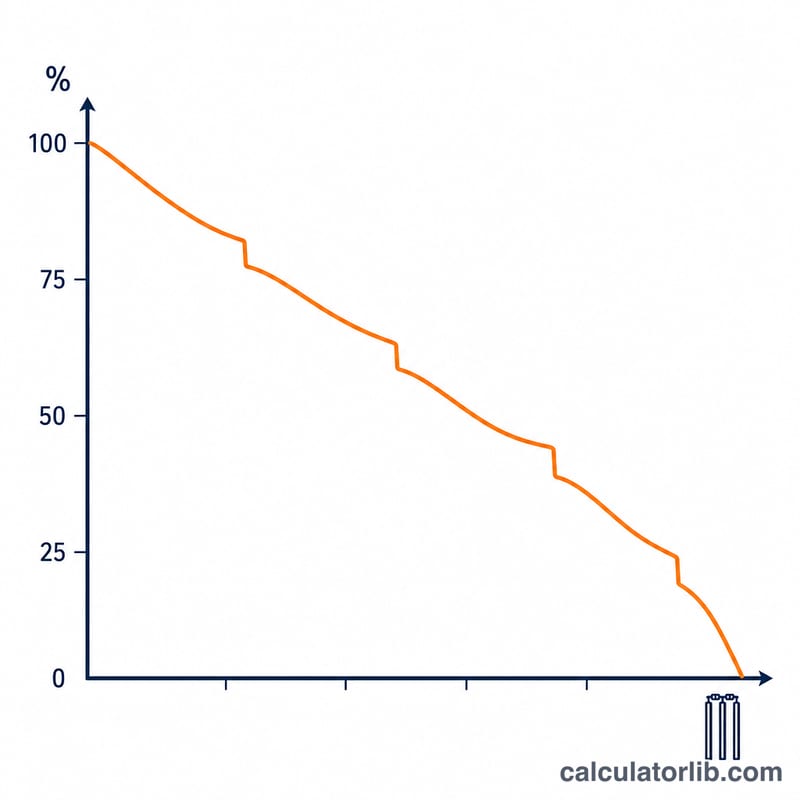
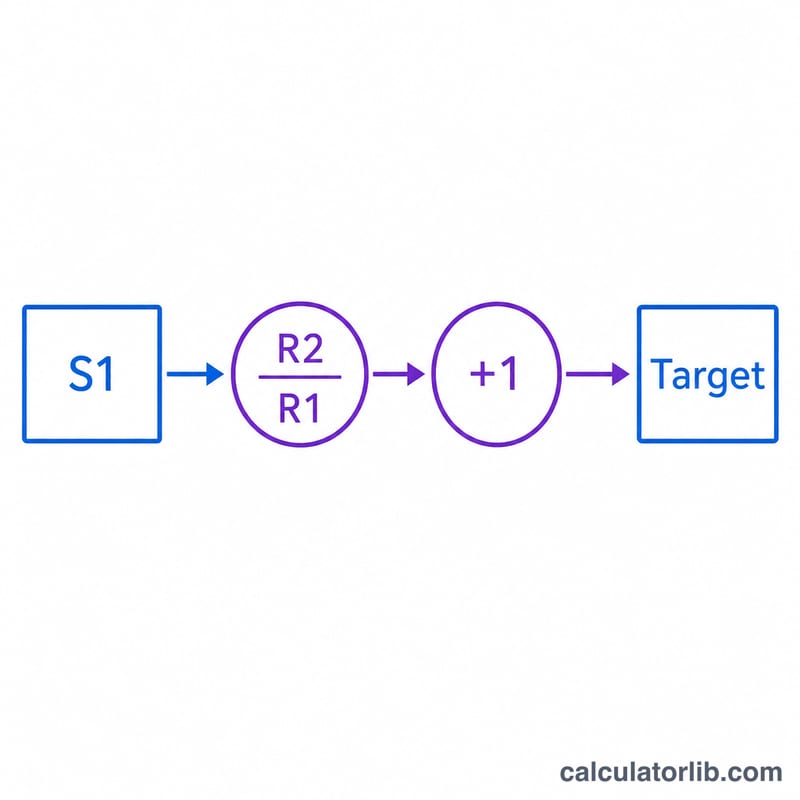
The Duckworth-Lewis (DLS) method is the standard system used in limited-overs cricket to set a fair revised target when a match is shortened by rain or other interruptions. This calculator applies the core resource-percentage formula: it scales the team batting first's score by the ratio of resources available to each side, then adds one run to determine the winning target.
How to Use It
Enter Team 1's final score in runs. Then enter the percentage of resources (overs and wickets combined) that Team 1 had available, and the percentage Team 2 has available for their innings. These resource figures come from the official DLS resource tables published by the ICC. The calculator returns the par score (the tie threshold) and the revised target Team 2 must reach to win.
The Formula Explained
$$\text{Target} = \left\lfloor \text{Score}_1 \times \frac{R_2}{R_1} \right\rfloor + 1$$ where \(R_1\) and \(R_2\) are the resource percentages. If Team 2 has fewer resources than Team 1, the ratio is below 1 and the target is reduced. If Team 2 has more resources, the target rises. The par score is the floor of the adjusted score, and the target is always one run higher so a tie is impossible at the boundary.
Worked Example
Suppose Team 1 scores 250 using 100% of its resources, but rain limits Team 2 to only 75% of resources. The adjusted score is $$250 \times \frac{75}{100} = 187.5$$ The par score is \(\lfloor 187.5 \rfloor = 187\), so Team 2's revised target is 188 runs to win.
FAQ
Where do the resource percentages come from? From the official DLS resource tables, which map remaining overs and wickets to a percentage of total batting resources.
Why add one run? Adding one run to the par score guarantees a clear win rather than a tie; matching the par score exactly results in a tie.
Is this the exact professional DLS computation? This implements the published resource-ratio formula. The full professional version (DLS Standard/Professional Edition) uses proprietary tables and adjustments, but the underlying target formula is identical.