
What This Calculator Does
The GPM to Pipe Velocity Calculator converts a volumetric flow rate measured in gallons per minute (GPM) into the average fluid velocity inside a round pipe, expressed in feet per second (ft/s). Knowing the velocity is essential for sizing pipes, avoiding erosion, controlling noise and water hammer, and meeting plumbing code limits — typically 5–8 ft/s for water supply lines.
How to Use It
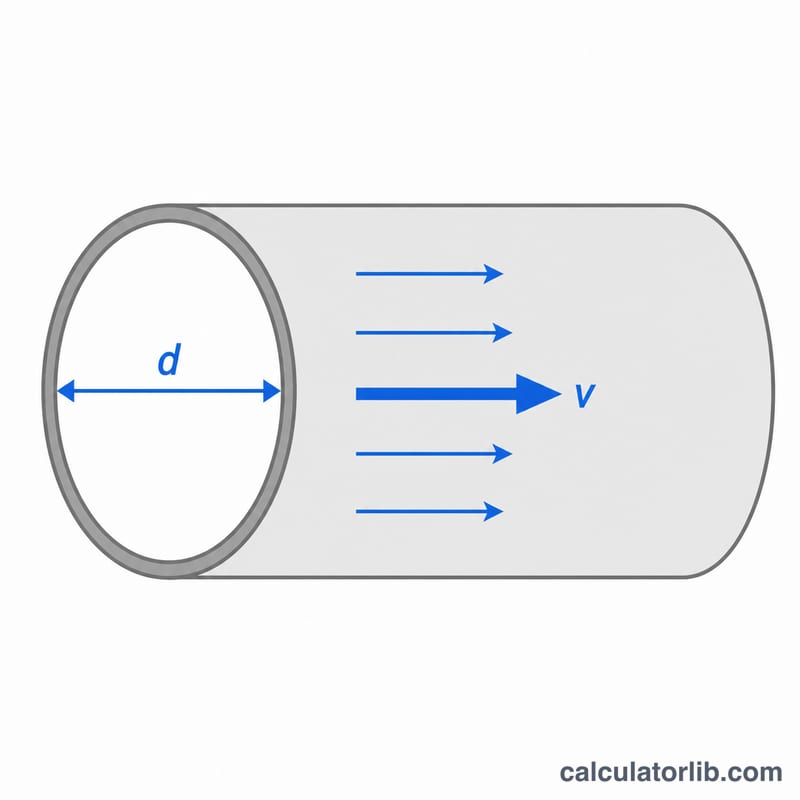
Enter the flow rate in GPM and the inside diameter of the pipe in inches (use the actual ID, not the nominal pipe size). The calculator instantly returns the average velocity, along with the pipe's cross-sectional area and the equivalent flow rate in cubic feet per second.
The Formula Explained
The shortcut formula is:
$$V = \frac{0.4085 \times \text{Flow Rate (GPM)}}{\text{Diameter (in)}^{2}}$$
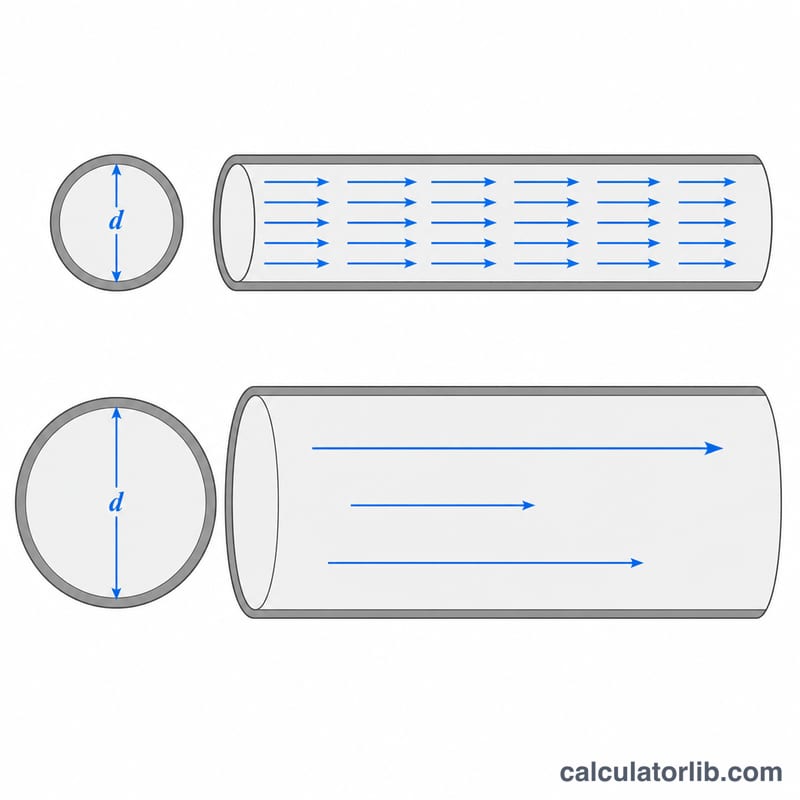
The constant 0.4085 bundles several unit conversions together. The exact area-based relationship is velocity = flow ÷ area. Converting GPM to cubic feet per second (\(\times 0.133681 \div 60\)) and dividing by the pipe area (\(\pi \cdot (d/24)^2\) in square feet) collapses to the constant 0.4085 when diameter is in inches. The velocity scales inversely with the square of the diameter, so doubling the pipe diameter cuts velocity to one quarter.
Worked Example
Suppose 50 GPM flows through a pipe with a 2-inch inside diameter:
$$v = \frac{0.4085 \times 50}{2^{2}} = \frac{20.425}{4} = \mathbf{5.106 \text{ ft/s}}$$ This sits comfortably within the typical recommended range for copper and PEX water lines.
FAQ
What velocity is too high? Velocities above roughly 8 ft/s in water lines can cause erosion, noise, and water hammer. Many designers target 5–7 ft/s.
Should I use nominal or actual diameter? Always use the actual inside diameter. A "2-inch" nominal pipe often has an ID that differs from 2.000 inches.
Does this work for fluids other than water? Yes — the velocity calculation is purely geometric and works for any incompressible liquid, since it only depends on flow rate and pipe area.