
What Is a Percent Decrease?
A percent decrease measures how much a quantity has fallen relative to its starting (original) value, expressed as a percentage. It is a handy way to describe price cuts, weight loss, falling sales, discounts, or any drop in a number. This calculator answers the everyday question: "by how much percent did this value go down?"
How to Use the Calculator
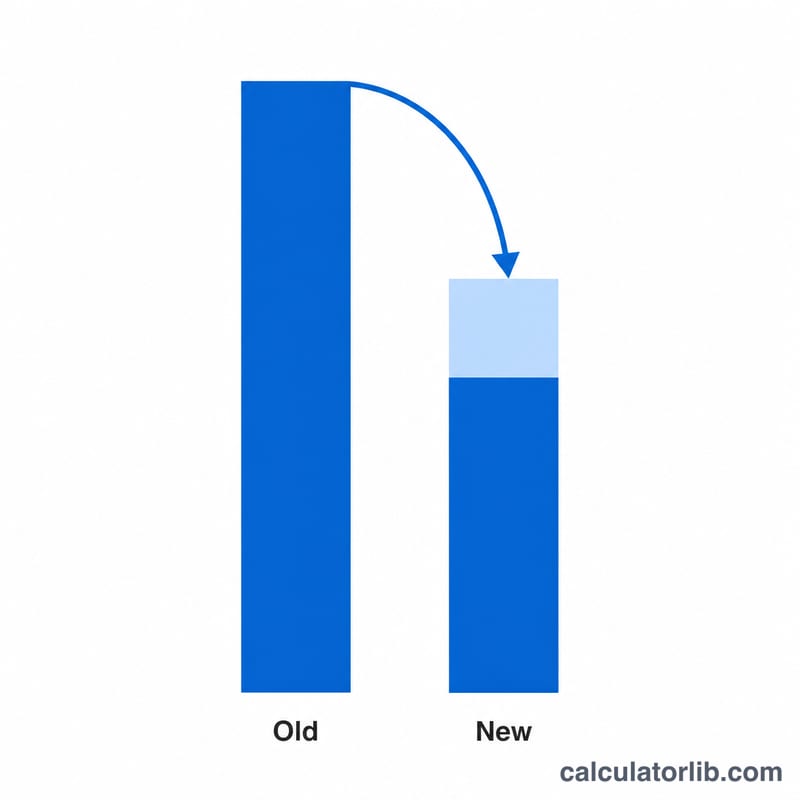
Enter the original value (the starting number) and the new value (the number after the change). The calculator subtracts the new value from the old, divides by the old value, and multiplies by 100 to give you the percentage decrease. It also shows the absolute drop so you can see both the relative and raw change.
The Formula Explained
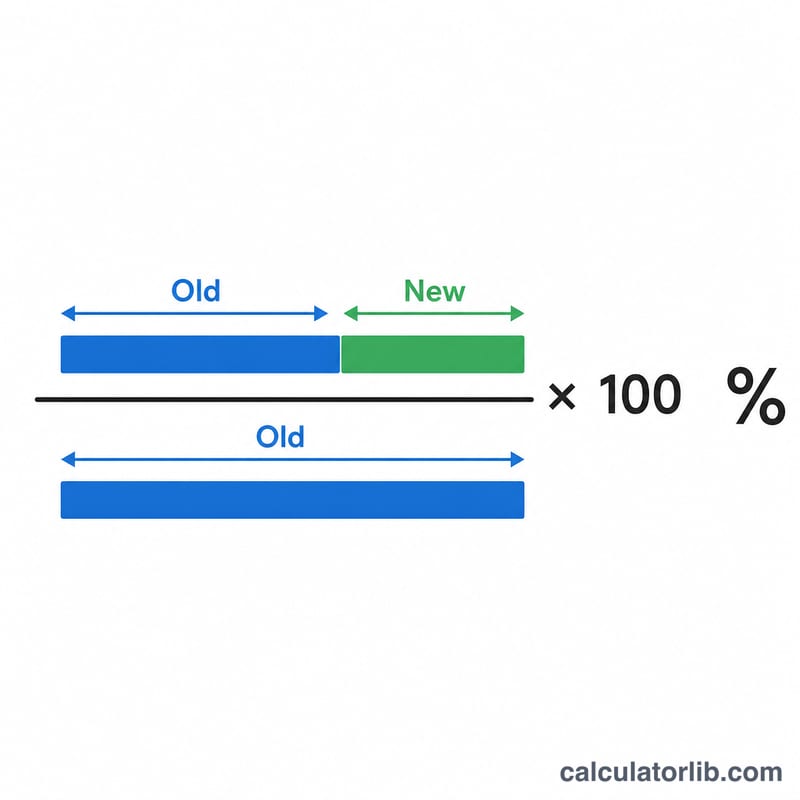
The percent decrease formula is:
$$\text{decrease\%} = \frac{\text{old} - \text{new}}{\text{old}} \times 100$$
The numerator (old − new) is how much the value fell. Dividing by the original value scales that drop to the starting point, and multiplying by 100 converts it to a percentage. If the new value is larger than the old value, the result will be negative — meaning the value actually increased.
Worked Example
Suppose a jacket originally cost $200 and is now on sale for $150. The decrease is \(200 - 150 = 50\). Dividing by the original: \(50 / 200 = 0.25\). Multiplying by 100 gives a 25% decrease. So the jacket is 25% cheaper than before.
FAQ
What if the result is negative? A negative percentage means the new value is higher than the old value, so it is actually an increase, not a decrease.
Can the original value be zero? No. You cannot calculate a percent decrease from zero because division by zero is undefined; this calculator returns 0 in that case.
Is percent decrease the same as a discount? Yes, a discount is simply a percent decrease applied to a price.