
What this calculator does
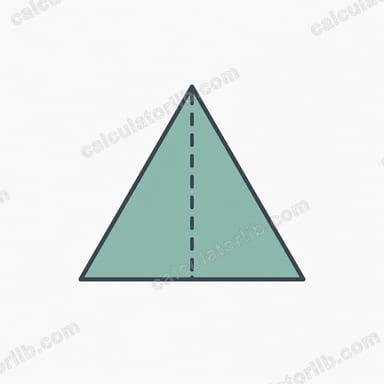
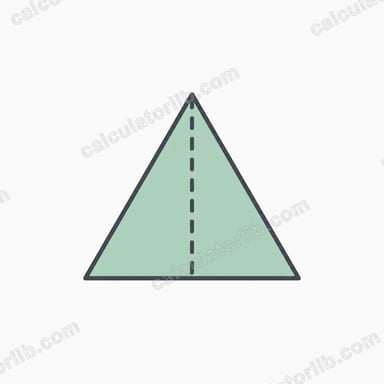
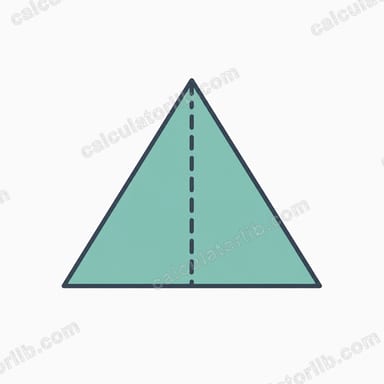
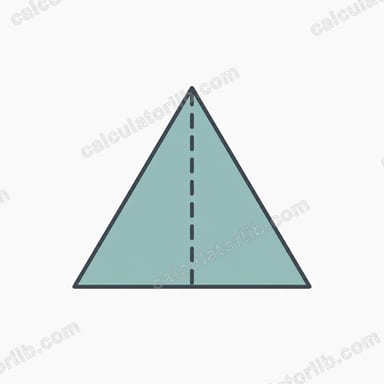
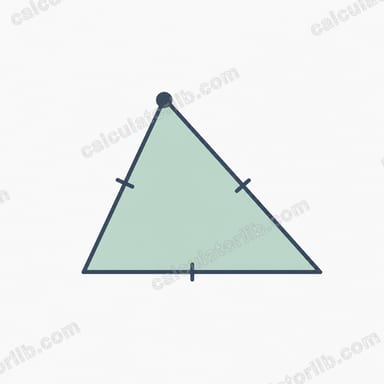
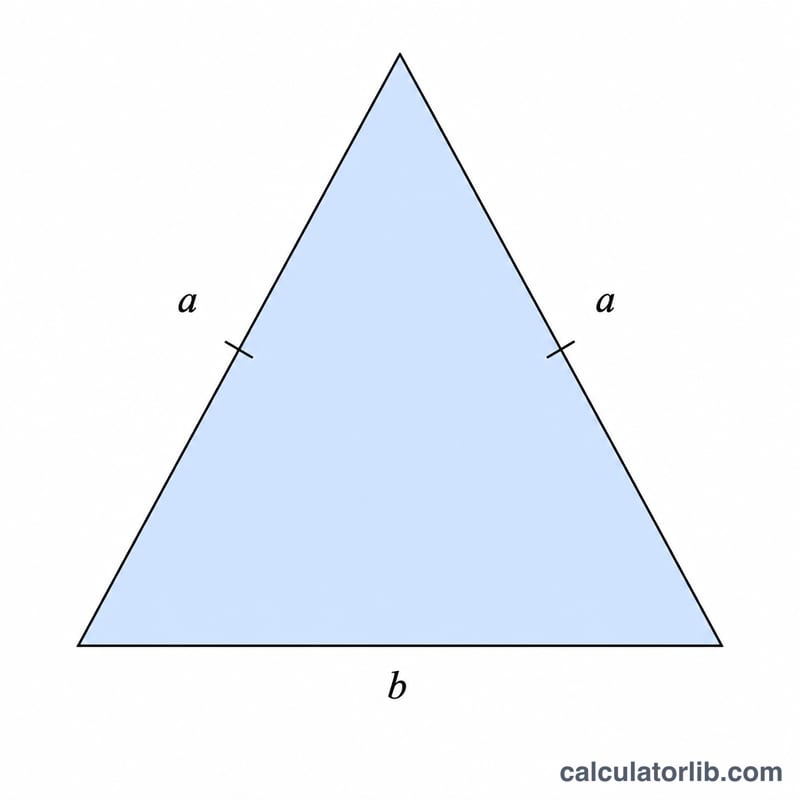
The Isosceles Triangle Perimeter Calculator finds the total distance around an isosceles triangle — a triangle that has two sides of equal length. You enter the length of the two equal sides and the length of the base, and the tool returns the perimeter using the formula P = 2a + b. It also checks that the three values you enter can actually form a valid triangle before giving you a result.
The input fields
- Length of Equal Sides (a): the measurement of each of the two matching sides. Because there are two of them, this value is doubled in the formula.
- Length of Base Side (b): the measurement of the third, unequal side (the base).
Both numbers must be positive. You can use any unit (cm, m, inches, feet) — just keep the same unit for both inputs, and the perimeter comes out in that same unit.
The formula explained
The perimeter is simply the sum of all three sides. Since two sides are equal (a + a) plus the base (b), this simplifies to:
P = 2a + b
The calculator also enforces the triangle inequality: the two equal sides together must be longer than the base, written as 2a > b. If the base is equal to or greater than twice the equal sides, the shape collapses into a straight line or cannot close, so the tool flags it as invalid rather than returning a meaningless number.
Worked example
Suppose each equal side is a = 8 and the base is b = 6:
- Check validity: 2 × 8 = 16, which is greater than 6 — valid triangle.
- Apply the formula: P = (2 × 8) + 6 = 16 + 6 = 22.
If you instead entered a = 4 and b = 8, the check 2 × 4 = 8 is not greater than 8, so the calculator would return the message "Base cannot be greater than or equal to twice the equal sides."
Frequently asked questions
Why does the base have to be less than twice the equal sides? This is the triangle inequality. For any triangle, the sum of two sides must exceed the third. With two equal sides of length a, their sum (2a) must be greater than the base b, otherwise the sides cannot meet to form a closed shape.
Can I enter decimal values? Yes. The calculator reads any positive number, including decimals like 5.5 or 12.25, as long as both values are greater than zero.
Does this also give the area? No — this tool calculates only the perimeter (the distance around the triangle). For area you would need the height or use a separate area formula.