
What This Calculator Does
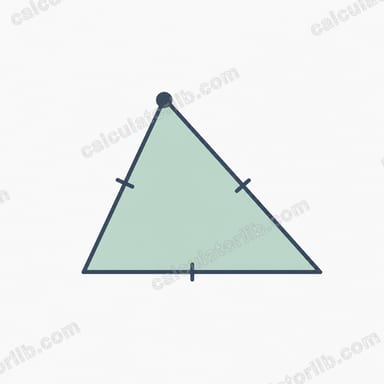
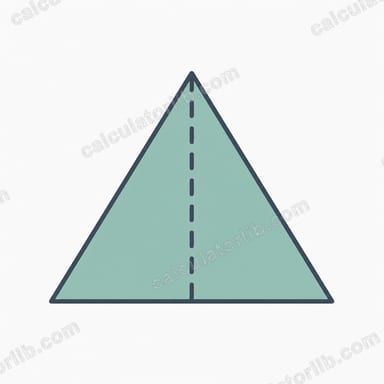
The Isosceles Triangle Height Calculator finds the perpendicular height (h) of an isosceles triangle — a triangle with two equal sides — using just two measurements. You provide the base length and the length of one of the two equal sides, and the tool returns the height instantly. As a bonus, it also computes the triangle's area and perimeter from the same two inputs.
The Inputs You Provide
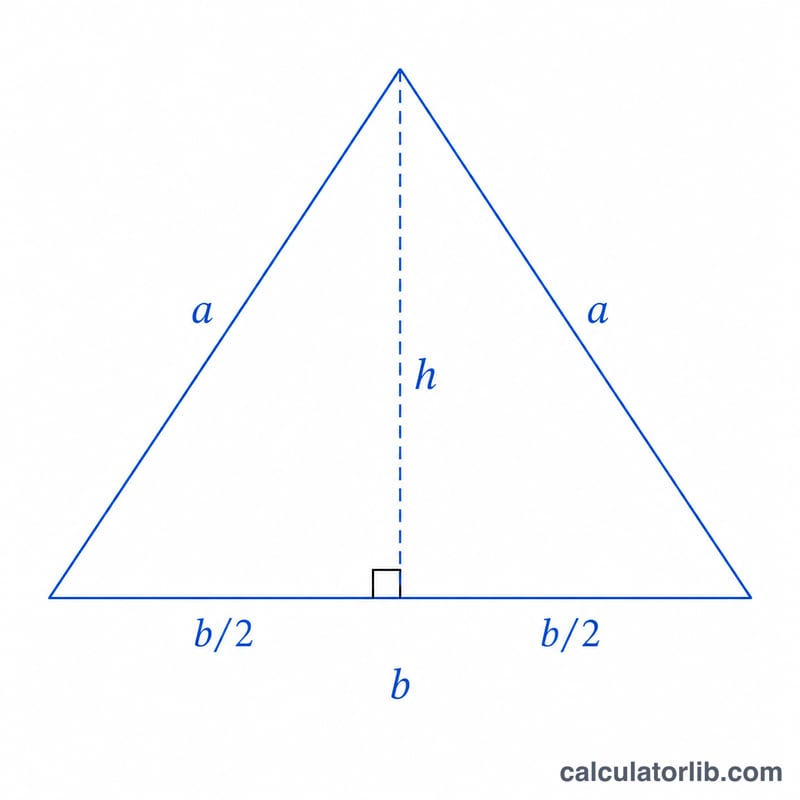
- Base Length (b): the length of the unequal side at the bottom of the triangle.
- Equal Side Length (a): the length of either of the two matching sides.
Both values must be in the same unit (cm, m, inches, etc.). The height you get back will be in that same unit.
The Formula Explained
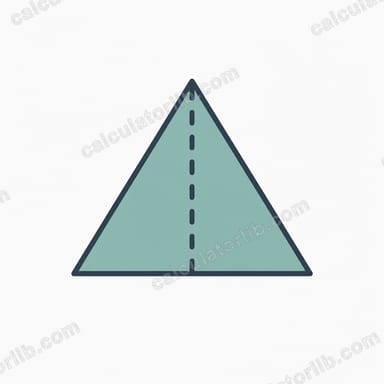
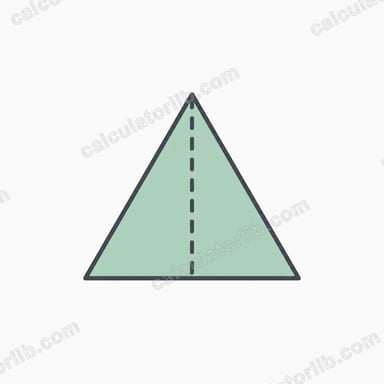
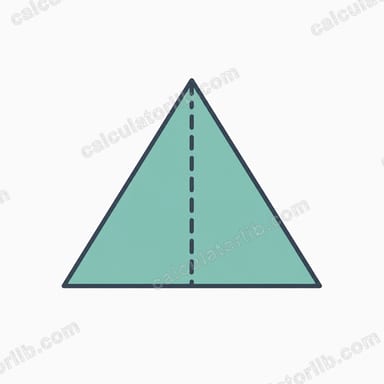
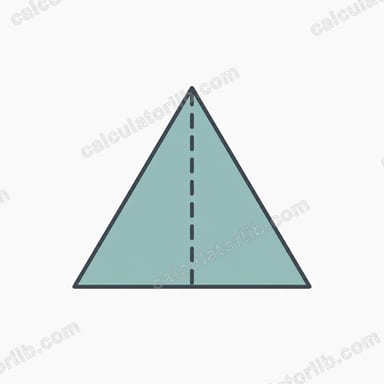
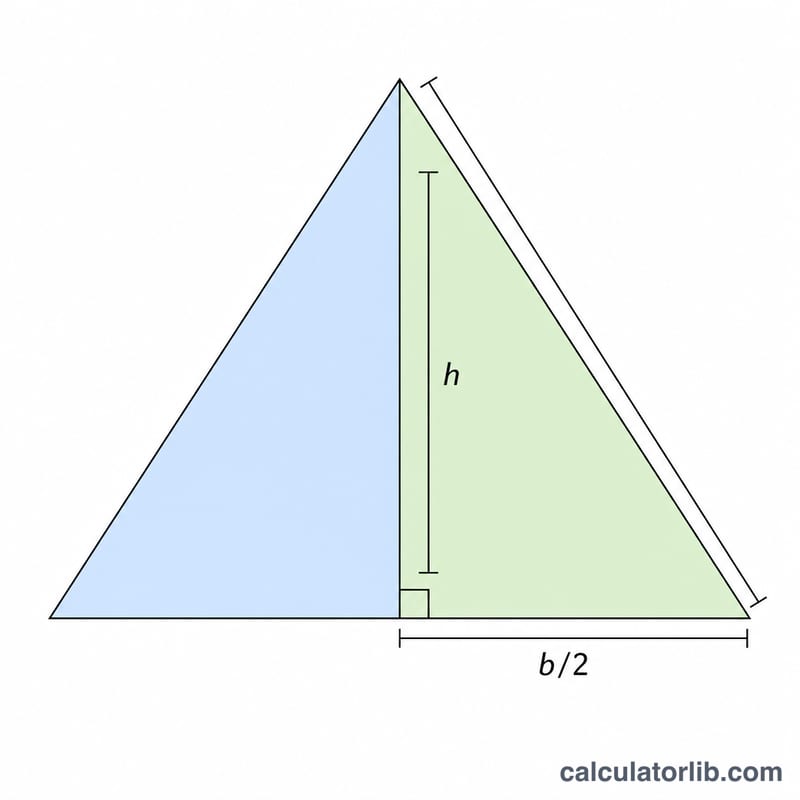
An isosceles triangle can be split down its middle into two identical right triangles. The height drops from the apex straight to the midpoint of the base, cutting the base exactly in half. That gives a right triangle whose hypotenuse is the equal side (a) and whose horizontal leg is half the base (b/2). Applying the Pythagorean theorem:
h = √(a² − (b/2)²)
The calculator then derives the other results:
- Area = (base × height) / 2
- Perimeter = base + 2 × side
Worked Example
Suppose the equal side length is 10 and the base is 12.
- Half the base: 12 ÷ 2 = 6
- Height: √(10² − 6²) = √(100 − 36) = √64 = 8
- Area: (12 × 8) / 2 = 48
- Perimeter: 12 + (2 × 10) = 32
So a triangle with sides 10, 10 and base 12 has a height of 8 units.
Frequently Asked Questions
Why must the side be longer than half the base? If the equal side is shorter than half the base, the value inside the square root becomes negative and no real triangle exists. The two sides simply cannot meet above the base. Make sure a > b/2.
Does this height work for finding the area? Yes. The height measured here is the perpendicular distance from the apex to the base, which is exactly the height used in the area formula (base × height ÷ 2).
Can I use it for an equilateral triangle? Yes — set the base equal to the side. For example, with side and base both 6, the height is √(36 − 9) = √27 ≈ 5.196, the correct equilateral result.