
What is keyword density?
Keyword density is the percentage of times a target keyword or phrase appears in a piece of content relative to the total number of words. It is a classic on-page SEO metric used to confirm that a page is focused on its topic without "keyword stuffing." Most SEO professionals aim for a natural density in the 0.5%–2.5% range, though there is no magic number — readability always comes first.
How to use this calculator
Paste your full article, paragraph, or page copy into the text box, then type the keyword or phrase you want to measure. The tool lowercases everything, strips punctuation, counts whole-word matches (so "cat" won't match "category"), and returns the density percentage plus useful supporting numbers: how many times the phrase occurred, how many keyword words that represents, and the total word count.
The formula explained
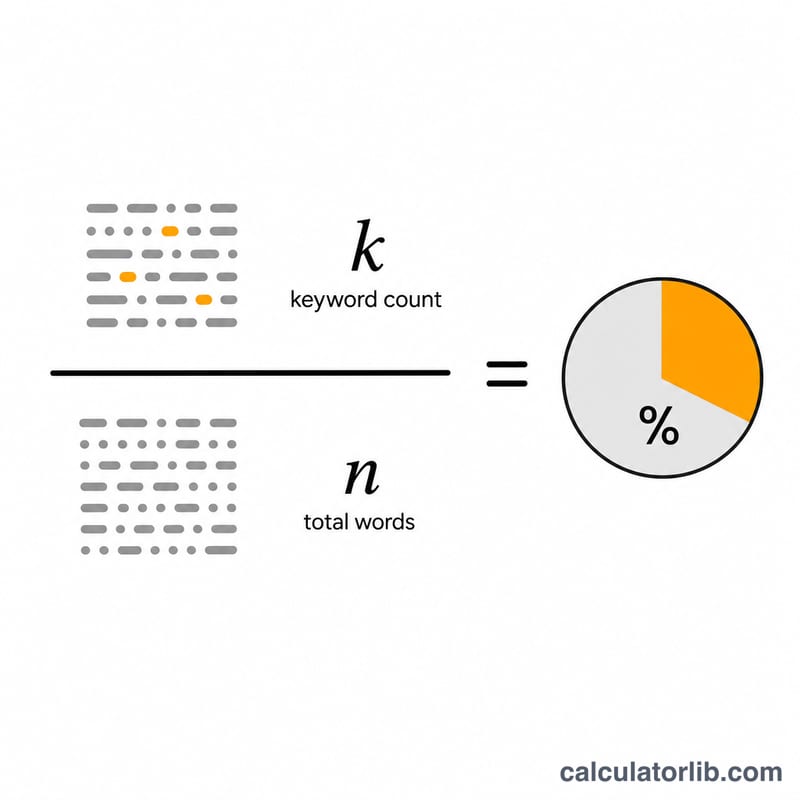
The core formula is simple:
$$\text{Density (\%)} = \frac{\text{Keyword Count}}{\text{Total Words}} \times 100$$For multi-word phrases, the keyword count is the number of phrase occurrences multiplied by the number of words in the phrase. For example, if the phrase "content marketing" (2 words) appears 3 times, the keyword count is 6 words.
Worked example
Suppose your text has 100 words and the phrase "content marketing" appears 3 times. Keyword count = \(3 \times 2 = 6\) words. Density:
$$\frac{6}{100} \times 100 = 6\%$$That would be considered high — you'd likely want to reduce repetition for a more natural read.
FAQ
What is a good keyword density? There's no official figure, but roughly 0.5%–2.5% is common. Prioritize natural, helpful writing over hitting a target.
Does keyword density still matter for SEO? Modern search engines rely far more on semantic relevance and intent. Density is a sanity check, not a ranking lever — avoid stuffing.
How are multi-word phrases counted? Each occurrence of the exact phrase counts once, and its word count contributes to the keyword count (occurrences × words per phrase).