
What Is Machine Utilization Rate?
Machine utilization rate measures how much of a machine's available time is actually spent producing output. It is a core metric in manufacturing, equipment management, and capacity planning, helping you spot underused assets, justify new investment, and identify excessive downtime. A higher utilization rate generally means you are getting more value from your capital equipment.
How to Use This Calculator
Enter two numbers: the actual run time (hours the machine was genuinely operating) and the available time (the total scheduled hours the machine could have run). The calculator divides run time by available time and multiplies by 100 to give the utilization percentage, along with the remaining idle or down time.
The Formula Explained
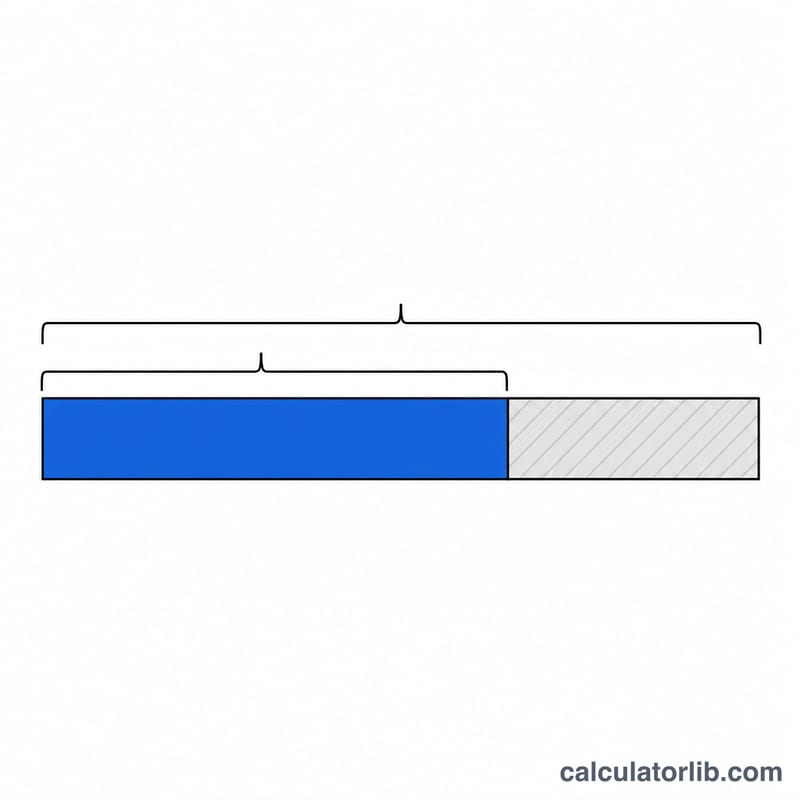
The calculation is simple: $$\text{Utilization (\%)} = \frac{\text{Actual Run Time (hours)}}{\text{Available Time (hours)}} \times 100$$. "Available time" is the denominator and should reflect the scheduling basis you care about — a single 8-hour shift, a 24-hour day, or a full work week. Keep both numbers in the same unit (usually hours).
Worked Example
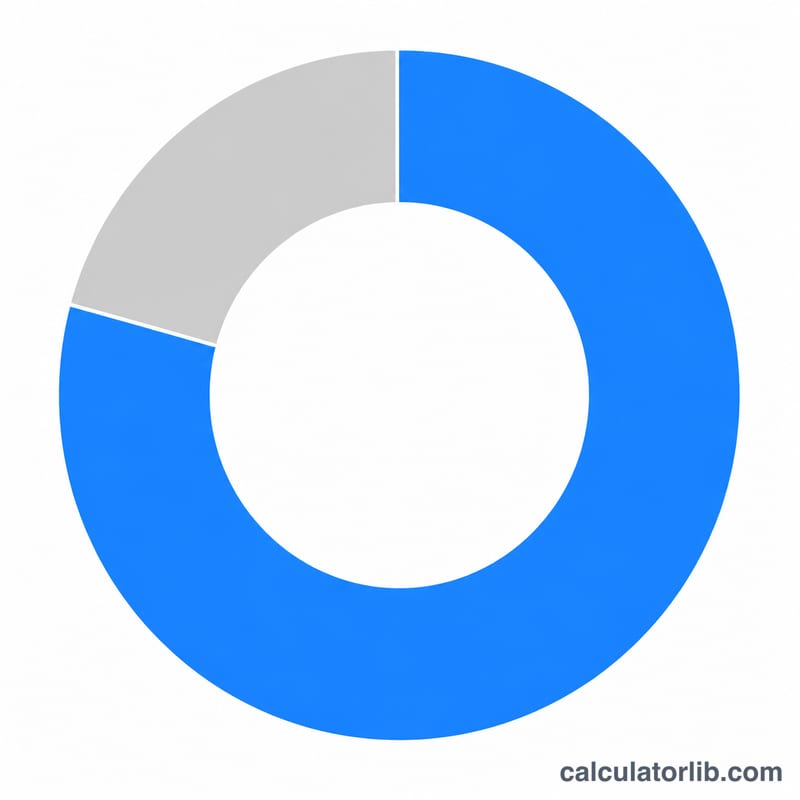
Suppose a CNC machine was scheduled to be available for 24 hours in a day but only ran for 18 hours. Utilization $$= \frac{18}{24} \times 100 = \textbf{75\%}$$, leaving 6 hours of idle or downtime. This tells managers that a quarter of the machine's potential capacity went unused.
FAQ
Is utilization the same as OEE? No. Utilization only looks at run time versus available time. Overall Equipment Effectiveness (OEE) also factors in performance speed and quality yield.
What counts as "available time"? That depends on your standard. You might use calendar time, scheduled production time, or planned operating time minus planned maintenance — be consistent.
Can utilization exceed 100%? Not normally. If run time exceeds available time, your available-time figure is likely understated.